Why This Question Matters More Than Technique, Price, or Graft Count
When researching a hair transplant, most patients focus on the wrong things—FUE vs DHI, cost per graft, or clinic popularity. Those details matter, but they are not what ultimately determines your result.
The single most important question is:
Who is actually performing your hair transplant surgery from beginning to end?
In today’s market, the answer is often not what patients expect—and that’s where problems begin.
The Truth About Modern Hair Transplant Clinics
In 2026, many clinics operate on a high-volume, technician-driven model. It’s efficient for business, but it comes at the expense of quality.
Here’s what typically happens behind the scenes:
The doctor may briefly draw the hairline
Technicians perform the graft extractions
Technicians create recipient sites
Technicians place the grafts
The doctor is minimally involved—or not present at all
This is not a minor detail. It fundamentally changes the outcome of your surgery.
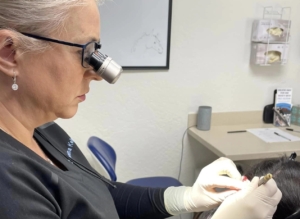
Hair transplantation is not a repetitive task. It is a precise surgical procedure that requires judgment, artistry, and consistency from start to finish.
Why It Matters Who Performs Each Step
Every phase of a hair transplant builds on the one before it. When multiple people handle different steps, the final result often lacks cohesion.
Hairline Design
A natural hairline requires:
Irregularity (not straight or artificial)
Proper transition zones
Age-appropriate planning
This cannot be standardized or rushed.
Graft Extraction (FUE)
Poor extraction leads to:
Permanent donor damage
Patchy or overharvested areas
Limited options for future procedures
This step demands surgical precision—not delegation.
Recipient Site Creation
This is the foundation of the final result.
It determines:
There is no outsourcing of critical steps. No assembly-line process. No uncertainty about who is handling your grafts.
A Rare Standard in the United States
Very few clinics in the U.S. operate this way.
Most rely heavily on technicians due to:
Time constraints
High patient volume
Business scalability
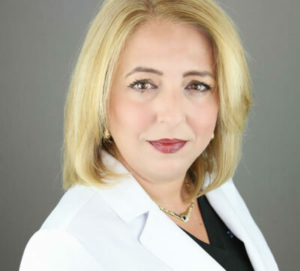
Dr. Ramona Kelemen has chosen a different path—one that prioritizes quality, precision, and accountability over volume.
This is especially important for:
Repair cases
Patients with limited donor hair
Individuals seeking natural, undetectable results
The Importance of a Consistent Surgical Team
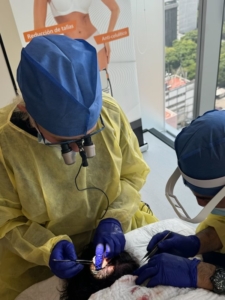
While Dr. Ramona Kelemen performs every step herself, she is supported during graft implantation by one highly experienced technician:
Jessica, who has worked alongside her for over 20 years.
This is not a rotating staff or a group of assistants. It is a longstanding surgical partnership built on consistency and trust.
Why this matters:
Seamless coordination during implantation
Consistent handling of grafts
Refined technique developed over decades
No variability from case to case
In an industry where teams often change daily, this level of continuity is exceptionally rare.
Why This Produces Superior Hair Transplant Results
When one surgeon controls the entire procedure:
The original vision is preserved from start to finish
Grafts are handled with maximum care and precision
The donor area is protected for long-term use
Hairlines appear natural, soft, and undetectable
And when that surgeon works with the same trusted assistant for decades, the process becomes even more refined.
This is how consistent, high-quality results are achieved—not through marketing terms or trendy techniques.
One Size Does Not Fit All: Customized FUE Techniques
Another advantage at Hair 4 Life Medical is the ability to tailor the procedure to the patient.
Dr. Ramona Kelemen utilizes multiple advanced approaches, including:
should understand that location and price are secondary to surgical involvement.
A well-performed transplant should:
Look natural in all lighting
Age appropriately over time
Preserve donor hair for future needs
Those outcomes depend on who performs the procedure—not the marketing.
The Bottom Line
Hair transplantation is permanent. There is no room for shortcuts.
At Hair 4 Life Medical, Dr. Ramona Kelemen performs your surgery from the first step to the final graft placement, maintaining full control over every detail.
She is assisted only during implantation by Jessica, her trusted technician of over 20 years—ensuring consistency, precision, and continuity throughout the procedure.
This is not the industry standard—but it should be.
https://hairforlifeaz.com/wp-content/uploads/2024/09/drkelemen.jpg361400Ioan A Kelemenhttps://hairforlifeaz.com/wp-content/uploads/2024/02/Hair-for-Life-Medical-Logo-web.pngIoan A Kelemen2026-03-19 17:37:522026-04-13 08:56:37Who Is Actually Performing Your Hair Transplant Surgery?
Hair transplant technology has evolved dramatically over the past two decades. One of the most heavily marketed innovations is the robotic hair transplant system known as ARTAS Robotic Hair Transplant System. Clinics often promote robotic surgery as the most advanced option available, implying that a robot automatically delivers better results.
The reality is very different.
While robotics may sound impressive in marketing brochures, experienced hair transplant surgeons understand that the success of a hair transplant depends on surgical judgment, artistic design, and meticulous graft placement—things a robot cannot truly replicate.
If you are researching hair restoration, it is important to understand why robotic systems like ARTAS are often not the best choice for achieving the most natural results.
Understanding What ARTAS Actually Does
The ARTAS Robotic Hair Transplant System is a robotic device designed to assist with FUE (Follicular Unit Extraction). It uses cameras and algorithms to identify hair follicles and harvest them from the donor area.
Human surgeons can adjust their technique instantly. A robotic algorithm, however, relies on pre-programmed scanning patterns that may not adapt well to these variations.
The most important part of any hair transplant is the hairline.
Natural hairlines require:
Micro-irregularities
Precise graft distribution
Fine single hairs in the front
Angles that mimic natural growth
These subtle details cannot be programmed into a robot.
If grafts are placed too far apart or at incorrect angles, the result can look artificial. This is one reason robotic systems struggle to consistently produce the ultra-natural hairlines achieved by experienced surgeons.
In many robotic clinics, this step is often performed by technicians rather than the surgeon. This approach can reduce surgical control and consistency.
Marketing vs. Reality
The popularity of robotic systems is largely driven by marketing.
Robots attract attention because they sound futuristic and advanced. Many clinics promote robotics because it helps differentiate them in a competitive market.
These approaches allow surgeons to customize the procedure for each patient rather than relying on automated systems.
The Bottom Line
Robotic hair transplant systems like the ARTAS Robotic Hair Transplant System may appear impressive, but they are not the gold standard in hair restoration.
Hair transplantation remains a surgeon-dependent procedure where experience, technique, and artistic judgment matter far more than automation.
Patients seeking the most natural results should focus on finding a highly skilled surgeon who performs the procedure personally and uses advanced manual techniques tailored to each individual case.
https://hairforlifeaz.com/wp-content/uploads/2024/10/ARTAS2017.png13811389Ioan A Kelemenhttps://hairforlifeaz.com/wp-content/uploads/2024/02/Hair-for-Life-Medical-Logo-web.pngIoan A Kelemen2026-03-10 11:30:052026-04-13 08:57:09ARTAS Robotic FUE: What Patients Should Know
If you are searching for a hair-transplant near me, it is critical to understand one foundational truth:
Hair-transplantation is surgery — not a cosmetic add-on.
Yet today, many med spas and aesthetic clinics market hair services alongside injectables, lasers, and skincare. While these environments may appear modern and convenient, they are structurally different from legitimate hair-transplant practices that have produced consistent, long-term results for decades.
Understanding this difference can determine whether your transplant becomes a lifelong success — or a permanent regret.
What Defines a Legitimate Hair-Transplant Practice?
A physician with years of transplant-specific experience
Long-term donor management and hairline planning
Accountability for both results and complications
This traditional model has existed long before marketing-driven aesthetics entered the field — and it still forms the backbone of reliable outcomes today.
The Traditional Hair-Transplant Model
Other local hair-transplant clinics typically represent the traditional surgical model:
An experienced hair-transplant surgeon
A team-based execution (physician plus trained staff)
Emphasis on repetition, volume, and long-established workflows
This approach has produced millions of successful transplants worldwide. For patients who value legacy experience and standard techniques, clinics like Biltmore Surgical Hair Restoration can make sense.
The strength of this model lies in its history and consistency.
The Physician-Centric Hair-Transplant Model
By contrast, Hair 4 Life Medical represents a physician-centric model — one that has evolved as technology and patient expectations have advanced.
This structure is defined by:
Solo surgery: the physician performs 100% of the procedure
Conservative donor preservation with long-term planning in mind
This model appeals to patients who prioritize total physician control, cosmetic discretion, and precision, particularly professionals, women, public-facing individuals, and corrective cases.
Why Med Spas Don’t Belong in the Same Category
Med spas may offer PRP, microneedling, or limited FUE — but these services do not equate to comprehensive surgical hair restoration.
Key limitations of med-spa hair services:
Hair transplantation demands judgment, restraint, and foresight — qualities that only come from years of dedicated surgical focus.
Choosing the Right Model for You
There is no single “best” option for everyone — but there is a right structural fit for each patient.
If you value legacy experience and standard surgical techniques, the traditional model makes sense.
If you value maximum physician involvement, cosmetic precision, and long-term donor protection, the physician-centric model stands apart.
That distinction is not marketing.
It is structural.
And structure is what determines how well your transplant ages — not just how it looks at six months.
Final Thought
Hair loss is common.
Donor hair is finite.
Mistakes are permanent.
Choose a clinic based on how it is built, not how it is advertised.
https://hairforlifeaz.com/wp-content/uploads/2025/07/IMG_6680-scaled.jpg20481536Ioan A Kelemenhttps://hairforlifeaz.com/wp-content/uploads/2024/02/Hair-for-Life-Medical-Logo-web.pngIoan A Kelemen2026-01-19 13:56:362026-05-14 08:52:38Legitimate Hair-Transplant Practices — Not Med Spas
When people start researching hair restoration, their first stop is usually Google. And year after year, the same questions dominate search results. These questions reflect real concerns — about naturalness, safety, cost, and long-term results.
1. Do Hair Transplants Look Natural?
This is the number one hair transplant question asked online — and for good reason. Nobody wants a pluggy or artificial hairline.
The truth is simple: Hair transplants look natural when the doctor is skilled and performs the entire procedure themselves.
At Hair 4 Life Medical, every graft is harvested and placed personally by Dr. Ramona Kelemen. No technicians. No delegating. Your result reflects the work of an expert, not a clinic assembly line. Dr Kelemen performs 2 surgeries a week! Quality over quantity!
2. How Long Does a Hair Transplant Last?
A well-executed hair transplant is permanent. The follicles come from the “safe donor zone,” which is genetically resistant to hair loss. Once transplanted, they continue to grow normally for life.
3. Is a Hair Transplant Painful?
Most patients report far less discomfort than they expected. You’ll feel the numbing injections at the beginning. After that, the procedure is very tolerable. Mild soreness or tightness afterward is common but short-lived.
Dr Kelemen has her own post op protocol that speeds up recovery.
4. How Much Does a Hair Transplant Cost?
Costs vary depending on technique (Long hair FUE, NO Shave, DHI etc.) and graft count, but most patients invest $6,500–$30,000.
Removes a strip of tissue from the back of the scalp
Leaves a linear scar
Used for specific cases needing high graft counts
Most modern patients choose FUE for its natural appearance and easier recovery. The tools used matter but what matters the most is the abilities of the doctor!
6. How Long Is Recovery?
Most people resume regular daily activities in 2–3 days. Redness improves within a week. Gym workouts and heavy activity usually resume after 10–14 days.
Patience pays off — the transformation is worth the wait.
8. Is a Hair Transplant Safe?
Yes — as long as it’s done by a trained physician.
Most complications happen in clinics where technicians, not doctors, perform the surgery.
At Hair 4 Life Medical, your procedure is performed start to finish by Dr. Kelemen, ensuring precision, safety, and medical oversight at every step.
There is a lot of hype and marketing jargon on the interne! Dr Kelemen highly recommends that prospective patients take their time and due diligence in order to choose wisely! For example a doctor might advertise SOLO hair transplant only to find out that they use technicians for most of work!
9. Can a Hair Transplant Fix a Receding Hairline or Crown?
Absolutely. Both areas respond very well to FUE. The design is customized based on age, long-term pattern, donor density, and personal goals.
A natural, age-appropriate plan ensures your results look great now and decades from now.
A personal evaluation — including photos — will confirm your custom plan.
Final Thoughts
These are the most searched hair-transplant questions online, and it’s easy to see why. People want honesty, skill, and long-term reassurance.
If you want results crafted by a true hair transplant specialist — with 100% of your procedure performed by Dr. Kelemen herself — you’re already in the right place.
https://hairforlifeaz.com/wp-content/uploads/2025/07/IMG_6680-scaled.jpg20481536Ioan A Kelemenhttps://hairforlifeaz.com/wp-content/uploads/2024/02/Hair-for-Life-Medical-Logo-web.pngIoan A Kelemen2025-12-08 10:30:122026-03-19 17:40:12The Most Asked Hair Transplant Questions on the Internet — Answered by Dr. Ramona Kelemen
Hair transplantation has come a long way. What was once a procedure requiring large scars and long recoveries is now a minimally invasive surgery that can be customized to the needs and lifestyle of each patient. One of the most advanced techniques available today is Long Hair FUE – a procedure that allows patients to keep their hair long during the transplant process. For many, this means restored confidence without the obvious signs of surgery.
This comprehensive guide will walk you through everything you need to know about Long Hair FUE – from how it works, who it’s for, its advantages, and why Dr. Ramona Kelemen at Hair 4 Life Medical is one of the very few surgeons in the United States who offers this technique.
What Is Long Hair FUE?
Long Hair FUE (Follicular Unit Excision) is an advanced hair transplant method where follicular units (groups of 1–4 hairs) are harvested while the patient’s hair is kept long. Unlike traditional FUE that usually requires shaving the donor area, Long Hair FUE preserves hair length, allowing for a more discreet healing process.
Instead of leaving patients with obvious signs of extraction, Long Hair FUE enables them to walk out of the clinic with their existing hairstyle largely intact. The donor sites are camouflaged by the surrounding long hair, making the recovery period virtually undetectable.
The Evolution of FUE Techniques
To understand why Long Hair FUE is so innovative, it helps to see how hair transplantation has evolved:
FUT (Strip Surgery): Involves removing a strip of scalp, leaving a linear scar. Once considered the standard, FUT has mostly been replaced by FUE.
Traditional FUE: Harvests follicles individually with tiny punches but usually requires shaving large portions of the donor area.
Immediate Visual Feedback: Because grafts retain their length, both doctor and patient can preview how the new hairline and density will appear immediately.
Key Benefits of Long Hair FUE
No Shaving Required: Avoids the need to cut hair short, allowing for a discreet procedure.
Breadth of Techniques: She offers the widest range of FUE tools and methods in the U.S. — including ARTAS robotic, WAW DUO, Ugraft, Cole System, manual FUE, and Long Hair FUE.
Artistic Approach: She treats hair restoration as both science and art, designing hairlines and density patterns that look natural for each patient.
Patient-Centered Care: Transparency, honesty, and integrity guide every consultation and procedure.
With Dr. Kelemen, patients don’t just receive a transplant — they experience the gold standard in personalized care.
What to Expect After Long Hair FUE
Recovery Time: Minimal downtime, with many patients resuming normal life quickly.
Healing: Redness and scabbing resolve within days and are camouflaged by long hair.
Growth Timeline:Transplanted hairs will shed in the following weeks, then regrow permanently over several months.
Final Results: Most patients see significant new growth between 6–12 months.
Patient Testimonials
“Dr. Kelemen’s Long Hair FUE was life-changing for me. I walked out looking like myself, and no one could tell I had surgery. The results are incredibly natural.”
“The attention to detail and the fact that Dr. Kelemen performed the whole surgery herself gave me confidence. I couldn’t be happier with my decision.”
Long Hair FUE is one of the most advanced and discreet options available for hair restoration today. While it is more technically demanding and not widely offered, the benefits are undeniable: no shaving, instant preview of results, and an undetectable recovery.
If you’re considering a hair transplant in Arizona, Dr. Ramona Kelemen at Hair 4 Life Medical is the surgeon to trust. With her unmatched skill, broad range of techniques, and true SOLO approach, she delivers results that set the gold standard in hair restoration.
📍 Schedule your consultation today at Hair 4 Life Medical — and take the first step toward a natural, confident future.
https://hairforlifeaz.com/wp-content/uploads/2025/01/Hair-Transplant-FUE-01.png10682560Ioan A Kelemenhttps://hairforlifeaz.com/wp-content/uploads/2024/02/Hair-for-Life-Medical-Logo-web.pngIoan A Kelemen2025-09-29 11:47:502026-05-15 22:05:24Long Hair FUE: What Is It?
Long Hair FUE represents more than a surgical procedure—it’s a discreet, elegant transformation. Performed at Hair 4 Life Medical in Scottsdale, Arizona, by Dr. Ramona Kelemen, this method allows patients to maintain their full-length hair throughout the process. Dr. Kelemen stands alone as the only physician in Arizona offering Long Hair FUE, and uniquely, she is the sole surgeon in the United States to perform exclusively solo hair transplants, personally overseeing every surgical step.
Drawing from over two decades of expertise—and holding dual doctorates in M.D. and N.D.—Dr. Kelemen blends cutting-edge surgical skill with deep holistic care. At Hair 4 Life, clients find not just willful craftsmanship but genuine partnership in restoring both hair and confidence.
Long Hair FUE diverges from conventional methods by preserving hair length during extraction and reimplantation, offering both patients—and their social lives—a nearly seamless transition. Key differentiators include:
Patient communities consistently celebrate her artistry and ethics—emphasizing the value of surgeon-led care versus technician-handled approaches.
9. Final Reflection: When Restoration Becomes Art
Long Hair FUE at Hair 4 Life Medical isn’t merely a surgery—it’s a respectful, dignified approach to transformation. Under Dr. Kelemen’s solo guidance, each graft is positioned with artful intention, and every patient emerges not just with restored hair, but with peace of mind that comes from surgical integrity and vision.
Final Thoughts
The evolution of hair transplant surgery is here—and it doesn’t involve shaving your head. Long Hair FUE is the discreet, elegant, and effective choice for modern patients, and it’s available today at Hair 4 Life Medical in Arizona.
If you’re looking for a personalized, physician-led experience with surgical artistry at its core, schedule a consultation with Dr. Kelemen—the Long Hair FUE expert trusted by patients and doctors alike.
https://hairforlifeaz.com/wp-content/uploads/2024/09/IMG_2700-rotated.jpg800600Ioan A Kelemenhttps://hairforlifeaz.com/wp-content/uploads/2024/02/Hair-for-Life-Medical-Logo-web.pngIoan A Kelemen2025-08-08 20:43:342026-05-05 11:09:43The Art of Long Hair FUE at Hair 4 Life Medical
Long Hair FUE: The Ultimate Guide to a No-Shave Hair Transplant
Dr Kelemen the founder of Hair 4 Life Medical
Introduction
Hair transplants have evolved significantly, offering more advanced and less invasive solutions for those experiencing hair loss. One of the latest and most discreet methods is Long Hair Follicular Unit Extraction (Long Hair FUE). Unlike traditional FUE, this technique does not require shaving the donor or recipient area, making it an attractive option for individuals who prefer an undetectable transplant process. In this comprehensive guide, we will explore Long Hair FUE in detail, covering the procedure, benefits, risks, recovery, cost considerations, and why it is more expensive than other methods.
What is Long Hair FUE?
Long Hair FUE is a specialized hair transplant technique that follows the same principles as standard FUE but allows for the extraction and implantation of follicular units without cutting the donor hair short. This means that patients can undergo the procedure while maintaining their existing hair length, providing an immediate visual preview of results and maintaining discretion.
The Procedure: Step by Step:
1. Consultation and Assessment
Before undergoing Long Hair FUE, a thorough evaluation by a hair restoration specialist, such as Dr. Kelemen from Hair 4 Life Medical, is necessary. The doctor assesses the extent of hair loss, donor area quality, and overall suitability for the procedure.
2. Donor Hair Extraction
Unlike conventional FUE, where the donor area is shaved, Long Hair FUE allows for individual extraction of follicular units while keeping the hair long. The surgeon carefully selects and extracts grafts using a specialized micro-punch tool to minimize visible scarring. At Hair 4 Life Medical, Dr. Kelemen utilizes handheld motorized devices like the Ugraft and WAW DUO.
The surgeon makes tiny incisions in the recipient area following the natural hair growth pattern. Precision is crucial to ensure a natural and seamless result. At Hair 4 Life Medical, Dr. Kelemen uses custom blades designed specifically for site creation, ensuring optimal angulation, depth, and density for the most natural-looking results.
No Need for Shaving: Unlike traditional FUE or FUT, Long Hair FUE allows patients to maintain their hair length, making it ideal for those who prefer a more discreet procedure.
Immediate Aesthetic Preview: Since the transplanted hair is long, patients can see an immediate change in hair density and appearance.
Minimal Downtime: The recovery process is generally quick, with minimal discomfort and swelling.
No Linear Scars: As with standard FUE, Long Hair FUE does not leave a noticeable linear scar, unlike the traditional FUT method.
Enhanced Confidence Post-Procedure: The ability to return to daily life without significant visual changes or signs of surgery is a major advantage for many patients.
Why is Long Hair FUE More Expensive?
Long Hair FUE comes with a higher price tag compared to traditional hair transplant techniques. The reasons for its premium cost include:
Increased Time and Labor: Extracting and implanting long hair follicles requires more precision and takes significantly longer than standard FUE.
Specialized Tools and Equipment: Clinics performing Long Hair FUE must invest in advanced micro-punch tools and specialized implantation techniques to ensure optimal results. Hair 4 Life Medical, led by Dr. Kelemen, employs custom blades tailored to individual patient needs for the best outcome.
Custom Blades for Site Creation: One of the unique aspects of Hair 4 Life Medical’s approach is the use of custom blades to create precise recipient sites. These blades are specifically designed to ensure the perfect depth, angle, and placement for each graft, maximizing natural-looking results and promoting faster healing.
Hair Shedding (Shock Loss): Some of the transplanted hairs may shed temporarily before new growth begins, typically within 3-4 months.
Cost Considerations
Long Hair FUE is more expensive than standard FUE due to the increased labor and precision required. Prices vary based on factors such as clinic location, surgeon expertise, and the number of grafts needed. On average, the cost can range between $12,500 and $30,000 per session.
Common FAQs About Long Hair FUE
1. Who is an ideal candidate for Long Hair FUE?
Anyone with sufficient donor hair who prefers a no-shave hair transplant is a good candidate. It is particularly beneficial for those in professional or public-facing roles who want minimal downtime.
2. How long does the procedure take?
Depending on the number of grafts required, a Long Hair FUE session can take anywhere from 6 to 12 hours.
3. Are the results permanent?
Yes, the transplanted hair is permanent and will continue to grow naturally.
4. How soon can I return to work?
Many patients return to work within a few days, as there is no visible shaving or scarring.
This procedure is ideal for individuals who want a discreet hair restoration solution without shaving their head. It is particularly beneficial for professionals, public figures, or those who prefer to keep their hair transplant private. However, it may not be suitable for individuals with extensive baldness or insufficient donor hair.
Conclusion
Long Hair FUE is a revolutionary approach to hair transplantation, offering natural-looking results without the need for shaving. While it requires more time and investment, the benefits of discretion, immediate aesthetic improvements, and minimal scarring make it an excellent option for those seeking a seamless hair restoration experience. If you’re considering Long Hair FUE, consult with a qualified hair transplant specialist, such as Dr. Kelemen at Hair 4 Life Medical, to determine if it’s the right choice for you.
If you’re ready to take the next step in your hair restoration journey, schedule a consultation with Dr. Kelemen and the team at Hair 4 Life Medical. Your confidence and a full head of hair are just a procedure away.
Ready to transform your look? Schedule a paid consultation with Dr. Kelemen today and discover why Hair 4 Life Medical is Arizona’s trusted leader in hair restoration.
Interested in learning more?Contact Us or call Hair 4 Life at (480) 525-4547 to schedule an appointment.
https://hairforlifeaz.com/wp-content/uploads/2024/10/DHI-2.png1024682Ioan A Kelemenhttps://hairforlifeaz.com/wp-content/uploads/2024/02/Hair-for-Life-Medical-Logo-web.pngIoan A Kelemen2025-02-17 19:26:252026-01-21 19:10:32Long Hair FUE: The Ultimate Guide to a No-Shave Hair Transplant
Why FUE is More Popular Than FUT Hair Transplant: Key Reasons and Benefits
Dr Kelemen the founder of Hair 4 Life Medical
When it comes to hair restoration procedures, two of the most common and widely recognized techniques are Follicular Unit Extraction (FUE) and Follicular Unit Transplantation (FUT). Both methods are effective in treating hair loss, but over the years, FUE has become far more popular than FUT, and there are several compelling reasons for this shift in preference.
In this blog post, we’ll dive into the key differences between FUE and FUT and explore why FUE hair transplants have gained more popularity, both among patients and surgeons alike.
What is FUE?
Follicular Unit Extraction (FUE) is a minimally invasive hair transplant technique where individual hair follicles are extracted directly from the donor area (usually the back or sides of the scalp) using a specialized punch tool. These follicles are then transplanted into the balding or thinning areas of the scalp.
Unlike FUT, FUE does not involve removing a strip of scalp tissue. Instead, the process is performed using tiny incisions, leaving minimal scarring and promoting faster recovery times.
One of the most significant advantages of FUE over FUT is the minimal scarring it leaves behind. With FUE, the extraction of individual follicles results in tiny, dot-like scars that are barely noticeable, even when the hair is cut short. This is a major selling point for patients who want the option to wear their hair short after the procedure without worrying about visible scars.
In contrast, FUT leaves a linear scar on the donor area, which can be more noticeable, especially if the patient prefers to keep their hair short. The desire for less visible scarring has driven many patients toward FUE, particularly those who prioritize aesthetics.
2. Faster Recovery Time
FUE generally offers a faster recovery than FUT. Since FUE doesn’t involve removing a strip of skin, the wounds are smaller, and the healing process is quicker. Most patients experience less post-operative discomfort and swelling with FUE, allowing them to return to their normal activities sooner.
FUT, on the other hand, involves a more invasive process where the donor area requires sutures or staples, leading to a longer recovery time and potentially more discomfort during the healing phase.
3. Less Invasive Procedure
Patients and surgeons alike prefer FUE because it’s a less invasive procedure compared to FUT. Since there’s no need to remove a large strip of tissue from the scalp, FUE reduces the chances of complications, such as infection or excessive bleeding. This also makes the procedure less daunting for individuals who may be hesitant to undergo surgery.
With FUT, the larger wound and suturing required for closing the donor area create a more invasive experience, often accompanied by greater post-operative discomfort.
4. More Flexibility in Donor Area
FUE provides more flexibility when it comes to choosing the donor area. Hair follicles can be extracted from various parts of the scalp, and in some cases, even from other parts of the body (known as Body Hair Transplantation or BHT). This flexibility is especially useful for patients with limited donor hair on the scalp or for those undergoing repair procedures.
In contrast, FUT limits the donor area to a strip of scalp, usually at the back of the head. This restricts the number of usable follicles, making it less ideal for individuals who need a large number of grafts or have limited donor availability.
5. Natural-Looking Results
FUE is widely regarded for its ability to deliver natural-looking results. Since individual follicles are transplanted with precision, the hairline and overall hair distribution appear more seamless and natural. Surgeons can carefully select and place follicles to mimic the patient’s natural hair growth patterns.
While FUT can also produce natural results, the presence of a linear scar and the larger grafts involved in the strip method may make the results less refined, especially when working on the hairline or areas of thinner hair.
6. Comfort During and After the Procedure
FUE is generally considered more comfortable for patients, both during and after the procedure. Local anesthesia is used to numb the scalp, and the use of smaller instruments means less trauma to the scalp tissue. The minimally invasive nature of FUE contributes to a smoother and more comfortable recovery period, with fewer reports of pain or tightness in the donor area.
On the other hand, FUT can result in more discomfort, particularly in the donor area where the strip was removed. Patients may feel tightness or discomfort in the area where sutures were used, and the recovery process is typically longer and more uncomfortable compared to FUE.
7. Scalp Tightness After FUT
A common side effect of FUT is scalp tightness, particularly in the area where the strip was removed. The stretching of the skin during suturing can cause patients to feel discomfort or tightness, which may persist for several weeks or even months. In some cases, this tightness can limit the scalp’s flexibility in future hair restoration procedures.
In contrast, FUE does not involve cutting or stretching the scalp tissue, meaning patients are unlikely to experience any tightness in the scalp following the procedure.
8. Advancements in FUE Technology
Over the years, FUE has benefited from significant technological advancements, making the procedure more precise and efficient. Modern handheld devices, such as manual punches and automated extraction tools, have improved the accuracy and speed of follicle extraction. This reduces the risk of damage to the follicles and increases the chances of successful transplantation.
While FUT remains a reliable technique, it has not seen the same level of technological innovation as FUE, making it less appealing to patients and surgeons who prefer cutting-edge methods.
9. Lower Risk of Post-Surgical Complications
Because FUE is less invasive and doesn’t involve large incisions or suturing, it carries a lower risk of post-surgical complications such as infection, swelling, or excessive bleeding. The smaller wounds created by FUE heal faster and are less prone to complications, which contributes to its growing popularity among patients.
FUT, on the other hand, carries a higher risk of complications due to the larger wound in the donor area. The recovery period often requires more careful post-operative care to avoid infection and ensure proper healing of the sutures.
10. Patient Preference for Discretion
In today’s world, many patients value discretion when it comes to cosmetic procedures. FUE allows patients to undergo hair restoration without making it obvious that they’ve had surgery. Since there is no need for a full head shave (as with No Shave FUE), and the scars are virtually invisible, patients can return to their daily lives without raising any suspicion.
FUT, with its linear scar, can be more challenging to conceal, particularly for individuals who prefer shorter hairstyles.
When FUT Might Still Be Preferred
While FUE has become the more popular option, FUT still has its place in certain scenarios. For example:
Larger Sessions: FUT may be preferred for patients who require a large number of grafts in a single session since the strip method allows for a higher yield of hair follicles.
Thicker Donor Hair: In cases where the patient has thick hair in the donor area, FUT may be a better option for achieving the desired density in the recipient area.
However, in most cases, the advantages of FUE outweigh the benefits of FUT for patients who prioritize minimal scarring, faster recovery, and a more comfortable overall experience.
Conclusion
The popularity of FUE hair transplants continues to grow due to its numerous advantages over the traditional FUT method. From minimal scarring and faster recovery to more natural results and patient comfort, FUE has established itself as the go-to choice for hair restoration.
Whether you’re considering a hair transplant for the first time or exploring your options for a more discreet and comfortable experience, FUE offers a superior solution that aligns with the needs and preferences of modern patients. With technological advancements and continued improvements in technique, FUE is likely to remain the dominant choice for hair transplants for years to come.
If you’re ready to take the next step in your hair restoration journey, schedule a consultation with Dr. Kelemen and the team at Hair 4 Life Medical. Your confidence and a full head of hair are just a procedure away.
Ready to transform your look? Schedule a paid consultation with Dr. Kelemen today and discover why Hair 4 Life Medical is Arizona’s trusted leader in hair restoration.
Interested in learning more?Contact Us or call Hair 4 Life at (480) 525-4547 to schedule an appointment.
https://hairforlifeaz.com/wp-content/uploads/2025/01/Hair-Transplant-FUE-01.png10682560Ioan A Kelemenhttps://hairforlifeaz.com/wp-content/uploads/2024/02/Hair-for-Life-Medical-Logo-web.pngIoan A Kelemen2025-02-04 09:56:352026-05-15 16:26:51Why FUE is More Popular Than FUT Hair Transplant: Key Reasons and Benefits
Why is Long Hair FUE the future of hair transplant
Dr Kelemen showcasing a long hair transplant
Long Hair Follicular Unit Extraction (FUE) is considered the future of hair transplantation due to several unique advantages it offers over traditional methods. Unlike typical FUE, which often requires shaving the donor area, Long Hair FUE allows extraction and implantation of full-length hair without shaving. This provides patients with an immediate preview of the final results, enabling them to maintain their usual hairstyle during recovery. This instant transformation can be a significant confidence booster, making the procedure especially appealing to those who prioritize maintaining their appearance throughout the process.
Another reason Long Hair FUE is gaining popularity is its minimal recovery time and low post-surgery visibility. The technique involves highly precise follicle extraction, which reduces scarring and shortens healing time, allowing patients to resume normal activities sooner. Additionally, Long Hair FUE’s natural-looking results and lower impact on existing hair density have made it a preferred choice for professionals and individuals who want a discreet hair restoration option.
Given these benefits, many experts in hair restoration believe that Long Hair FUE will continue to grow as the preferred method for those seeking effective, minimally invasive, and aesthetically pleasing hair transplant options.
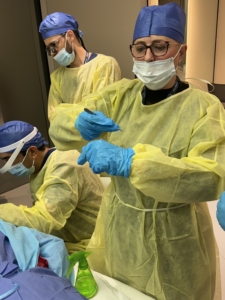
Dr Kelemen showing the staff how a long hair graft is prepared/trimmed.
Long Hair Follicular Unit Extraction (FUE) is revolutionizing the hair transplant field by addressing common challenges faced by traditional methods and offering a modern solution for those seeking immediate, natural-looking results. Here’s why Long Hair FUE is quickly becoming the future of hair restoration:
1. Immediate Visual Results Without Shaving
One of the most significant benefits of Long Hair FUE is that it allows patients to skip the head shaving typically required in traditional FUE procedures. In Long Hair FUE, full-length hair follicles are extracted and transplanted without cutting them short. This means patients can walk out of their appointment with their natural hair length intact, allowing them to see the potential outcome immediately. For many, this provides an instant confidence boost and avoids the often uncomfortable “growing in” phase.
2. Discreet and Natural Appearance
Long Hair FUE achieves a seamless, natural-looking outcome by blending the new grafts with the patient’s existing hair. Because the donor area remains unshaved, there is minimal evidence of the procedure, making it nearly undetectable. This is ideal for individuals in professional settings or those who want to avoid the visibility of having undergone a procedure.
3. Minimal Downtime and Faster Recovery
The process of Long Hair FUE is precise and involves smaller incisions, leading to less trauma to the scalp and quicker healing times. Patients often experience minimal discomfort and are able to resume regular activities faster than with traditional methods, a significant advantage for those with busy lifestyles. Dr. Ramona Kelemen, a proponent of Long Hair FUE, notes that recovery time can be reduced by up to one-third compared to shaved procedures.
4. Ideal for Busy Professionals
Long Hair FUE is particularly suited for those who are in the public eye or have demanding professional lives. Since it eliminates the need for a temporary “buzzed” look, patients can maintain their regular appearances without interruption. This has made Long Hair FUE an appealing option for celebrities, executives, and anyone concerned with privacy.
5. Customization and Advanced Techniques
Long Hair FUE requires advanced skill and precision, as surgeons must carefully extract and implant long hair follicles to create a natural growth pattern. This requires specialized training and meticulous technique, making it a highly individualized treatment. Experienced hair restoration specialists like Dr. Kelemen are skilled in ensuring that each graft is placed to match the existing hair’s density and angle, resulting in a seamless integration with natural hair.
– Technique Precision: Requires careful handling to ensure the thin hair follicles are not damaged during extraction. Dr Kelemen has developed her own techniques and proprietary punches that allow her to extract with minimal scaring.
– Aesthetic Planning: Special planning to ensure optimal density and natural appearance.
– Donor Area: Often provides ample donor hair for extraction. Dr Kelemen has developed process to remove beard and body hair that can be transplanted to the scalp.
– Transplantation Ease: Easier to achieve desired density and volume. Dr Kelemen designed and developed her unique site making tools that allow her to mimic the patient’s unique hair pattern thus achieving a natural hair transplant.
Ethnic Hair
– Curvature: Some ethnic hair types, such as African hair, have follicles with a tighter curl, requiring specialized expertise.
– Special Techniques: Dr Kelemen has developed her own specific techniques tailored for the unique curl patterns to ensure success.
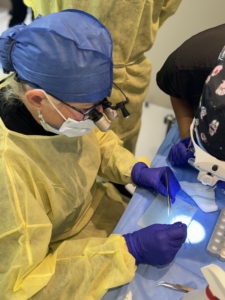
Dr Kelemen showcasing her technical skills during long hair Fue
General Suitability Factors
– Scalp Health: A healthy scalp is crucial for optimal outcomes, regardless of hair type.
– Hair Loss Pattern: Suitable for various hair loss patterns, but personalized assessment is necessary.
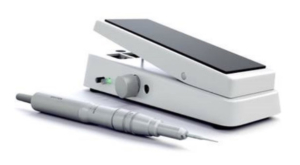
WAW FUE is handheld device that provide the doctor the option to tailor the device movements based on the grafts of the patient. The latest iteration of the device provides a lightweight wireless hand-held device that alleviates any possible doctor fatigue. Combine the lightweight with the revolutionary Hybrid Tornado punch it allows the doctor to penetrate the skin deeper with minimal trauma to grafts. (Punches 0.85mm – 1.05mm)
WAW system FUE handheld device
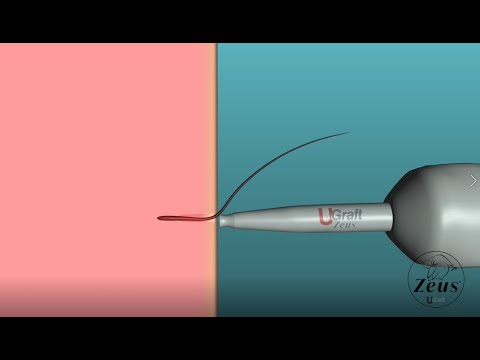
Zeus Ugraft – FUE handheld device wired and wireless
The system features a set of uniquely designed devices that have completely changed the game when it comes to FUE hair transplant procedures. it provides patients with higher quality grafts with greater survival rates. Innovative features work together to make this possible in a way that’s never been done before.
These features include a flared punch tip, an expanded inner volume, an upward pulling action, a unique graft control mechanism, and fluid irrigation with hands-free ejection provided by the Dr.UGraft™ Zues System. (Punches are 18,19,20 gauge)
Zeus Ugraft FUE handheld device
Conclusion
Long Hair FUE offers a future-forward approach to hair transplantation that prioritizes discretion, immediate aesthetic satisfaction, and minimal disruption to patients’ lives. By reducing recovery time and maintaining a natural look, it has set a new standard in hair restoration, appealing to individuals seeking a high-quality, innovative solution to hair loss.
For more details on Long Hair FUE and the latest hair transplant techniques, you can explore Dr. Kelemen’s blog and other resources on her clinic’s website.
Long Hair FUE can be performed on many hair types, including straight, wavy, and curly, as well as thin and thick hair. However, the suitability and success of the procedure heavily depend on personalized planning and the expertise of the surgeon handling different hair characteristics.
https://hairforlifeaz.com/wp-content/uploads/2024/09/IMG_2597-scaled.jpg20501538Ioan A Kelemenhttps://hairforlifeaz.com/wp-content/uploads/2024/02/Hair-for-Life-Medical-Logo-web.pngIoan A Kelemen2024-11-19 10:59:292026-02-21 13:36:43Long Hair FUE the future of hair transplant
The Ultimate Guide to Long Hair Follicular Unit Excision (FUE) with Dr. Kelemen
Hair transplantation has evolved significantly over the years, with new techniques and technologies enhancing the outcomes for those seeking to restore their hair. One such innovative method is Long Hair Follicular Unit Excision (FUE), a technique that stands out for its minimally invasive approach and natural-looking results. We will delve into the intricacies of Long Hair FUE and explore why Dr. Kelemen is among a handful of elite hair transplant physicians who leave no stone unturned in their quest to find the best approach to the most natural and virtually undetectable hair transplant.
Long Hair FUE is a specialized method of hair transplantation where hair grafts are extracted and implanted without the need for shaving the recipient area or donor area. This technique allows for immediate previewing of results, as the transplanted hair remains long. Patients can return to their daily routines without the noticeable signs of surgery, making it an ideal choice for those who value discretion.
Dr Kelemen showing the staff how a long hair graft is prepared/trimmed.
Challenge? Find another hair transplant physician, in the Unites States, that does SOLO eyebrow, beard or hairline corrective surgeries on a regular basis. This is a testament to her unmatched skills in this unique field.
Dr Kelemen is among a select few that can perform a hair transplant SOLO.
Innovative Techniques: Dr. Kelemen remains at the forefront of hair restoration technologies and techniques. Her continuous pursuit of excellence ensures that patients receive the most advanced and effective treatments available.
Personalized Patient Care: Beyond her technical skill, Dr. Kelemen is renowned for her compassionate approach. She takes the time to understand each patient’s goals, ensuring that they feel comfortable and informed throughout the process.
The Procedure
During a Long Hair FUE procedure with Dr. Kelemen, hair follicles are gently extracted from the donor area using specialized tools. The extracted follicles are then strategically implanted into the thinning or balding areas, matching the natural hair growth pattern. This ensures a seamless blend with existing hair, resulting in a natural and aesthetically pleasing outcome. Dr Kelemen performs every step with the aid of her trusted technician, Jessica. They have been together for 20 years and they ying and yang. She does not delegate anything and steps in, to trim grafts. Why? Because it gives her a more in-depth look at the grafts. (Her loops are 3.5x while the microscope is 10x)
Recovery and Results
One of the most significant advantages of Long Hair FUE is the reduced downtime. Most patients experience minimal discomfort and can resume normal activities within a few days. The transplanted hair initially sheds but begins to regrow within a few months, unveiling fuller, natural hair that enhances the patient’s appearance and confidence. Her post op includes hyperbaric chamber sessions that help reduce the recovery time drastically.
Is Long Hair FUE Right for You?
If you’re considering hair restoration, especially Long Hair FUE, Dr. Kelemen is the only one offering this procedure in Arizona. You may see others advertise them to be seen, but none perform this procedure. Ideal candidates are those who desire immediate aesthetic results and are keen to avoid the shaved look typically associated with traditional FUE procedures.
Cost for Long Hair FUE
Long Hair FUE procedures typically cost more than traditional FUE due to the complexity and time involved. Generally, the price might range from $9,000 to $15,000 or more. However, costs can vary based on factors like the number of grafts needed, the clinic’s location, and the surgeon’s expertise. Dr Kelemen’s consultation concludes with the patient getting a folder and an estimate for the procedure, various financing options available and no pressure. Dr Kelemen believes that important decisions like this need to be thought out. This is an aesthetic procedure after all and the patient should be allowed ample time to think about it, to shop around, to research before making such an important decision.
Conclusion
Long Hair FUE is a groundbreaking advancement in the world of hair transplantation and the GOLD standard in hair transplantation, offering patients a discreet and effective solution to hair loss. With Dr. Kelemen’s expertise, patients can expect top-notch care and impressive results that restore not just hair but self-confidence. If you’re interested in exploring this option, consulting with Dr. Kelemen could be the first step towards achieving the hair of your dreams.
.
Dr Kelemen showcasing her technical skills during long hair Fue
https://hairforlifeaz.com/wp-content/uploads/2024/09/IMG_2597-scaled.jpg20501538Ioan A Kelemenhttps://hairforlifeaz.com/wp-content/uploads/2024/02/Hair-for-Life-Medical-Logo-web.pngIoan A Kelemen2024-10-12 11:08:092026-01-21 19:09:58The Ultimate Guide to Long Hair Follicular Unit Excision
ID used to identify users for 24 hours after last activity
24 hours
_gat
Used to monitor number of Google Analytics server requests when using Google Tag Manager
1 minute
_gac_
Contains information related to marketing campaigns of the user. These are shared with Google AdWords / Google Ads when the Google Ads and Google Analytics accounts are linked together.
90 days
__utma
ID used to identify users and sessions
2 years after last activity
__utmt
Used to monitor number of Google Analytics server requests
10 minutes
__utmb
Used to distinguish new sessions and visits. This cookie is set when the GA.js javascript library is loaded and there is no existing __utmb cookie. The cookie is updated every time data is sent to the Google Analytics server.
30 minutes after last activity
__utmc
Used only with old Urchin versions of Google Analytics and not with GA.js. Was used to distinguish between new sessions and visits at the end of a session.
End of session (browser)
__utmz
Contains information about the traffic source or campaign that directed user to the website. The cookie is set when the GA.js javascript is loaded and updated when data is sent to the Google Anaytics server
6 months after last activity
__utmv
Contains custom information set by the web developer via the _setCustomVar method in Google Analytics. This cookie is updated every time new data is sent to the Google Analytics server.
2 years after last activity
__utmx
Used to determine whether a user is included in an A / B or Multivariate test.
18 months
_ga
ID used to identify users
2 years
_gali
Used by Google Analytics to determine which links on a page are being clicked
30 seconds
_ga_
ID used to identify users
2 years
Clarity is a web analytics service that tracks and reports website traffic.
Registers a unique ID on mobile devices to enable tracking based on geographical GPS location.
1 day
VISITOR_INFO1_LIVE
Tries to estimate the users' bandwidth on pages with integrated YouTube videos. Also used for marketing
179 days
PREF
This cookie stores your preferences and other information, in particular preferred language, how many search results you wish to be shown on your page, and whether or not you wish to have Google’s SafeSearch filter turned on.
10 years from set/ update
YSC
Registers a unique ID to keep statistics of what videos from YouTube the user has seen.
Session
DEVICE_INFO
Used to detect if the visitor has accepted the marketing category in the cookie banner. This cookie is necessary for GDPR-compliance of the website.
179 days
LOGIN_INFO
This cookie is used to play YouTube videos embedded on the website.