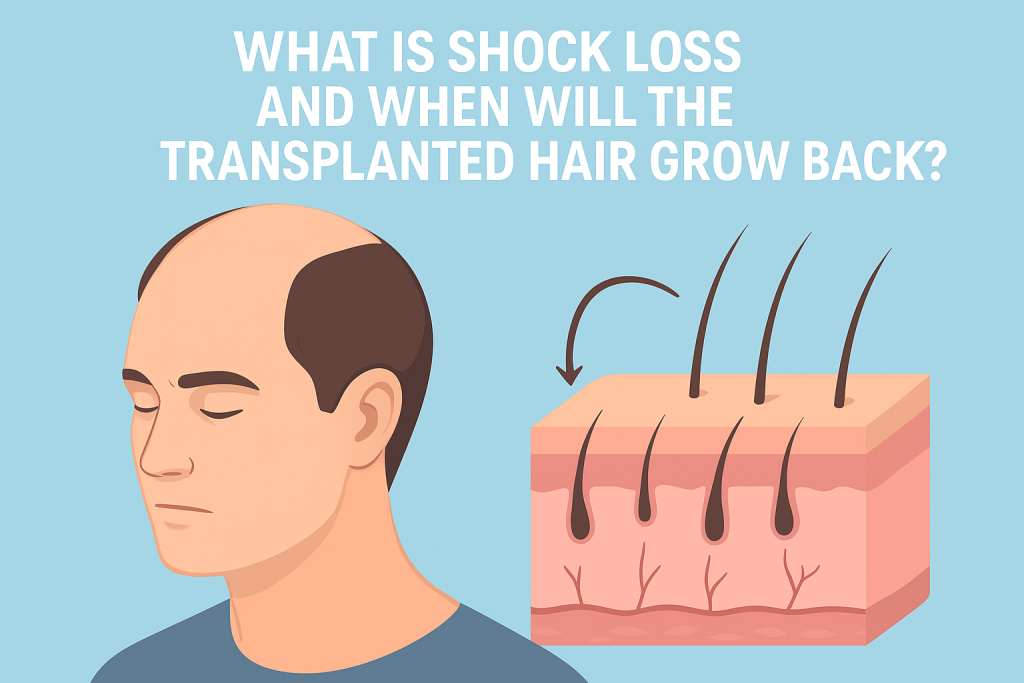
What Is Shock Loss and When Will the Transplanted Hair Grow Back?

Shock loss is one of those terms that makes patients nervous—mostly because it’s misunderstood. In reality, shock loss is a temporary response that can happen after a hair transplant, and when you understand why it happens, it becomes a lot less intimidating. If you’ve had a transplant or you’re planning one, this guide lays out exactly what shock loss is, why it occurs, who is most likely to experience it, and—most importantly—when your hair will grow back.
Shock loss isn’t a sign of poor surgical technique when the procedure is done correctly. It’s simply your scalp reacting to work being done. Think of it like pruning a tree: it may look sparse for a moment, but the regrowth is far stronger in the months that follow.
This article breaks down the facts so you know what to expect, why it happens, and how to set yourself up for a smooth recovery and a strong final result.
1. What Exactly Is Shock Loss?
Shock loss is a temporary shedding of hair that occurs after a hair transplant. It can affect:
-
Existing native hairs in the recipient area
-
Donor-area hairs (less common)
Despite how dramatic it can look, shock loss is not permanent in the vast majority of cases. The follicles enter a resting phase as part of the hair-growth cycle, then come back stronger once the body recovers from the trauma and inflammation caused by surgery.
Shock loss is not the same as:
-
Graft failure
-
Overharvesting
-
Poor surgical technique
Those issues create permanent loss. Shock loss does not.
When performed by an experienced physician using precise tools and methods, shock loss is kept to a minimum—although some degree of it remains completely normal and expected.
2. Why Shock Loss Happens
Shock loss is your body’s natural reaction to surgical activity. Even the gentlest, most meticulous surgeon cannot fully eliminate the temporary stress your scalp goes through. The main causes include:
A. Surgical Trauma (Even Microscopic)
FUE and DHI are minimally invasive, but they are still surgical procedures. The scalp experiences micro-trauma that can push nearby hairs into the telogen (resting) phase. These hairs then shed 2–8 weeks after the procedure.
B. Reduced Blood Flow (Temporarily)
A transplanted area needs time to establish new microcirculation. Native hairs around the surgical zone can temporarily lose blood flow and shed as a result.
C. Inflammation
Early healing includes swelling, redness, and inflammation. Inflammation disrupts the normal growth cycle of native hairs, triggering shedding.
D. Anesthesia Effects
Local anesthesia used during the procedure can affect blood vessels and temporarily impact hair follicles.
E. Pre-Existing Weak Hairs
Hairs already miniaturized by androgenic alopecia are extremely vulnerable. These are often the hairs that shed first—because they were on their way out anyway.
Shock loss tends to hit the weakest hairs, not the strongest ones.
3. When Shock Loss Usually Happens
Timing varies, but most patients experience one of these windows:
-
2–4 weeks after the transplant
-
6–8 weeks for more sensitive or miniaturized areas
It rarely starts earlier than two weeks because hairs need time to detach from the follicle and shed.
The shedding can feel discouraging—but it’s temporary. What’s actually happening under the skin is more important: the follicles are in recovery mode and getting ready to regrow.
4. Types of Shock Loss (Know the Difference)
There isn’t just one type of shock loss. Understanding each helps you set realistic expectations.
A. Shock Loss of Transplanted Hair (Normal, Expected)
This is the standard. Newly transplanted hairs fall out around weeks 2–6.
This does not mean the graft is gone.
The root remains safely under the skin and will regrow.
B. Shock Loss of Existing Native Hair (Temporary)
This is the one that catches people off guard.
Native hairs in the recipient area—especially weak, miniaturized ones—shed after surgery.
This can temporarily make the area look thinner than before the procedure.
The upside?
Those weak hairs weren’t reliable long-term, and replacing them with permanent grafts gives a stronger final result.
C. Shock Loss in the Donor Area (Less Common)
A donor area that has been overharvested or handled poorly can show some thinning. When performed using gentle extraction methods, this type of shock loss grows back as well.
5. Who Is More Likely to Experience Shock Loss?
Shock loss isn’t equal across all patient types. Certain factors raise the likelihood:
You are more prone if:
-
You have active miniaturization in the recipient area
-
You are in your 20s or early 30s with unstable pattern hair loss
-
You have aggressive androgenic alopecia
-
You underwent a large-session transplant
-
You had a dense packing procedure
-
You had surgery performed with aggressive or outdated tools
-
You are not taking medical therapy to stabilize hair loss
A skilled physician can evaluate your risk during consultation and design a strategy to minimize shock loss while protecting the native hair that can still be saved.
6. When Will the Hair Grow Back? A Month-by-Month Timeline
This is the answer every patient wants—and it’s very straightforward.
Below is the typical timeline for shock loss regrowth:
0–2 Weeks: Early Healing
Scalp is healing. Transplanted hairs may begin shedding at the end of this phase.
2–8 Weeks: Shock Loss Happens
Transplanted and some native hairs shed.
This is the ugly duckling phase—normal but temporary.
2–3 Months: “Dormant Phase”
Follicles rest before entering regrowth mode.
Most patients see no visible change yet.
3–4 Months: Early Regrowth Begins
Fine, thin hairs start popping through the skin.
6 Months: Noticeable Improvement
Hair has bulked up, density starts to show, and the outline of your final result becomes visible.
9–12 Months: Major Results
Most patients reach 70–90% of their final density.
12–18 Months: Final Thickness
Hair continues to thicken, strengthen, and mature.
Shock loss hair ALWAYS grows back along this schedule—unless the hair was already destined to miniaturize and disappear long-term anyway.
7. How to Reduce Shock Loss Before Your Procedure
There’s no magic pill to stop shock loss entirely, but you can significantly reduce its severity by preparing correctly.
A. Optimize Scalp Health Before Surgery
Well-hydrated, nourished skin heals faster.
Patients with dandruff, psoriasis, or dermatitis should treat these conditions ahead of time.
B. Strengthen Native Hair
Medications like finasteride or minoxidil stabilize native hair, making it more resilient to shock.
C. Avoid Tight Hairstyles or Excessive Heat
Protect the follicles in the weeks leading up to surgery.
D. Choose a Skilled Solo Physician
A physician performing 100% of the procedure—not techs—means gentler handling, less trauma, and lower shock loss risk.
Heavy-handed technique is one of the biggest culprits behind unnecessary shock loss.
8. How to Minimize Shock Loss After Your Procedure
You can’t eliminate the natural growth cycle, but you can support healthy regrowth.
Follow post-op care exactly
This includes washing guidelines, sleeping position, and avoiding activities that increase swelling.
Don’t pick, scratch, or rub the scalp
Trauma to grafts or native hairs increases shedding.
Avoid intense exercise for the first two weeks
Sweating, heat, and blood pressure spikes can aggravate inflammation.
Use medications recommended by your physician
These include finasteride, minoxidil, and growth-support treatments.
Maintain patience
Shock loss is temporary and does not affect the final result.
9. When Shock Loss May Be Permanent
Permanent shock loss is rare—but it can happen under specific circumstances:
A. The native hair was already miniaturizing heavily
Meaning it was on its way out soon regardless of the transplant.
B. Poor technique by clinics that use unqualified technicians
Rough handling, excessive trauma, and poor planning can permanently damage follicles.
C. Overharvesting in the donor area
When too many grafts are removed or extraction is sloppy.
When a highly trained physician performs the procedure, permanent shock loss becomes extremely unlikely.
10. The Good News: Shock Loss Has Zero Impact on Final Results
Most patients forget about shock loss by month six because the new hair grows in stronger, healthier, and more uniform than what was there before.
Shock loss is simply a phase. It doesn’t take away grafts. It doesn’t ruin results.
It’s a temporary dip before the rise.
Patients who stay the course and follow their post-op plan always come out ahead—with thicker, healthier, permanent hair.
11. When to Contact Your Doctor
Reach out to your surgeon if:
-
You see redness, heat, or swelling that worsens
-
You experience significant pain (beyond mild post-op soreness)
-
Shock loss happens in areas the surgeon hasn’t discussed with you
-
You want reassurance on your timeline
A real physician welcomes follow-up conversations—because that’s how hair restoration should be done.
12. Final Thoughts: Shock Loss Is Normal—And Your Hair Will Come Back
Shock loss can test your patience, but it’s part of the natural process.
When you understand it, it stops being something to fear.
Within months, the shed hairs return thicker, stronger, and more permanent. The key is choosing the right practitioner, following the right post-op plan, and giving your body the time it needs to heal and regrow.
Done right, shock loss becomes nothing more than a short chapter in the story of a strong, natural hair restoration.
Reference
News: How To Deal with Donor Shock Loss After a Hair Transplant
Complications of Hair Transplant Procedures—Causes and Management – PMC
Shock Loss After Hair Transplant – Post-op Hair Shedding Timeline
How do you avoid shock loss in the recipient area? | Hair Transplant Forum International