How to Choose Between DHI and Regular FUE: What Every Patient Needs to Know
I. Introduction
Hair loss is deeply personal—and choosing the right way to restore your hair should be just as individualized. For those considering a permanent solution, hair transplantation has become the gold standard. But once you’ve decided to go that route, you’re faced with a critical choice: DHI or regular FUE?
The truth is, the method matters. The technique you choose affects everything from your recovery time to your final results. But here’s what most clinics won’t tell you: there’s no one-size-fits-all answer. Despite the marketing hype, DHI is not automatically “better,” and FUE is not “old-fashioned.” Each has strengths and weaknesses—and the right choice depends on your scalp, your goals, and most importantly, your surgeon’s expertise.
This comprehensive guide cuts through the noise. Whether you’re just beginning your research or comparing last-minute options before surgery, you’ll learn:
-
The technical differences between DHI and FUE
-
The pros, cons, and costs of each method
-
Who is best suited for each technique
-
Why who performs your transplant matters more than how
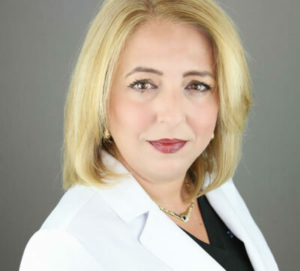
At Hair 4 Life Medical in Arizona, Dr. Ramona Kelemen has mastered both techniques—not just in theory, but in practice. She’s among the rare physicians who personally performs procedures using multiple advanced FUE systems and Choi pens when DHI is indicated. Patients choose her because she offers what few do: true personalization and unmatched technical range.
Let’s take a closer look at these two transplant methods, so you can make an informed, confident decision.
II. What is FUE (Follicular Unit Excision)?
FUE is the most widely performed method of hair transplantation today. It evolved from the older strip method (FUT) and revolutionized hair restoration by eliminating the need for a linear scar.
How it Works:
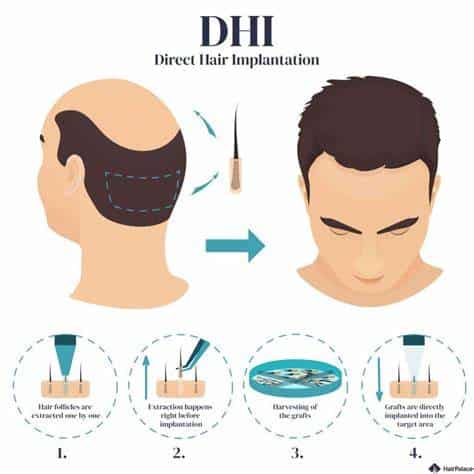
FUE involves extracting individual follicular units—tiny natural groupings of 1–4 hairs—from the donor area (usually the back or sides of the scalp). These units are then stored in a hydration solution before being implanted into balding or thinning areas.
There are different ways to perform FUE:
-
Manual FUE: The most delicate technique, performed using handheld punches
-
Motorized FUE: Uses small, powered devices to assist with excision
-
Robotic FUE (e.g., ARTAS): A robot maps the donor area and extracts follicles under physician oversight
Dr. Kelemen is the only physician in Arizona who utilizes all major FUE systems: WAW DUO, UGraft, Cole System, ARTAS Robot, and Manual FUE, which allows her to customize the procedure to the patient’s hair type, scalp condition, and donor limitations.
FUE is trusted for everything from subtle density boosts to full megasessions (3000+ grafts), and is particularly effective when beard or chest hair is being used for scalp restoration.
III. What is DHI (Direct Hair Implantation)?
Direct Hair Implantation (DHI) is not a completely separate procedure, but rather a modification of FUE, focused specifically on how the grafts are implanted.
The Key Distinction:
With traditional FUE, the steps are performed in two stages:
-
Follicles are extracted
-
Small incisions or slits are made in the recipient area
-
Grafts are placed into those incisions with forceps
In DHI, a special tool called a Choi implanter pen is used to combine steps 2 and 3. The follicle is loaded into the pen, and the doctor or technician uses the pen to implant the graft directly into the scalp at a precise depth, angle, and direction—in a single motion.
This technique was originally popularized in Korea and is now performed worldwide. DHI clinics often advertise:
-
No pre-made incisions
-
Less bleeding
-
Shorter time out of the body for follicles
-
“More natural” results
But these benefits only hold true when DHI is performed correctly. Unfortunately, many clinics delegate the implantation to unlicensed technicians, increasing the risk of poor angling and damage to grafts.
At Hair 4 Life Medical, Dr. Kelemen personally performs both FUE and DHI techniques, using Choi pens only when appropriate, and only under sterile, physician-controlled conditions.
IV. Comparing FUE and DHI: Step-by-Step Differences
To make a meaningful decision between DHI and regular FUE, you must understand how they differ in technique—not just marketing. Let’s break it down step-by-step:
1. Extraction (Identical in Most Cases)
Both FUE and DHI rely on the same extraction method: individual follicular units are removed from the donor area using a circular punch. Whether manual, motorized, or robotic, the extraction technique does not change between the two.
Bottom line: DHI is not a separate extraction method—it simply adds a different implantation step.
2. Graft Preparation
In both procedures, once the grafts are extracted, they are carefully trimmed and sorted under magnification. They are stored in a holding solution like HypoThermosol to maintain graft vitality. However, in DHI, the grafts must be carefully loaded into Choi implanter pens, which adds an additional layer of handling and time.
3. Implantation Tools
-
FUE: A blade or needle is used to create recipient sites, then grafts are inserted manually using forceps.
-
DHI: Choi pens allow simultaneous site creation and graft insertion, reducing handling and potential graft trauma—if performed correctly.
4. Angle, Direction & Density Control
-
FUE (with forceps): Depends entirely on the surgeon’s skill in planning and placing each graft manually.
-
DHI (with Choi pen): The angle and depth are pre-set on the pen. This allows for high-precision placement, especially useful in delicate areas like the frontal hairline or crown swirl.
5. Bleeding and Trauma
DHI is generally associated with less bleeding, as the incisions are smaller and made at the time of insertion. Traditional FUE may result in slightly more visible trauma in the early days, due to the two-step process of incision and implantation.
6. Speed and Graft Survival
Here’s where things get counterintuitive:
-
FUE is usually faster overall, especially in larger cases (3000+ grafts), because the team can prepare the entire field and implant in bulk.
-
DHI takes longer due to the meticulous loading and pen insertion—but graft survival may be improved due to less time out of the body.
7. Shaving Requirements
-
FUE: Almost always requires shaving the donor and recipient zones unless performing long-hair or no-shave FUE (which is rare and requires expertise).
-
DHI: Often marketed as “no-shave” or “long hair” friendly, especially for small touch-up zones or frontal restoration.
At Hair 4 Life Medical, Dr. Kelemen offers both long-hair FUE and long-hair DHI options—rare among clinics. Most physicians avoid long-hair DHI due to its complexity, but it is ideal for patients who wish to avoid an obvious post-op look.
V. Pros and Cons of FUE
Let’s start with the more established technique: traditional FUE.
Advantages:
✅ Versatility – Can be adapted for megasessions, beard-to-scalp, body hair transplants
✅ Faster for High Graft Counts – Ideal for cases needing 3000–4000+ grafts
✅ Tool Flexibility – Surgeons can select punch size, angle, and depth more freely
✅ Cost-Effective – Typically less expensive than DHI due to lower equipment and labor intensity
✅ Good for Dense Packing – With a skilled team, forceps implantation can match or exceed DHI results
Disadvantages:
❌ Greater Bleeding and Trauma – More tissue disruption during recipient site creation
❌ Graft Handling Risk – More time out of body and more steps increases the risk of desiccation
❌ Less Control in Unskilled Hands – Implantation quality depends on the skill of the person placing each graft
FUE is like a versatile workhorse: it’s been proven in thousands of cases, adaptable to nearly every type of patient, and especially powerful when combined with beard or chest grafts. But it does require careful hydration, gentle handling, and meticulous planning.
VI. Pros and Cons of DHI
DHI is often marketed as the “premium” option, but that doesn’t mean it’s better in every case. Here’s what patients need to know:
Advantages:
✅ Precise Placement – Grafts are inserted at a consistent angle, depth, and direction
✅ Minimal Bleeding – Micro-incisions are created as the graft is placed, reducing trauma
✅ Less Graft Dehydration – Grafts go from pen to scalp with minimal time out of the body
✅ Great for Small Zones – Ideal for detailed hairline work, eyebrows, and temple refinement
✅ No-Shave Possibility – Can be done without shaving the recipient area in small sessions
Disadvantages:
❌ High Cost – Due to time, labor, and the specialized equipment
❌ Longer Procedure Time – Implanting with pens is slower and requires more team coordination
❌ Not Ideal for Large Sessions – Not efficient for megasessions or body hair transplants
❌ Technician Dependence – In many clinics, unlicensed staff perform the implantation
❌ Limited Donor Access – If the surgeon is not experienced, donor overharvesting can occur without noticing
It’s important to note: DHI is not ideal for everyone, despite what commercial clinics suggest. It requires a skilled surgeon, experienced pen handlers, and a tightly coordinated team. Dr. Kelemen uses DHI selectively—for cases where precision and artistry outweigh volume and speed.
VII. What Type of Patient is Ideal for Each?
Hair transplant techniques are not “better or worse”—they’re simply better suited for certain patients and goals. Let’s break down who should consider DHI versus who may benefit more from FUE.
✅ DHI is Best Suited For:
-
Hairline and Temple Refinement
DHI offers superior control over direction and angulation—perfect for natural-looking temples and frontal hairlines. -
Eyebrow and Beard Transplants
The Choi pen’s precision makes DHI ideal for delicate areas like eyebrows or facial hair, where density and exact placement are critical. -
Touch-Ups or Small Sessions
If you’re restoring a small area (under 1500 grafts), DHI’s efficiency and aesthetic precision shine. -
Patients Who Want a No-Shave Option
DHI allows implantation into long hair, which is ideal for public figures, professionals, or anyone unwilling to shave the recipient zone. -
High-Density Aesthetic Goals
Because it allows for close packing without excessive trauma, DHI can create fuller looks in limited spaces.
✅ FUE is Best Suited For:
-
Large-Scale Hair Restoration
When addressing Norwood 5–7 hair loss patterns or diffuse thinning, FUE is the workhorse that can deliver high-volume results in one or two sessions. -
Beard or Chest Hair to Scalp Grafting
DHI struggles with coarse grafts and limited donor zones. FUE (especially with UGraft or Cole Systems) is better suited for multi-body donor transplants. -
Cost-Conscious Patients
FUE tends to be more affordable, especially for large graft counts. Patients on a budget will often achieve excellent results with properly executed FUE. -
Shorter Procedure Time
For busy professionals or those coming in from out of town, FUE’s efficiency can make a difference. -
Complex Cases Requiring Tool Variety
FUE allows the use of different punch sizes, depth controls, and tools like WAW DUO or ARTAS robotic assistance—all tailored to the unique structure of each patient’s hair.
VIII. Doctor’s Experience Matters More Than Method
This cannot be stressed enough: the surgeon’s experience and involvement far outweigh the technique itself. A poorly executed DHI transplant will look worse than a skillfully done FUE—and vice versa.
❗ Too many clinics let techs run the show.
In most high-volume, franchise-style clinics, the “doctor” is only present for the consultation and may never touch your scalp. Technicians, often unlicensed, extract and implant grafts. This puts patients at risk for:
-
Overharvesting
-
Misangled implantation
-
Low graft survival
-
“Pluggy” or doll-like appearance
✅ Dr. Ramona Kelemen’s Philosophy: Hands-On Excellence
At Hair 4 Life Medical, Dr. Kelemen personally performs all major steps of the surgery—extraction, planning, and implantation. She has trained in all major FUE and DHI systems and uses her own clinical judgment to determine the best tool and method for each case.
She is one of the very few doctors in Arizona who performs:
-
Solo long-hair DHI procedures
-
Incognito FUE and No-Shave options
-
Beard-to-scalp and body hair megasessions
-
Combination transplants (DHI + FUE)
That level of flexibility simply cannot be found in clinics that only offer one method.
IX. Common Myths and Marketing Gimmicks
Many patients walk into consultations already misled by YouTube ads and social media posts. Let’s debunk a few persistent myths:
🚫 MYTH #1: DHI is a revolutionary new method
Truth: DHI is a variation of FUE, not a different procedure. The only difference is in how the graft is implanted—via Choi pen rather than forceps. The extraction step is identical.
🚫 MYTH #2: Choi pens give better results automatically
Truth: A Choi pen is a tool—not magic. The results depend entirely on who is using the pen. Poorly loaded pens or rushed implantation leads to trauma, misdirection, and lower graft survival.
🚫 MYTH #3: Robotic FUE is superior
Truth: Robots like ARTAS can assist with extraction, but they do not perform the procedure independently. In fact, robotic extractions require an experienced human surgeon to oversee depth, angle, and punch alignment. Over-reliance on robotic extraction can lead to transections and overharvesting if not monitored carefully.
🚫 MYTH #4: Only one method is needed
Truth: Many of Dr. Kelemen’s most natural results come from combining DHI and FUE techniques in the same session. For example: DHI for the frontal hairline and FUE for the crown and mid-scalp. Customization is key.
🚫 MYTH #5: Lower cost means better value
Truth: Low-ball pricing often means:
-
Non-physician operators
-
Hidden technician work
-
Reused tools or unsanitary conditions
-
Factory-style clinics doing 6–8 surgeries per day
A hair transplant is a medical procedure—not a commodity. Saving a few hundred dollars can cost you thousands later in revision surgery. You will see your HT every day and EVERYONE around you will see it. If you are going to save money save it on clothing, car NOT on your HT. There were way too many cases where patients chose poorly and needed corrective HT. Lastly, in the US you will be hard pressed to find a HT doctor to perform corrective surgery. Turkish HT’s have 3 things in common: straight hair line, large punch/scaring, and 90-degree implantation! (and lately 2 and 3 grafts in the hairline to give the illusion of thickness, a natural hairline is single grafts).
X. Cost Comparison: DHI vs FUE
Hair transplant pricing is one of the most misunderstood topics for patients. Unfortunately, many base their decisions on price alone—often to their regret. Here’s how DHI and FUE differ in cost and why.💰 Why DHI Is More Expensive:
- Specialized Equipment: Choi implanter pens are costly and require sterilization or replacement after each use.
- More Time-Intensive: DHI procedures take longer per graft to perform, especially with proper handling.
- Labor-Heavy: DHI requires multiple assistants to load grafts into pens and hand them off during implantation.
- Smaller Sessions: Most DHI clinics cap sessions at ~1500–2000 grafts. Larger cases must be split into multiple procedures, increasing cost over time.
💰 Why FUE Is More Cost-Efficient:
- Simpler Instrumentation: Blades and forceps are reusable under sterilization and are less complex.
- Faster Procedure: Efficient teams can perform 3000+ grafts in a single day.
- Easier Logistics: Less staff involvement reduces total labor costs.
⚠️ Red Flags in Pricing:
- Clinics offering “flat rate DHI” packages under $3000 often compromise on:
- Sterility
- Physician supervision
- Graft count accuracy
- Graft survival rates
XI. Recovery and Results: DHI vs FUE
Many patients ask: “Which one heals faster?” The answer isn’t straightforward—but here’s a breakdown of what to expect with each technique.🩹 Initial Recovery:
- DHI: Slightly less trauma to the scalp, resulting in less redness and less crusting. Healing is often quicker in the recipient area.
- FUE: More trauma due to pre-made incisions. Healing may involve slightly more scabbing and redness, especially in larger sessions.
🔄 Shock Loss:
- Can happen with both methods, though DHI may reduce shock loss due to less trauma at the implantation site.
- Still, shock loss is influenced more by:
- Pre-existing miniaturization
- Vascularity of the scalp
- Graft density
- Surgeon experience
🌱 Graft Survival and Growth Timeline:
- Both DHI and FUE produce excellent results when done properly.
- 2–3 Months: Shedding phase complete
- 4–6 Months: Noticeable regrowth begins
- 9–12 Months: Full cosmetic results evident
- In DHI, some clinics report earlier visible growth (by ~1 month), but that is not guaranteed.
🎯 Naturalness of Results:
- Both methods can yield undetectable results with proper angulation, density control, and artistic planning.
- The method alone does not determine aesthetics—the surgeon’s judgment and skill does.
XII. Questions to Ask Before You Decide
Before booking any hair transplant—DHI or FUE—ask these essential questions. Your surgeon’s answers will tell you more than any brochure:✅ Does the doctor perform both DHI and FUE?
A competent surgeon should have mastery of both methods and select the one that’s best suited to you—not just offer what they’re trained in.✅ Who will be performing the extractions and implantation?
Beware of clinics that say, “The doctor supervises.” The person holding the punch and Choi pen must be the licensed surgeon—or you’re risking the outcome.✅ How are the grafts stored during the procedure?
Proper hydration, chilling, and oxygenation of grafts during surgery dramatically impacts survival. Dr. Kelemen uses advanced protocols for minimizing ischemic time.✅ How is graft survival tracked and ensured?
Ask what tools the clinic uses to ensure consistent depth, angle, and growth direction.✅ What method is best for my hair type and pattern of loss?
A thorough consultation should include:- Scalp analysis
- Density mapping
- Long-term donor management planning
- Custom plan, not a sales script
XIII. Why Experience with Both Matters: Dr. Kelemen’s Approach
In the world of hair restoration, the future belongs to clinics that adapt—not just to trends, but to each individual patient. That’s why the most successful hair transplant outcomes don’t come from being loyal to one technique—they come from knowing when to use which technique, or even how to combine both.
At Hair 4 Life Medical, Dr. Ramona Kelemen stands apart because she does what few others can:
✅ Trains and Performs in All Major Methods
-
Regular FUE using ARTAS Robot, WAW DUO, UGraft, Cole System, and manual punches
-
DHI procedures using Choi implanter pens, personally performing the implantation herself
-
Hybrid sessions where DHI is used in the frontal zone, and FUE is used in the crown or mid-scalp
-
Long-hair and Incognito FUE/DHI—rare specialties requiring high-level skill
✅ Solo Surgeon Option
Unlike high-volume clinics that rely heavily on teams of assistants, Dr. Kelemen offers solo procedures (up to 1500 grafts) for patients who want the surgeon’s hand involved from start to finish—extraction to implantation.
✅ Custom Tool Matching for Each Scalp
Not all donor areas are created equal. Some scalps require the finesse of WAW’s trumpet punch. Others benefit from UGraft’s sharp curves to minimize transection in coarse beard grafts. DHI may suit dense packing in fine hair, while manual FUE may be necessary for hard-to-reach zones.
Only a physician with full-spectrum mastery can make that call, and execute it.
✅ Trichology Integration
As a trained trichologist, Dr. Kelemen goes beyond just transplantation—she evaluates hair cycle health, scalp condition, and underlying pathology before recommending surgery. If you’re not a candidate, she tells you the truth and explores non-surgical options like Regenera Activa or PRP.
XIV. Final Thoughts: Choosing Wisely, Not Just Trendily
The DHI vs. FUE debate shouldn’t be a battle—it should be a conversation. A well-informed patient, paired with an honest and skilled surgeon, will always make the right choice.
Here’s the unvarnished truth:
-
DHI is precise, but slower and more costly. It’s great for touch-ups, facial hair, and high-density zones.
-
FUE is powerful, adaptable, and scalable for large sessions, beard/chest-to-scalp, and diverse hair types.
-
Neither method is perfect for everyone—but in the hands of the right physician, both can deliver transformative results.
Don’t fall for “one-size-fits-all” solutions, flashy advertising, or price gimmicks. Trust experience, customization, and proven technique.
Your hair restoration should be tailored to you—not your surgeon’s marketing package.
XV. Why Patients chose H4L Medical
If you’re ready to stop guessing and start planning your hair restoration the right way, schedule a consultation with Dr. Ramona Kelemen at Hair 4 Life Medical.
✔ Full trichological scalp evaluation
✔ Side-by-side analysis of DHI vs FUE for your specific case
✔ Access to the most complete toolbox in Arizona
✔ No technicians performing critical steps—only physician care
✔ Transparent, honest, and medically grounded advice
Let your restoration reflect your story—accurately, naturally, and permanently.
🔗 Visit www.hairforlifeaz.com 📞 Call (480) 525-4547
👉 Ready to restore your hair? Schedule a consultation with Dr. Kelemen today!
Interested in learning more? Contact Us or call Hair 4 Life at (480) 525-4547 to schedule an appointment.