Demystifying Micro FUE and the Sapphire Blade Technique: Separating Fact from Marketing
Introduction: Why Patients Deserve Clarity
Hair transplant patients today face an overload of flashy marketing terms: Micro FUE, Sapphire blade technique, Dense Packing, Robotic precision. Each promises to be “the next big thing.” But in reality, many of these phrases are refinements of existing methods—not revolutionary breakthroughs.
Micro FUE and the Sapphire blade technique are two of the most talked-about terms in recent years. Both sound advanced, but what do they actually mean? And more importantly, should you care?
This guide will break down the truth, dispel myths, and explain why surgical skill—not buzzwords—ultimately defines your results.
A Brief History of FUE and Its Refinements
To understand Micro FUE and Sapphire blades, we need to look back.
-
1990s: FUT (strip method) dominated. Surgeons removed a strip of scalp, leaving a linear scar.
-
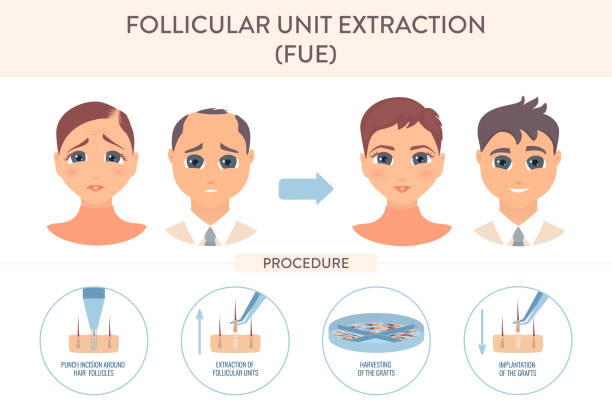
Early 2000s: FUE (Follicular Unit Extraction) emerged. Instead of removing strips, grafts were taken individually. This eliminated long scars, though it required more precision.
-
Mid-2000s: Punch sizes were reduced (1.0–1.2 mm → 0.8–0.9 mm), lowering scarring and speeding healing.
-
2010s: Surgeons refined techniques, introduced specialized punches, and tools like WAW, ARTAS robot, Cole, Ugraft.
-
Late 2010s–2020s: Buzzwords like Micro FUE and Sapphire blade technique became popular.
Key Point: Every decade has seen refinements, but the fundamentals of FUE remain the same: remove grafts one by one, then place them in tiny incisions. The difference lies in how precisely this is done.
What is Micro FUE?
Definition
Micro FUE is essentially FUE done with ultra-fine punches, typically between 0.7 mm and 0.9 mm. The “micro” label refers to the reduced punch size—not a new surgical technique.
Benefits of Micro FUE
-
Reduced scarring: Smaller punches leave smaller marks, often undetectable.
-
More natural hairlines: Tiny grafts allow precise placement at the hairline.
-
Higher density potential: Because the punches are smaller, more grafts can be safely extracted without thinning the donor area.
Limitations of Micro FUE
-
Hair type sensitivity: Coarse or curly grafts can be damaged with very small punches.
-
Surgeon dependent: A skilled doctor can harvest efficiently; an inexperienced one may transect (destroy) grafts.
-
Time-intensive: Smaller punches take longer—meaning fewer grafts per day.
Patient Suitability
-
Best for: Patients with straight to slightly wavy hair, fine to medium thickness, seeking natural hairlines.
-
Caution: Patients with very curly or thick hair may benefit from slightly larger punches.
Bottom Line: Micro FUE is a refinement of FUE. It works best when tailored to the patient—not used as a blanket marketing promise.
The Devices Behind Micro FUE
When clinics advertise “Micro FUE,” what they often don’t explain is that this is the standard approach of today’s most advanced handheld devices. Systems like the WAW DUO, Ugraft, Cole System, and Trivellini are all designed to harvest using micro-sized punches.
These devices combine refined engineering with oscillation, vibration, or suction-assisted technology to minimize transection rates (graft damage) and maximize yield. What separates them isn’t the punch size—they’re all in the micro range—but rather how well the surgeon can control the device.
Limitations of Micro FUE
-
Hair type sensitivity: Coarse or curly grafts can be damaged with very small punches.
-
Surgeon dependent: A skilled doctor can harvest efficiently; an inexperienced one may transect (destroy) grafts.
-
Time-intensive: Smaller punches take longer—meaning fewer grafts per day.
Bottom Line: Micro FUE is not just about the punch size—it’s about using the right tool (WAW, Ugraft, Cole, Trivellini) in the right hands, tailored to the patient’s hair type and goals.
Comparing the Most Advanced Micro FUE Devices
While many clinics advertise “Micro FUE” as if it were a unique procedure, the truth is that today’s top handheld devices all use micro-sized punches. What matters most is how they are engineered and how well the surgeon controls them.
| Device | Key Feature(s) | Advantages | Considerations |
|---|---|---|---|
| WAW DUO (Belgium) | Oscillating punch system with controlled movement | Minimizes graft transection, excellent for consistent extractions, gentle on donor area | Requires advanced skill to handle; best in experienced hands |
| Ugraft (Dr. Umar, USA) | Specialized punches with suction-assisted extraction | Great for curly/afro-textured hair, reduces torsion damage, good graft survival | More time-intensive, requires careful surgeon control |
| Cole System (PCID) | Precision motorized punch device with customizable settings | Versatile, allows surgeon to adjust torque and speed for patient’s hair type | Demands surgeon expertise for best results |
| Trivellini (Argentina) | Multiphasic punch with vibration + oscillation | Flexible, can adapt to different hair types, minimizes tissue trauma | Newer system; learning curve for surgeons |
What Patients Should Know
-
All of these devices are Micro FUE tools. They are NOT separate “types” of transplants, just different instruments designed for refined harvesting.
-
No device is inherently superior. The surgeon’s ability to match the tool to the patient’s hair type is what makes the difference.
-
Marketing can mislead. Some clinics advertise a single device as though it’s the gold standard, but true mastery means having multiple options.
At Hair 4 Life Medical, Dr. Ramona Kelemen uses all of these systems (WAW DUO, Ugraft, Cole, Trivellini) in addition to robotic and manual options. This ensures each patient gets the best possible method for their unique hair type and goals—not a one-size-fits-all solution.
What is the Sapphire Blade Technique?
Definition
The Sapphire blade technique refers to using sapphire-tipped blades instead of steel to create incisions (recipient sites) where grafts are implanted.
Claimed Advantages
-
Sharper and smoother cuts for cleaner incisions.
-
Smaller channel creation allows potential for higher density.
-
Faster healing due to less tissue trauma.
-
Reduced risk of scarring and infection because sapphire is non-porous.
The Reality
-
Not revolutionary: It’s simply a tool upgrade. The procedure itself doesn’t change.
-
Skill trumps tool: A skilled surgeon with steel blades will outperform an unskilled surgeon with sapphire.
-
Minimal healing difference: Patients rarely notice a meaningful change in recovery time.
-
Marketing appeal: Sapphire sounds luxurious, making it attractive in ads.
Bottom Line: Sapphire blades are a refinement in instrumentation. They can help—but they don’t guarantee results.
Micro FUE vs. Traditional FUE
| Feature | Traditional FUE | Micro FUE |
|---|---|---|
| Punch Size | 0.9–1.2 mm | 0.7–0.9 mm |
| Scarring | Tiny, visible when shaved | Virtually undetectable |
| Recovery | 7–10 days | 5–7 days |
| Transection Risk | Lower with larger grafts | Higher if surgeon lacks precision |
| Best For | All hair types | Fine/medium hair, high density goals |
Sapphire Blade vs. Steel Blade
| Feature | Steel Blade | Sapphire Blade |
|---|---|---|
| Sharpness | Excellent | Sharper, smoother |
| Incision size | 1.0–1.2 mm | As low as 0.8 mm |
| Healing | Good | Slightly faster (theoretically) |
| Density Potential | Good | Potentially higher |
| Marketing Appeal | Moderate | Very high |
Common Myths About Micro FUE and Sapphire Blades
-
“Micro FUE is a different surgery.”
No—it’s still FUE, just with smaller punches. -
“Sapphire blades guarantee higher density.”
No—the surgeon’s technique determines density, not the blade. -
“Bigger buzzwords mean better results.”
No—results come from artistry, planning, and consistency. -
“Every patient should get Micro FUE with Sapphire.”
Wrong—patient suitability varies. Sometimes traditional tools are better.
Why Surgeon Skill Matters More than Tools
Tools matter, but they are secondary. What defines a great transplant?
-
Surgical planning: Designing a natural hairline that matches your age, face, and goals.
-
Precision harvesting: Extracting grafts without overharvesting or damaging donor areas.
-
Dense yet natural placement: Creating density without a “pluggy” look.
-
Consistency: Delivering reliable results over hundreds of patients.
At Hair 4 Life Medical, Dr. Ramona Kelemen performs 100% of the transplant herself for up to 1500 grafts. She doesn’t delegate critical steps to technicians—an increasingly rare standard in the U.S. This ensures Micro FUE and Sapphire blade techniques are used correctly, not as marketing gimmicks.
Beyond 1500 grafts Dr Kelemen is assisted by ONE technician, Jessica, who has been by her side for 20 years. Together they are known as the Magic DUO! Why? Because there is no other team anywhere that can accomplish the results in the time they can!
Recovery After Micro FUE with Sapphire Blades
What Patients Can Expect
-
Day 1–3: Redness, mild swelling, scabs forming.
-
Day 4–7: Scabs fall off, most discomfort subsides.
-
Week 2: Transplanted hairs shed (normal).
-
Months 3–4: New hairs start to grow.
-
Month 6: Noticeable density improvement.
-
Month 12–15: Full results visible.
Tips for Faster Healing
-
Follow shampoo instructions (Dr. Kelemen personally guides her patients).
-
Avoid smoking and alcohol during recovery.
-
Use hyperbaric oxygen therapy (offered at Hair 4 Life) to speed healing.
-
Sleep with head elevated for first few days.
FAQs
Q: Is Micro FUE better than standard FUE?
A: Not always. It’s best for certain patients, but larger punches may suit others better.
Q: Does Sapphire blade mean faster healing?
A: Slightly, but the difference is small. What matters most is surgical skill.
Q: Should I only look for clinics that advertise these techniques?
A: No. Focus on surgeon experience, reviews, and consistency. Tools are secondary.
Q: Can these techniques guarantee no scarring?
A: No. All surgery leaves marks, though Micro FUE makes them nearly invisible.
Q: Is it worth paying more for Sapphire blades?
A: Only if your surgeon has the skill to use them well. Don’t pay for tools—pay for expertise.
Final Takeaways
-
Micro FUE = smaller punches.
-
Sapphire blade = tool upgrade, not a new technique.
-
Marketing hype often overshadows surgical reality.
-
The surgeon—not the tool—makes or breaks the result.
At Hair 4 Life Medical, Dr. Ramona Kelemen combines every refinement in the field—Micro FUE, Sapphire blades, advanced devices like WAW DUO, ARTAS, Cole, Ugraft—with the rare standard of solo-performed surgery. That’s why patients consistently achieve natural, lasting, and transformative outcomes.
Conclusion: Beyond Buzzwords
If you’re considering a hair transplant, don’t be swayed by flashy names. Ask the right questions:
-
Who will perform my surgery?
-
How many procedures has the doctor personally completed?
-
Does the clinic rely on technicians, or is the surgeon hands-on?
-
Are they skilled with multiple tools, or only one method?
The truth is simple: Micro FUE and Sapphire blades are refinements, not revolutions. In the right surgeon’s hands, they’re powerful tools. In the wrong hands, they’re just marketing words.
Choose wisely—because your hair deserves more than buzzwords.
Ready to learn more?
Book a 45–60 minute consultation with Dr. Kelemen at Hair 4 Life Medical to get a customized, honest assessment of your hair restoration options.
🔹 Considering a hair transplant? Contact Hair 4 Life Medical for a personalized consultation!
👉 Ready to restore your hair? Schedule a consultation with Dr. Kelemen today!
Interested in learning more? Contact Us or call Hair 4 Life at (480) 525-4547 to schedule an appointment.
References
Large-Scale Beard Extraction Enhances the Cosmetic Results of Scalp Hair Restoration in Advanced Androgenetic Alopecia in East Asian Men: A Retrospective Study – PMC
https://www.venustreatments.com/en-us/artas.htm
https://www.trivellinitech.com/
https:/www.devroyeinstruments.com
https://www.coleinstruments.com/
Sapphire Hair Transplant | Advanced FUE with Sapphire Blades
Sapphire Blades: A New Paradigm in Hair Transplantation Techniques