
A beard to scalp hair transplant can be a valuable option when the traditional scalp donor area is limited, but it is not a simple substitute for scalp hair. Beard follicles often provide strong, durable growth, yet their texture, curl pattern, caliber, and growth characteristics can make them better suited to some areas of the scalp than others. The right plan starts with an honest assessment of your donor supply, hair-loss pattern, and expectations for density.
For patients with advanced thinning, previous transplant surgery, scarring, or naturally limited scalp donor reserves, beard grafts may expand what is surgically possible. At the same time, a physician should evaluate the underlying cause of hair loss and help protect the native hair that remains. A transplant can restore hair, but it should fit into a longer-term strategy.
What Is a Beard to Scalp Hair Transplant?
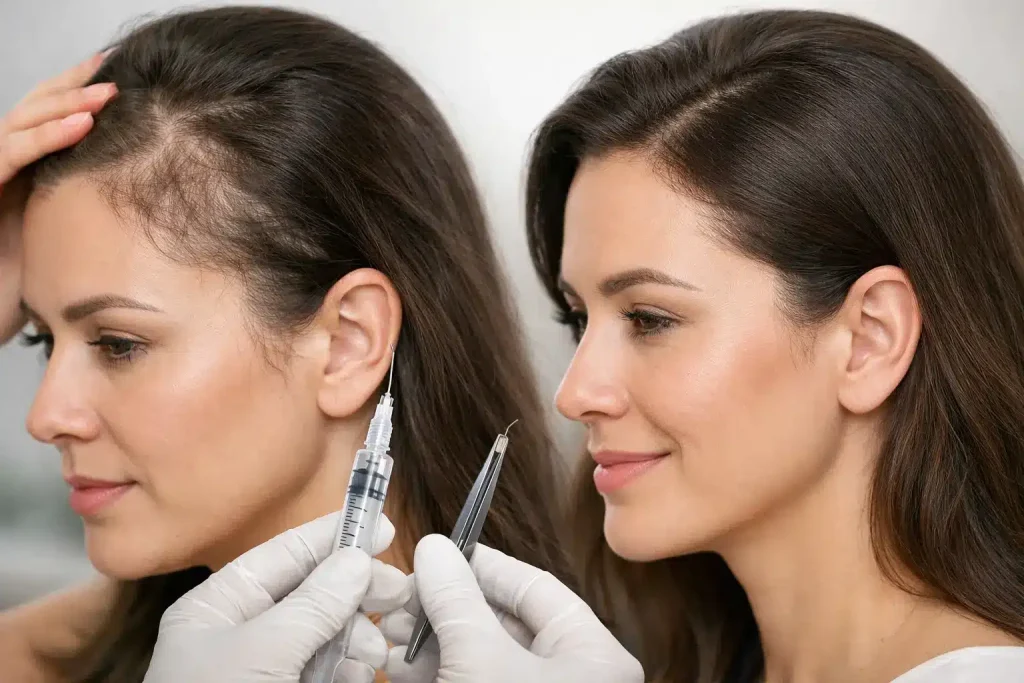
A beard to scalp hair transplant moves healthy follicular units from the beard area, most often beneath the jawline, to areas of scalp thinning or baldness. The procedure is generally performed with follicular unit excision, or FUE. Individual grafts are carefully extracted and then placed into recipient sites designed to match the existing direction, angle, and pattern of scalp hair.
Beard hair is classified as body hair, but it is usually the most predictable and useful body donor source. It tends to be thicker than scalp hair and can offer excellent coverage when placed thoughtfully. For many patients, it is used alongside scalp grafts rather than as the only donor source.
That distinction matters. A natural-looking restoration is not simply a matter of placing the highest possible number of grafts. It requires choosing the right hair type for the right area, preserving donor appearance, and planning for future hair loss.
When Beard Grafts May Be a Good Option
The strongest candidates usually have a healthy, dense beard donor area and limited but stable scalp donor availability. Men with more advanced pattern hair loss are often the most common candidates, especially when they need additional density in the midscalp, crown, or areas behind a previously restored hairline.
Beard grafts can also be useful in corrective work. A patient who has already had one or more hair transplants may have fewer available scalp grafts than expected. In those cases, beard hair may help improve coverage, soften the contrast around scars, or add density where it will have the most visual benefit.
Some patients with scalp scarring from injury, prior surgery, or inflammatory hair loss may also be evaluated for beard donor use. However, scar tissue has a less predictable blood supply than healthy scalp tissue. It requires careful assessment and realistic expectations about graft survival.
Women can occasionally be candidates, but beard donor availability naturally limits this option for most female patients. For every patient, candidacy should be based on examination rather than assumptions. Donor density, skin characteristics, hair caliber, curl, color contrast, medical history, medications, and the stability of hair loss all affect the decision.
Areas Where Beard Hair Often Performs Best
Beard hair is often most useful where added bulk matters more than a soft, fine appearance. The midscalp and crown can be good recipients because the area may require significant visual coverage. Its thicker caliber can create a fuller effect with fewer grafts than finer scalp hair alone.
It may also be blended behind a hairline created with scalp grafts. In this role, scalp hair provides the natural, finer transition at the front, while beard hair supports density farther back. This combination can be particularly valuable when donor resources must be used carefully.
A beard-only frontal hairline is usually not the first choice. Beard hair can be coarse and may not mimic the softness or growth behavior of native frontal scalp hair. There are exceptions, but using it in the wrong location can make a result look less refined. The artistic side of transplantation is knowing where not to use a technically available graft.
What Makes Beard Hair Different From Scalp Hair?
Beard follicles are biologically distinct from scalp follicles. They may grow more slowly, have a shorter growth cycle, and remain curlier or coarser after transplantation. Their visual impact can be impressive, but their characteristics do not disappear simply because they are moved to the scalp.
This is why graft placement design is critical. The surgeon must consider the angle at which the hair exits the scalp, the direction it naturally grows, and how it will blend with surrounding native hair. Poorly angled coarse grafts are more noticeable than properly placed fine grafts.
Color contrast also matters. A patient with dark hair and lighter skin may achieve a stronger cosmetic improvement from added density than someone whose hair and skin have less contrast. The number of grafts needed is only one part of the equation. Coverage, caliber, and contrast all shape the visible result.
The Procedure and Recovery Experience
Beard-to-scalp FUE is typically performed under local anesthesia. The beard donor area is trimmed for extraction, which may be a consideration for patients who prefer to keep facial hair at a certain length. Individual grafts are removed using a small punch and then prepared for placement into the scalp.
On the scalp, recipient sites are made with attention to natural spacing and direction. Depending on the treatment plan, beard grafts may be placed alone or combined with scalp grafts during the same procedure. The number of grafts safely harvested depends on beard density, skin laxity, follicle characteristics, and the need to avoid an overharvested appearance.
After surgery, small scabs are expected in both donor and recipient areas. Redness, swelling, or temporary sensitivity can occur. Most patients can return to many normal activities relatively quickly, but should follow individualized post-procedure instructions regarding exercise, sun exposure, washing, shaving, and medications.
The transplanted hairs commonly shed in the first several weeks. This is a normal part of the cycle, not an indication that the transplant failed. New growth often begins around three to four months, with visible change building gradually. Final maturation can take 12 months or longer, particularly when evaluating density and texture integration.
Risks and Trade-Offs to Discuss Before Surgery
Like any surgical procedure, FUE carries risks. These can include temporary numbness, folliculitis, visible dot scarring, uneven beard density, infection, poor graft growth, and an unnatural appearance if graft selection or placement is not well planned. The goal is not to eliminate every risk, but to identify which risks are relevant to you and reduce them through careful technique and appropriate candidacy.
A beard donor area must be harvested conservatively. Removing too many grafts from one section may create patchiness, especially if the beard is worn short. Distribution across the donor area and preservation of facial symmetry should be part of the surgical design.
There is also a planning trade-off. Beard grafts may increase coverage today, but progressive genetic hair loss can continue behind or around transplanted areas. If native hair is still thinning, medical treatment or regenerative therapies may help preserve it. A physician-led plan considers surgery and non-surgical treatment together rather than treating a transplant as a one-time fix.
Why a Diagnostic Evaluation Matters
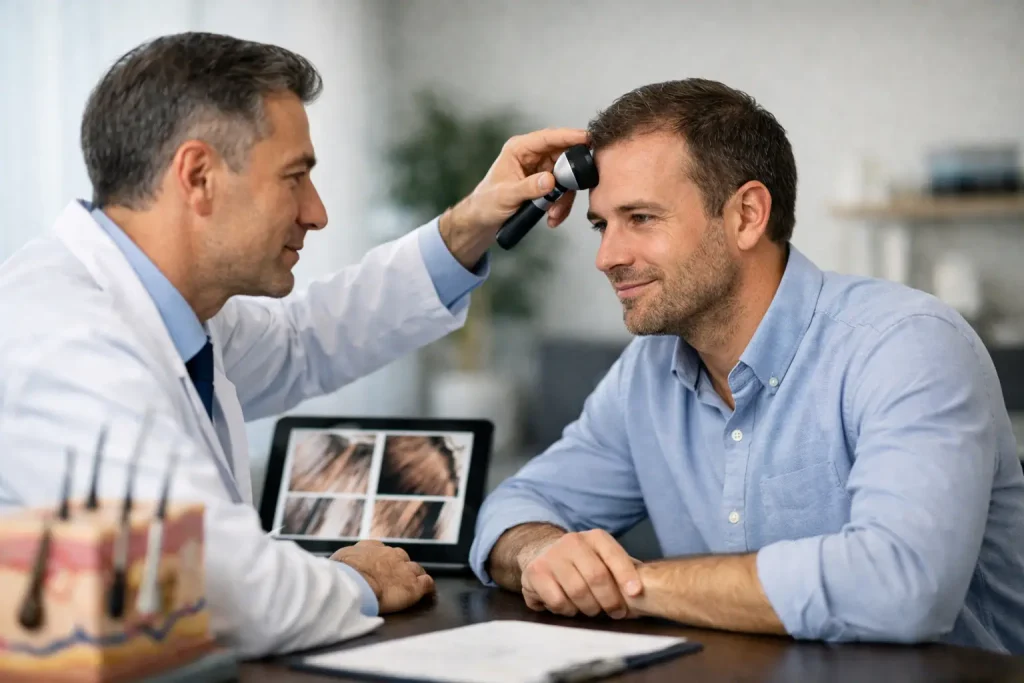
Not every thinning scalp needs more grafts. Hormonal changes, iron deficiency, thyroid conditions, autoimmune disease, medication effects, inflammation, and genetic pattern loss can all influence shedding and density. A thoughtful evaluation may include a detailed history, scalp examination, laboratory testing when indicated, and assessment of the donor area.
This is particularly important for patients who have had disappointing results elsewhere. A low-density outcome may be related to donor limitations, ongoing hair loss, scar tissue, poor graft handling, unrealistic density goals, or a diagnosis that was never fully addressed. Corrective planning starts with understanding why the prior result did not meet expectations.
At Hair For Life Medical, treatment planning is centered on matching the available options to the individual patient, not steering every concern toward one procedure. For some people, beard grafts are an excellent addition to a restoration plan. For others, scalp donor FUE, FUT, medical therapy, scalp micropigmentation, regenerative treatment, or simply monitoring progression may be more appropriate.
Questions Worth Asking at Your Consultation
Ask whether beard grafts are recommended as a primary donor source or as a supplement to scalp hair. Ask where they would be placed, how many can be safely harvested, and how the physician expects their texture to blend with your existing hair. You should also understand what treatment, if any, is recommended to stabilize ongoing hair loss.
It is reasonable to ask who will perform each surgical step. Hair transplantation is detail-dependent work, from donor extraction through graft handling and recipient-site creation. Clear answers help patients make decisions with confidence.
The best beard to scalp hair transplant plan respects both sides of the procedure: what can be gained on the scalp and what should be preserved in the beard. A careful consultation can turn that balance into a restoration strategy that looks natural now and remains sensible as your hair needs change.