Why Calling FUT “Outdated” Reveals a Lack of Surgical Insight

A Deep Dive into Hair Transplant Technique, Strategy, and Skill
Introduction: The Rise of FUE and the Mislabeling of FUT
In the world of hair restoration, trends shift fast. Clinics advertise “scarless” procedures, robotic precision, and minimally invasive techniques that promise miraculous results with little downtime. At the center of this marketing storm is Follicular Unit Extraction (FUE), hailed by many as the modern gold standard. But in the rush to embrace new technology, one time-tested method—Follicular Unit Transplantation (FUT)—has been unfairly labeled as outdated.
Let’s be clear: calling FUT outdated isn’t just misleading—it reveals a fundamental misunderstanding of surgical technique, long-term planning, and aesthetic artistry. FUT isn’t obsolete. It’s underappreciated, and often misunderstood by both patients and practitioners who prioritize convenience over craftsmanship.
Section 1: What Is FUT and Why It Still Matters
FUT, also known as the “strip method,” involves removing a thin strip of scalp from the donor area—typically the back of the head—then dissecting it under high-powered microscopes to isolate individual follicular units. These grafts are then implanted into the recipient area with precision.
🔬 Key Advantages of FUT:
- Microscopic Dissection: Grafts are prepared under magnification, preserving the integrity of each follicle.
- High Graft Yield: FUT allows for harvesting thousands of grafts in a single session.
- Donor Area Preservation: Because the strip is taken from a narrow zone, the surrounding donor area remains intact for future procedures.
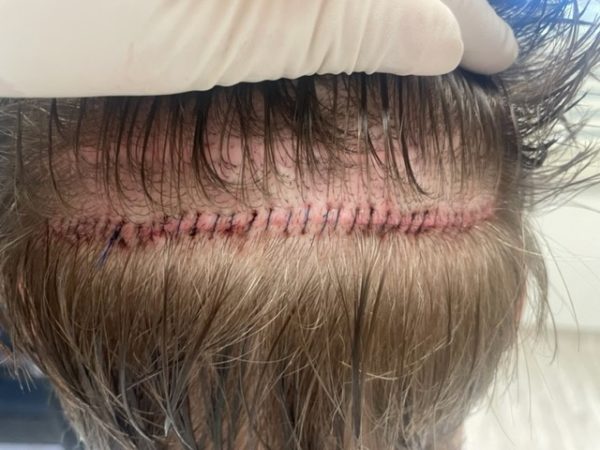
- Trichophytic Closure: A specialized suturing technique that allows hair to grow through the scar, making it nearly invisible.
FUT is especially valuable for patients with advanced hair loss, tight scalps, or those who may require multiple procedures over time. It’s not a relic—it’s a strategic tool in the hands of a skilled surgeon.
Section 2: The Skill Gap—Why FUT Requires More Surgical Expertise
Performing FUT is not for the faint of heart. It demands surgical precision, anatomical knowledge, and years of experience. Unlike FUE, which can be delegated to technicians or performed with robotic assistance, FUT is a true surgical procedure.
🧠 What Makes FUT More Demanding:
- Strip Harvesting: Requires careful measurement, depth control, and anatomical awareness to avoid nerve damage or excessive tension.
- Suturing Technique: Aesthetic closure is critical. Poor suturing can lead to wide scars, while trichophytic closure can make the scar nearly invisible.
- Graft Dissection: Technicians must be trained to dissect grafts without damaging the follicular units.
- Patient Selection: Surgeons must assess scalp laxity, donor density, and long-term goals.
Many clinics avoid offering FUT not because it’s outdated—but because they lack the skill or staff to perform it well. It’s easier to market FUE as “scarless” and delegate the procedure to technicians than to invest in the training and precision FUT demands.
Section 3: FUE—The Popular Kid with Limitations
FUE involves extracting individual follicular units directly from the scalp using a small punch tool. It’s less invasive, leaves dot-like scars, and doesn’t require sutures. But while FUE has its advantages, it’s not without limitations.
⚠️ Common Issues with FUE:
- Limited Graft Yield: Especially in patients with poor donor density or tight scalps.
- Donor Area Depletion: Overharvesting can lead to visible thinning and patchiness.
- Variable Punch Sizes: Larger punches (especially in robotic systems) can leave noticeable scars.
- Technician-Led Procedures: In many clinics, the surgeon is barely involved.
FUE is often marketed as “scarless,” but that’s a myth. It leaves hundreds or thousands of tiny scars, which can be visible if the patient wears short hair. And when performed by undertrained staff or robots, the results can be inconsistent and unnatural.
Section 4: ARTAS and the Illusion of Precision
The ARTAS robotic system is often touted as the future of hair restoration. It uses AI and robotic arms to harvest grafts with speed and consistency. But while ARTAS has its place, it’s far from perfect.
🤖 ARTAS Limitations:
- Large Punch Size: Typically 1.0–1.2 mm, which can lead to more visible scarring.
- Restricted Harvest Zones: ARTAS struggles with curved surfaces and areas near the ears or nape.
- No Site Creation: The robot cannot design or create recipient sites—this must be done manually.
- Lack of Adaptability: ARTAS doesn’t adjust well to hair angles, curl patterns, or scalp irregularities.
In theory, ARTAS should be a tool that enhances the surgeon’s capabilities. In practice, many clinics use it as a replacement for surgical skill. The surgeon presses “start,” and the robot does the rest—often with minimal oversight. This leads to generic results, poor hairline design, and disappointed patients.
Section 5: Strategic Planning—Why FUT Is Crucial for Long-Term Success
Hair restoration isn’t a one-time fix—it’s a long-term strategy. Patients with progressive hair loss may need multiple procedures over time. FUT plays a critical role in preserving the donor area and maximizing graft yield.
🧬 Strategic Advantages of FUT:
- High Graft Volume: FUT can yield 3,000–5,000 grafts in one session.
- Donor Preservation: Strip harvesting leaves surrounding areas untouched for future FUE.
- Ideal for Advanced Hair Loss: Patients with Norwood 5–7 patterns benefit most from FUT.
- Combining FUT and FUE: Many elite surgeons use FUT first, then FUE for refinement and touch-ups.
Patients who undergo FUE-only procedures often find themselves out of donor hair when they need a second surgery. FUT provides a foundation that supports future restoration efforts.
Section 6: The Marketing Problem—How Clinics Mislead Patients
Let’s be honest: many clinics prioritize profit over patient outcomes. FUE is easier to market, faster to perform, and can be delegated to technicians. FUT, on the other hand, requires surgical skill, trained staff, and more time.
🚩 Red Flags in FUE-Only Clinics:
- “Scarless” claims with no mention of dot scarring
- No FUT option offered—often due to lack of training
- Surgeon absent during consultation or procedure
- Heavy reliance on ARTAS or motorized tools
- No discussion of long-term donor management
Patients deserve transparency. They should be informed about all options, not just the ones that are easiest for the clinic to perform. A one-size-fits-all approach is a disservice to the patient and a sign of poor medical ethics.
Section 7: The Artistry of Hair Restoration—Why Technique Matters More Than Technology
Hair restoration is both a science and an art. Designing a natural hairline requires an understanding of facial proportions, hair angles, and density patterns. No robot can replicate that.
🎨 Artistic Elements of Hair Transplantation:
- Hairline Design: Must match the patient’s age, ethnicity, and facial structure.
- Graft Placement: Density, angle, and direction are critical.
- Recipient Site Creation: Determines how natural the result looks.
- Surgeon Involvement: The best outcomes come from hands-on artistry—not technician-led procedures.
Patients who choose clinics based on technology alone often end up with cookie-cutter results. The best surgeons use technology as a tool—not a crutch—and remain fully involved in every step of the process.
Section 8: Choosing the Right Surgeon—What to Ask and What to Avoid
Selecting a hair transplant surgeon is one of the most important decisions a patient can make. Here’s how to separate the skilled professionals from the marketers.
✅ Questions to Ask:
- Do you offer both FUT and FUE? Why or why not?
- Who performs the extractions and implantations?
- What punch size do you use for FUE?
- Do you use trichophytic closure for FUT?
- Can I see before-and-after photos of FUT patients?
❌ Red Flags to Avoid:
- Surgeon absent during procedure
- No FUT option offered
- Heavy reliance on ARTAS with minimal surgeon oversight
- “Scarless” claims without explanation
- No discussion of long-term donor management
The best clinics are transparent, patient-focused, and offer customized solutions based on individual needs—not marketing trends.
Conclusion: Reframing the Conversation Around FUT
FUT isn’t outdated—it’s misunderstood. It requires more skill, more planning, and more artistry than many modern techniques. Dismissing it as obsolete reveals a lack of surgical insight and a preference for convenience over craftsmanship.
Patients deserve better. They deserve surgeons who treat hair restoration as a lifelong journey, not a one-time transaction. They deserve options, education, and honesty.
So the next time someone tells you FUT is outdated, ask them this: Is it outdated—or just too difficult for them to perform well?
When Reputation Matches Results
Reputation isn’t built on advertising. It’s built on trust, consistency, and results that patients are proud to show the world. Dr. Kelemen’s position as Arizona’s most highly rated hair transplant doctor wasn’t bought—it was earned, one scalp at a time.
For those seeking:
- Custom hair restoration
- Advanced surgical tools
- Compassionate, doctor-led care
- Artistic and natural results
…there is only one obvious choice. Dr. Ramona Kelemen of Hair 4 Life Medical
Interested in learning more? Contact Us or call Hair 4 Life at (480) 525-4547 to schedule an appointment.
References
https://pubmed.ncbi.nlm.nih.gov/34053598/
https://www.ishrs-htforum.org/content/34/6/197
Guide to FUT Hair Transplant: Benefits, Procedure & Recovery