The Art and Science of Hairline Design in Hair Transplant Surgery | Hair 4 Life Medical

Table of Contents
- Introduction to Hairline Design
- Why Hairline Design Matters in Hair Transplant Surgery
- Anatomy of a Natural Hairline
- Factors That Influence Hairline Planning
- Techniques in Hairline Creation
- Gender and Ethnic Considerations
- Common Mistakes in Hairline Design
- Case Studies from Hair 4 Life Medical
- Technologies That Support Precision Hairline Design
- Final Thoughts: Why Experience is Everything in Hair Restoration
1. Introduction to Hairline Design
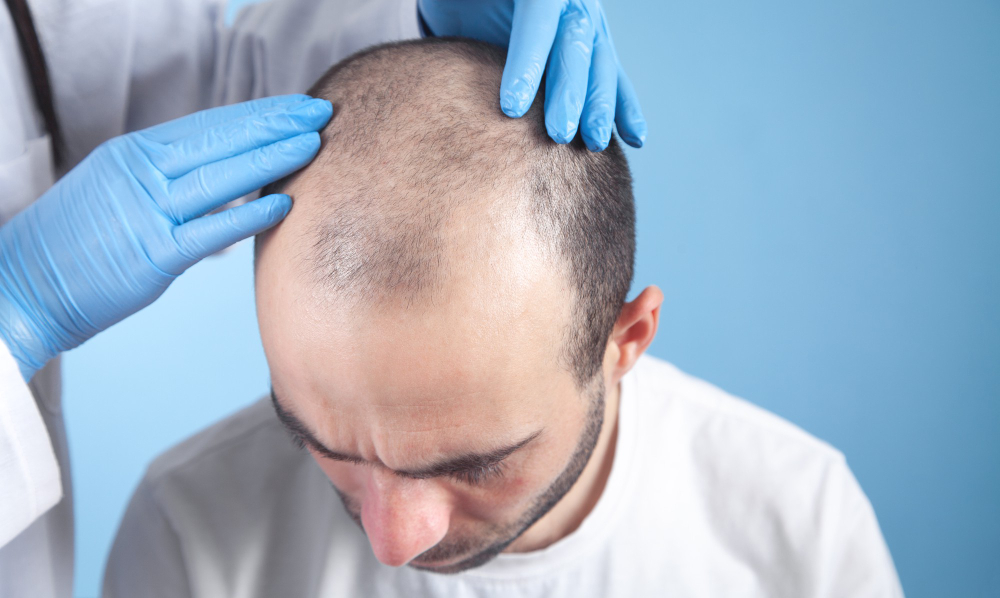
Hair restoration isn’t just about putting hair where it used to grow. It’s about recreating nature. The hairline is the first thing people notice—it frames the face, defines symmetry, and sets the tone for natural aesthetics. A poorly designed hairline will always look artificial, no matter how dense the grafts.2. Why Hairline Design Matters in Hair Transplant Surgery
A well-designed hair transplant hairline:- Enhances facial symmetry
- Restores a youthful appearance
- Withstands close inspection under harsh light
- Ages gracefully with the patient
- Boosts self-confidence
3. Anatomy of a Natural Hairline
A natural hairline has distinct features:- Transition zone: Soft and irregular, composed of single-hair grafts.
- Frontal tuft: Slightly denser area behind the transition, offering strength.
- Temporal points: Sharp angles that frame the face, especially in men.
- Lateral humps: Side areas that help connect the front to the temples.
4. Factors That Influence Hairline Planning
No two hairlines are the same. That’s why at Hair 4 Life Medical, we assess:- Facial proportions
- Forehead height
- Age and hair loss pattern
- Future hair loss projection (Norwood scale)
- Hair caliber and density
- Donor area availability
5. Techniques in Hairline Creation
Creating a natural-looking hairline requires finesse. We use:- Single-hair grafts only in the front row for softness
- Irregular zig-zag patterns to mimic nature’s randomness
- Feathering techniques to create a natural gradient
- Manual placement by Dr. Kelemen to ensure precision
6. Gender and Ethnic Considerations
A male hairline differs significantly from a female hairline:- Men: Often have M-shaped or slightly receded hairlines with strong temporal points.
- Women: Favor rounded, lower, and more symmetrical designs.
- Asian hairlines tend to be straighter.
- African American hairlines may require attention to curl pattern and density.
- Caucasian hairlines often favor soft, natural recession.
7. Common Mistakes in Hairline Design
We correct mistakes from other clinics every week. The most common include:- Using multi-hair grafts in the front
- Placing the hairline too low or too flat
- Ignoring long-term balding patterns
- Incorrect hair angulation (making hairs stick straight up)
- Symmetrical rows or “doll’s hair” appearance
8. Case Studies from Hair 4 Life Medical
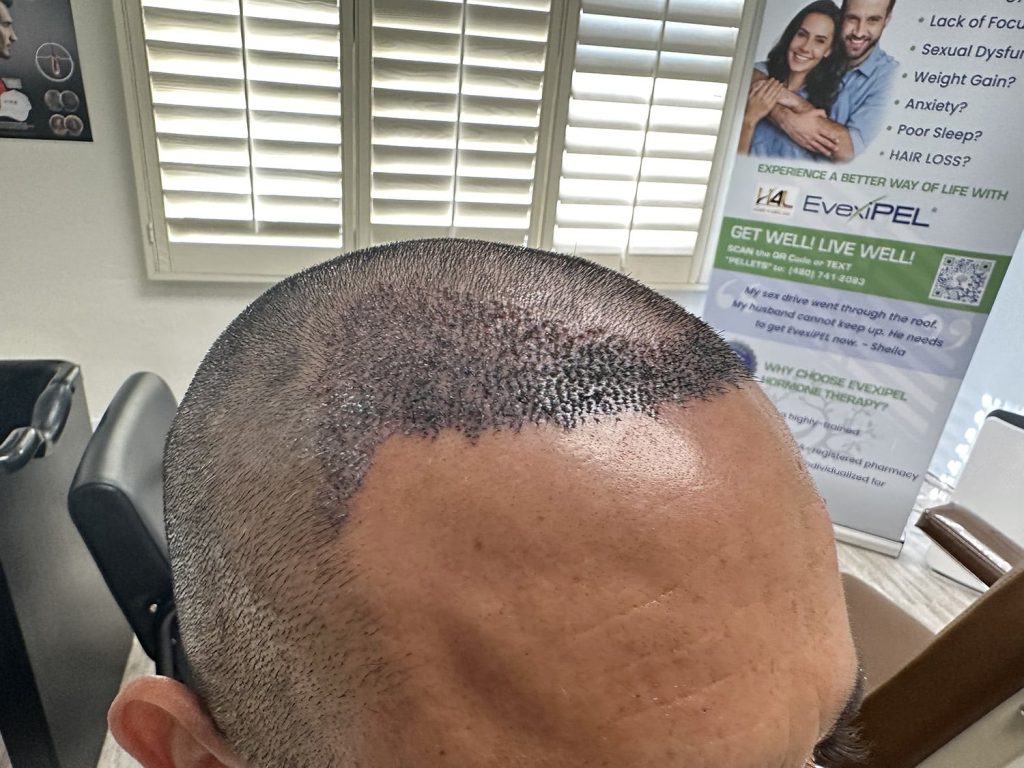
Case 1: 36-year-old male, Norwood 3, received 2,800 grafts. Result: Natural M-shaped hairline with soft feathering. Case 2: 42-year-old female with high forehead. Used 1,500 grafts to lower and round the hairline. Result: More youthful, balanced appearance. Case 3: Repair case from another clinic—removed pluggy grafts, rebuilt hairline using 1,200 single-hair units. Result: Now undetectable under any light.9. Technologies That Support Precision Hairline Design
We combine expert artistry with modern hair restoration technology:- Trichoscopy to evaluate scalp and follicle health
- Digital mapping software for hairline symmetry
- High-resolution photography to track pre- and post-op design
- ARTAS robotic system and WAW FUE system for high-precision donor extraction
10. Final Thoughts: Why Experience is Everything in Hair Restoration
Designing a natural hairline is not a job for technicians. It’s the work of a seasoned artist-surgeon. Dr. Ramona Kelemen has restored thousands of hairlines with ethical precision and unmatched skill. Hairline design is about more than hair—it’s about your appearance, your identity, and your confidence. When done right, it’s invisible. When done poorly, it’s all anyone sees.👉 Ready to restore your hair? Schedule a consultation with Dr. Kelemen today!
Interested in learning more? Contact Us or call Hair 4 Life at (480) 525-4547 to schedule an appointment.