Laser Therapy for Hair Loss: Is It Worth It?
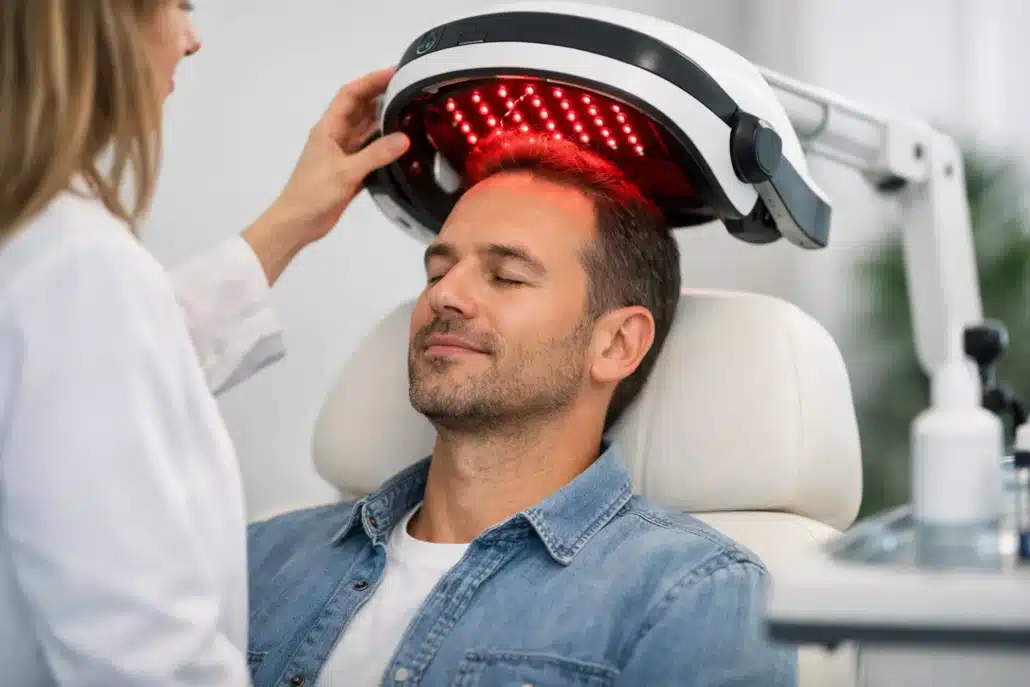
A laser cap, helmet, or in-office device can sound like an easy answer to hair thinning. Laser therapy can be a valuable part of a medically guided hair restoration plan, but it is not a replacement for a proper diagnosis, realistic expectations, or treatment for the cause of hair loss. Its value depends largely on whether the follicles in the treated area are still capable of producing hair.
For men and women noticing early to moderate thinning, low-level laser therapy may help support existing follicles and improve the appearance of density over time. For someone with long-standing bald areas where follicles are no longer active, it is unlikely to create meaningful regrowth on its own. That distinction is why an evaluation should come before investing time and money in any device.
What Is Laser Therapy for Hair Loss?
Laser therapy for hair loss is also called low-level laser therapy, or LLLT. It uses specific wavelengths of red light to deliver light energy to the scalp without heating, cutting, or damaging the skin. The goal is to stimulate cellular activity around the hair follicle and support a healthier environment for hair growth.
Hair follicles require energy, oxygen, nutrients, and hormonal balance to remain in an active growth phase. Although laser treatment cannot permanently override genetic hair loss or correct every medical cause of shedding, research and clinical experience suggest that appropriate light exposure may help improve hair caliber, reduce shedding for some patients, and encourage follicles that are becoming weaker to remain productive longer.
The treatment is noninvasive and generally painless. Patients may use an FDA-cleared home device, such as a cap or helmet, on a scheduled basis, or receive treatment in a clinical setting. The right option is not necessarily the most expensive one. Device quality, wavelength, treatment consistency, scalp access, and the patient’s diagnosis all matter.
Who May Benefit Most From Laser Therapy?
Laser therapy tends to be most useful when thinning is still present rather than complete baldness. It is commonly considered for androgenetic alopecia, often called male- or female-pattern hair loss, as well as certain patients with diffuse thinning who have been medically evaluated.
A patient in the earlier stages of pattern hair loss may use LLLT to preserve native hair and improve the visual quality of existing strands. It can also be helpful for patients who want a non-drug option, cannot tolerate certain medications, or wish to add another supportive treatment to a broader plan.
It may be considered before a transplant, after a transplant, or as part of long-term maintenance. Before surgery, the goal may be to strengthen and preserve vulnerable native hair. After surgery, laser treatment may be incorporated into recovery and ongoing hair preservation when clinically appropriate. It does not replace the need to protect non-transplanted hair, which can continue to thin due to genetics or hormonal influences.
There are limits. Laser therapy is not a dependable stand-alone answer for advanced hair loss, active scarring alopecia, untreated thyroid disease, nutritional deficiency, sudden unexplained shedding, or a scalp condition that requires medical treatment. In these situations, treating the underlying issue is more important than simply adding light exposure.
What Results Can You Realistically Expect?
The most realistic goal is usually improvement, not transformation. Patients may notice less shedding first, followed by hair that feels stronger or appears somewhat fuller. Changes in density and caliber often take several months because hair grows slowly and cycles through distinct phases.
Consistency is essential. A device used irregularly is unlikely to deliver a meaningful result. Most protocols require repeated sessions each week for many months, followed by continued use to maintain benefits. If treatment stops, any gains related to laser stimulation may gradually fade as the underlying hair loss process resumes.
Results also vary by person. Someone with miniaturized but active follicles may respond better than someone whose follicles have been inactive for years. Hair color, contrast between the scalp and hair, the degree of thinning, hormone status, nutrition, stress, medical history, and concurrent treatment all influence what is visible in the mirror.
Photographs are often more useful than day-to-day observation. Hair changes gradually, and lighting can make density look dramatically different from one week to the next. Standardized clinical photos and scalp analysis give a more reliable view of whether a plan is actually working.
Laser Therapy Is Usually a Supporting Treatment
The strongest treatment plan is rarely built around one tool. A physician may recommend laser therapy alongside prescription or nonprescription medications, injectables, regenerative treatments, hormone evaluation, nutritional assessment, or other therapies based on the diagnosis. Some patients may ultimately be better candidates for a surgical restoration procedure, while others should focus entirely on preserving the hair they have.
This is especially relevant for female-pattern hair loss, postpartum changes, menopause-related thinning, and diffuse shedding. These concerns can have overlapping causes. A device may support the follicles, but it cannot diagnose iron deficiency, thyroid dysfunction, androgen sensitivity, autoimmune disease, or a medication-related trigger.
At Hair For Life Medical, planning begins with the individual rather than a preselected procedure. A thorough scalp and hair evaluation can clarify whether laser therapy is likely to add value, what it should be combined with, and when a different approach would be more sensible.
Home Devices vs. In-Office Treatment
Home laser devices offer privacy and convenience. For busy professionals, a schedule that can be followed at home may be the most practical route to long-term consistency. However, not all products marketed for hair growth are equivalent. Treatment parameters, device coverage, fit, and manufacturer quality can differ substantially.
In-office treatment provides professional guidance and may suit patients who prefer structured appointments or are already receiving other in-clinic services. The trade-off is time and ongoing visit costs. Neither setting is automatically superior. The better choice is the one that matches the treatment recommendation and can be followed consistently.
Before purchasing a device, ask whether it is FDA-cleared for hair growth, what treatment schedule is required, whether the device covers the areas of concern, and how progress will be monitored. Be cautious about promises of rapid, dramatic regrowth. Responsible hair restoration care discusses both potential benefits and the limitations of each option.
Safety, Side Effects, and When to Ask Questions
Low-level laser therapy is generally well tolerated when used as directed. Some people experience mild scalp warmth, temporary irritation, itching, or headache. Eye protection and device instructions matter, particularly with equipment that exposes the user to direct light.
A medical consultation is particularly valuable for people with a history of scalp disease, photosensitivity, skin cancer concerns, unexplained hair shedding, or medications that may increase sensitivity to light. Pregnancy, nursing, and complex medical conditions also warrant individualized guidance rather than assumptions based on general device marketing.
Laser therapy should never delay evaluation when hair loss is sudden, patchy, accompanied by scalp pain or scaling, or associated with other symptoms such as fatigue, weight changes, or abnormal hair growth elsewhere. These patterns may point to a medical issue that deserves attention first.
Deciding Whether It Belongs in Your Plan
The right question is not simply, “Does laser therapy work?” A more useful question is, “What is causing my hair loss, and is laser therapy likely to help at this stage?” That answer requires an honest assessment of follicle health, the pattern of loss, your medical history, your goals, and what you are willing to do consistently.
For the right candidate, laser therapy can be a low-risk way to support existing hair and complement a broader restoration strategy. For the wrong candidate, it can become an expensive distraction from treatments that would better address the problem. A physician-led consultation gives you room to understand those differences without pressure and choose a path that respects both your hair goals and your long-term health.