A patient who asks about a DHI hair transplant Scottsdale consultation is usually not just asking for a technique. They are asking a bigger question – how do I restore hair in a way that looks natural, respects my lifestyle, and makes medical sense for my pattern of loss? That distinction matters, because DHI can be an excellent option for some patients, but it is not automatically the best answer for everyone.
What a DHI hair transplant in Scottsdale actually means
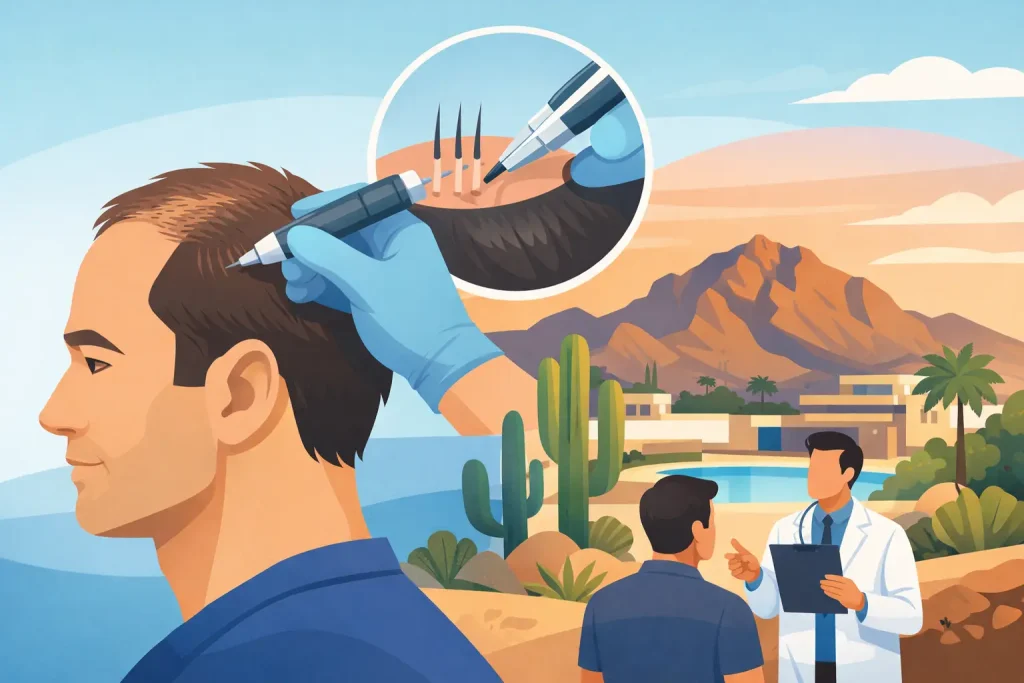
DHI stands for Direct Hair Implantation. In practical terms, it is a variation of FUE hair transplantation in which follicular units are extracted individually and then placed using a specialized implanter device rather than being pre-made into recipient sites in the traditional sequence.
That technical difference may sound small, but it changes how the procedure is planned and performed. The surgeon has precise control over angle, direction, and depth during placement, which can be especially helpful in visible cosmetic zones such as the frontal hairline, temples, and areas where density design needs to be refined carefully.
For many Scottsdale patients, the appeal of DHI is straightforward. They want natural growth, minimal visible scarring, and a method that supports detail-oriented placement. People who wear their hair short, work in professional settings, or are particularly focused on hairline aesthetics often ask about DHI for exactly those reasons.
How DHI differs from standard FUE
DHI is part of the FUE family, but it is not simply a marketing label for every FUE case. In standard FUE, grafts are typically harvested first, recipient sites are created, and then grafts are placed. In DHI, the placement phase uses an implanter tool that can allow the surgeon to create and place in a more direct, controlled manner.
The advantage is not that DHI magically creates better hair. The real advantage is procedural control. In the right hands, that can translate into highly natural angles, softer transitions at the hairline, and efficient graft handling.
The trade-off is that DHI is technique-sensitive. Results depend heavily on physician judgment, donor management, graft quality, and the overall treatment plan. A patient with extensive baldness, limited donor supply, scalp scarring, or ongoing aggressive hair loss may need a broader strategy than DHI alone.
Who is a good candidate for DHI hair transplant Scottsdale treatment?
The best candidates are usually patients who have stable enough donor hair, realistic goals, and an area of concern that benefits from precise implantation. That can include men with frontal recession, women with thinning that requires careful artistic placement, patients seeking refinement around the temples, and individuals who want a discreet, natural-looking result.
DHI can also be relevant for select corrective cases. If someone had an unnatural hairline from a previous procedure, controlled graft placement may help redesign the frontal zone. The same is true for some eyebrow and beard restoration cases, where direction and angle are critical.
At the same time, candidacy is never based on one buzzword procedure. Hair caliber, curl, contrast between hair and scalp, donor density, scalp laxity, age, family history, hormonal factors, and the pace of ongoing loss all influence the decision. A patient in the early stages of thinning may benefit from medical therapy first. Another may need a combination of surgery and non-surgical support to protect native hair and make the transplant worth doing.
Why diagnosis matters before technique
One of the biggest mistakes in hair restoration is choosing the procedure before understanding the cause of loss. Not every patient in Scottsdale who notices thinning is dealing with straightforward androgenetic alopecia. Some are dealing with hormonal shifts, inflammatory scalp conditions, traction, nutritional issues, prior surgical scarring, or shedding disorders that can mimic pattern loss.
That is why a serious consultation should do more than quote graft numbers. It should examine the scalp, assess miniaturization, review medical history, and determine whether the loss is stable, progressive, or potentially reversible in part. If active hair loss is ignored, even a technically good transplant can age poorly because surrounding native hair continues to disappear.
This is where a comprehensive clinic has an advantage. A physician-led evaluation can determine whether DHI is the right surgical path, whether another surgical approach is more efficient, or whether medical treatment should come first.
What patients usually care about most
Most patients are not comparing techniques the way surgeons do. They care about a handful of practical outcomes. Will it look natural? How visible is the recovery? How many grafts are needed? How long until growth appears? Will I need another procedure later?
Those are the right questions.
With DHI, naturalness comes from design as much as device choice. The implanter can support refined placement, but a natural result still depends on conservative hairline planning, proper irregularity at the front edge, and respect for future hair loss. A hairline that looks good at 32 should still make sense at 42.
Recovery is often manageable, especially compared with older strip-based assumptions patients may still have. Tiny extraction sites in FUE-based methods usually heal as small dot scars that are difficult to detect. Some redness and scabbing in the recipient area are normal. Most people can return to non-strenuous work fairly quickly, though public downtime varies depending on the procedure details and whether the case is shaved or designed for discretion.
When DHI is not the best option
This is the part many practices skip, but patients deserve honesty. DHI is not automatically superior in every case.
If a patient needs a large session with broad coverage, another FUE approach or even FUT may be more appropriate depending on donor goals, hair characteristics, and long-term planning. If someone has significant diffuse thinning, transplanting into unstable native hair without a medical stabilization plan can create more frustration than satisfaction. If donor reserves are limited, every graft must be allocated strategically.
There are also cases where non-surgical treatment should be part of the plan, whether before or after surgery. Medications, regenerative therapies, scalp micropigmentation, laser therapy, hormone support, and other treatments may improve the overall outcome or help preserve surrounding hair. The strongest plan is often not procedure-only thinking. It is a tailored restoration strategy.
The value of physician experience in DHI
DHI is a detail-driven procedure. That makes experience especially important. Extraction quality, graft handling, recipient design, and placement discipline all affect survival and aesthetics. Small technical errors repeated hundreds or thousands of times can change the final result.
Patients in Scottsdale who are researching premium hair restoration options often want to know who is actually performing the work and how decisions are made during surgery. That is a reasonable concern. Hair transplantation is not just about tools. It is about medical judgment, artistry, and consistency throughout the case.
At Hair For Life Medical, that physician-centered approach is central to treatment planning. Patients are evaluated based on diagnosis, donor limitations, aesthetic priorities, and long-term maintenance, rather than being pushed into a one-size-fits-all procedure.
What to expect from a consultation
A worthwhile DHI consultation should feel educational, not pressured. You should leave knowing whether you are a candidate, what area can realistically be treated, how many grafts may be involved, what timeline to expect, and whether supporting therapies are recommended.
You should also hear the limits. No ethical clinic should promise instant density, unlimited grafts, or a hairline that ignores age and future loss. Hair restoration is about improvement and planning, not fantasy.
For most patients, visible growth begins gradually after the early shedding phase, with meaningful change developing over several months and maturation continuing up to a year or longer. Patience is part of the process, but so is proper follow-up.
If you are considering a DHI hair transplant Scottsdale option, the best next step is not chasing a label. It is finding a clinic that can explain when DHI makes sense, when it does not, and how your treatment can be built around natural results that still look right years from now.
References:
International Society of Hair Restoration Surgery -ISHRS
Hair Transplant Forum International
DHI Hair Transplant vs. FUE, Pros & Cons, Recovery – RealSelf
DHI Hair Transplant Procedure: Benefits, Side Effects, How It Works