How Hair Loss Diagnosis Finds the Real Cause
A hair loss diagnosis should do more than confirm what you can already see in the mirror. It should explain why density is changing, whether the loss is likely to progress, which follicles can still be protected, and whether restoration is appropriate now or later. That distinction matters because two people with similar-looking thinning may need very different care.
Hair loss is personal. It can affect how confidently you walk into a meeting, style your appearance, or recognize yourself in photographs. A thoughtful medical evaluation creates space for both parts of the conversation: the underlying biology and the visible change you want to address. There is no need to accept a one-size-fits-all answer.
What a Hair Loss Diagnosis Should Answer
The first question is not simply, “How much hair have I lost?” A physician should determine the pattern, pace, and likely cause of the loss. Pattern hair loss, also called androgenetic alopecia, is common in both men and women, but it does not behave identically in every patient. Some people notice gradual temple recession or crown thinning. Others see a widening part, diffuse reduction across the scalp, or a sudden increase in shedding.
A complete evaluation also distinguishes permanent follicle miniaturization from temporary shedding. In some cases, follicles are becoming progressively finer under genetic and hormonal influence. In others, a medical event, nutritional issue, medication change, illness, stressor, inflammatory scalp condition, or hormone imbalance has shifted more hairs into the shedding phase. The visible symptom may be similar, but the treatment strategy is not.
A proper diagnosis should answer several practical questions: Is the shedding active? Is the donor area stable enough for transplantation? Is there inflammation or scarring? Are medications, hormones, or health changes contributing? Most importantly, what is realistic for your long-term appearance?
The Medical History Reveals More Than Most People Expect
A physician-led consultation begins with your story. When did you first notice thinning? Did it begin abruptly or gradually? Is the change limited to one area, or is it happening throughout the scalp? Family history can be useful, but it is only one part of the picture.
Your medical history matters as well. Recent illness, surgery, substantial weight change, childbirth, thyroid concerns, anemia, autoimmune conditions, menopause, testosterone use, changes in birth control, and new medications can all influence hair growth and shedding. For women, irregular cycles, acne, new facial hair growth, or other hormonal symptoms may help guide the evaluation. For men, the timing and pattern of loss can help determine whether medical stabilization should come before surgical planning.
Be candid about prior procedures and treatments. A previous transplant, scalp injury, or poorly planned restoration can change donor availability and affect how a corrective plan is designed. The goal is not judgment. It is to understand the starting point accurately.
Scalp Examination: Looking at the Follicles, Not Just the Coverage
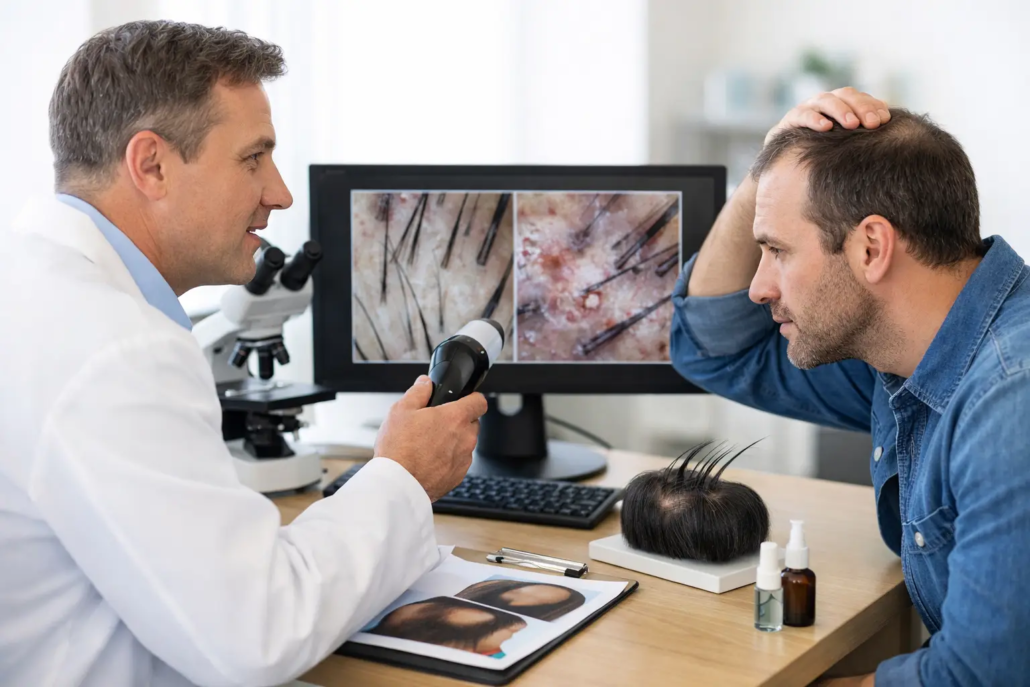
A visual examination assesses the distribution of loss, hair shaft caliber, scalp health, and the quality of the potential donor region. A physician may compare the front, temples, crown, sides, and back of the scalp to see whether the pattern follows a typical hereditary course or suggests something else.
Magnified scalp analysis can be especially valuable. It allows the clinician to look for variation in hair diameter, miniaturized follicles, excess buildup, redness, scaling, and signs that scarring may be present. In androgenetic alopecia, a mixture of thicker and progressively finer hairs is often seen in affected zones. This can indicate that follicles are still present but weakening – an important window for preservation treatment.
Scarring hair loss requires particular attention. When inflammation damages the follicle permanently, early diagnosis can be critical. The scalp may feel tender, itchy, burning, or simply look unusually smooth in an affected area, though symptoms vary. A transplant should not be rushed in the presence of unstable inflammatory disease. First, the priority is understanding and controlling the process.
Why the Donor Area Must Be Evaluated Separately
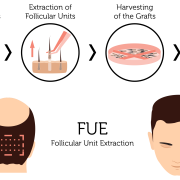
For patients considering FUE, FUT strip surgery, or another transplant approach, the donor area is not an unlimited resource. Its density, hair caliber, curl pattern, and long-term stability help determine what can be moved safely and what level of coverage is achievable.
This is one reason a hair transplant consultation should include diagnosis rather than begin with graft numbers. A person with early diffuse thinning may not be best served by immediate surgery, while someone with stable loss and strong donor density may be an excellent candidate. The right decision depends on the entire pattern, not only the area that feels most urgent.
When Testing May Be Part of the Evaluation
Not every patient needs extensive testing. For a classic, stable pattern of hereditary loss, the examination and history may provide a clear answer. Testing is more likely to be useful when shedding is sudden, diffuse, unusually rapid, accompanied by other symptoms, or inconsistent with a typical pattern.
Depending on the clinical picture, a physician may recommend selected blood work to evaluate factors such as:
- Iron stores and anemia
- Thyroid function
- Vitamin or nutritional deficiencies when risk factors are present
- Hormonal contributors, particularly when symptoms suggest an imbalance
Genetic testing may also help clarify a patient’s predisposition to androgenetic hair loss and inform long-term planning. It is a planning tool, not a guarantee of exactly how hair loss will unfold. Results are most helpful when interpreted alongside a scalp examination, medical history, and the patient’s goals.
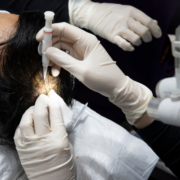
In uncertain cases, a scalp biopsy may be considered to distinguish between forms of scarring and non-scarring alopecia. This is not necessary for everyone, but it can provide essential information when the diagnosis remains unclear or inflammatory hair loss is suspected.
Common Causes Can Overlap
Hair loss is not always caused by one thing. A person may have inherited pattern hair loss and also experience temporary shedding after a major health event. A woman may have hormone-related thinning along with reduced iron stores. Someone who has had a transplant may continue to lose surrounding native hair if the underlying process is not addressed.
That is why a treatment plan should not be built around a single device or procedure. Medical therapies, hormone evaluation when appropriate, regenerative options, laser therapy, scalp health support, and surgical restoration each have a role in selected cases. Their value depends on what the diagnosis shows.
For example, medication may be used to slow miniaturization and preserve native hair. Regenerative treatments such as Regenera Activa AMT or TricoPat may be considered for appropriate candidates seeking support for weakened follicles. Scalp micropigmentation can create the appearance of greater density in certain situations. A transplant may restore lost hairline structure, improve frontal framing, add density to a stable crown, or address scars – but it cannot stop future loss in untreated native follicles.
Diagnosis Comes Before Choosing a Procedure
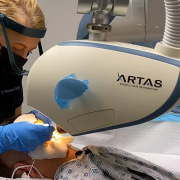
The most sophisticated procedure is only as good as the plan behind it. ARTAS robotic FUE, manual FUE, FUT, no-shave FUE, long-hair FUE, DHI, body hair transplantation, and corrective surgery each have potential advantages, limitations, and candidacy requirements. They are techniques, not interchangeable solutions.
A discreet no-shave approach may matter deeply to a professional who cannot easily step away from public-facing work. Long-hair FUE may help certain patients visualize placement immediately. FUT can be a sensible option for patients who need a larger number of grafts and accept a linear scar. FUE may be preferred when flexibility in short styling is a priority. None of these choices should be made before the donor area, loss pattern, scalp condition, and future goals have been assessed.
The same principle applies to eyebrow, beard, transgender, and scar restoration. The design must respect facial proportions, skin characteristics, existing hair direction, and the patient’s own definition of a natural result. A careful diagnosis supports that level of personalization.
What to Bring to Your Consultation
Come prepared to discuss your medical history, current medications and supplements, family pattern of hair loss, and any major changes in health or lifestyle around the time shedding began. If you have photographs from earlier years, they can help establish the speed and pattern of change. Prior treatment records can also be useful, especially after a previous restoration procedure.
Most of all, bring your real priorities. Some patients want to preserve what they have. Others want a stronger hairline, a fuller part, scar camouflage, or a corrective plan after an unsatisfactory result elsewhere. At Hair For Life Medical, the consultation is designed to clarify the cause and present appropriate options without pressure to commit to a single path.
The most reassuring next step is often not choosing a treatment immediately. It is getting a clear explanation of what your follicles are doing, what can realistically be preserved or restored, and how to make decisions that still serve you years from now.