Hair transplant Clinic in Scottsdale, AZ lead by Dr Kelemen offering every hair transplant method: FUT and FUE: ARTAS, WAW, Ugraft.
Tag Archive for: ARTAS Robotic
Hair transplant Clinic in Scottsdale, AZ lead by Dr Kelemen offering every hair transplant method: FUT and FUE: ARTAS, WAW, Ugraft.
Hair transplant Clinic in Scottsdale, AZ lead by Dr Kelemen offering every hair transplant method: FUT and FUE: ARTAS, WAW, Ugraft.
Hair transplant Clinic in Scottsdale, AZ lead by Dr Kelemen offering every hair transplant method: FUT and FUE: ARTAS, WAW, Ugraft.
Hair loss is a common concern affecting millions worldwide, regardless of age or gender. Recent statistics reveal that about 40% of men and 25% of women experience some degree of hair loss by the age of 50. The emotional toll of hair loss can be significant, leading to decreased self-esteem and confidence. Traditional hair restoration techniques have helped many, but advancements in technology have paved the way for more effective and minimally invasive procedures.
Enter the ARTAS System—an innovative hair transplant technology that employs robotic precision to extract and implant hair follicles. With a focus on minimally invasive techniques, the ARTAS System is changing the landscape of hair restoration, offering patients a promising solution to their hair loss concerns.
The ARTAS was designed to aid the doctor, NOT replace the doctor! The success of the surgery is directly proportional to the involvement of the doctor. The less he is involved the less chances are that the surgery will be successful! The robot is NOT smarter than the doctor!!! ARTAS has a basic program that needs to be continuously adjusted during the procedure like depth and angle. Dr Kelemen’s transaction rates are less than 5%.
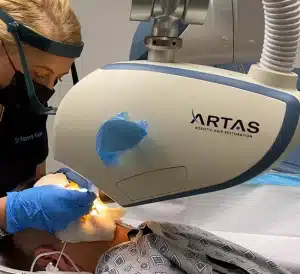
Dr Kelemen harvesting and giving directions to the robot operator. There is no replacement for the doctor being in the surgical room.
Understanding the ARTAS System
The ARTAS System is a groundbreaking advancement in hair transplant technology that utilizes robotic assistance to enhance the precision and effectiveness of hair restoration procedures. This state-of-the-art system merges advanced imaging with artificial intelligence, significantly improving the way hair follicles are extracted and implanted. Unlike traditional hair transplant methods that often depend on manual techniques—such as Follicular Unit Transplantation (FUT) and Follicular Unit Extraction (FUE)—the ARTAS System leverages robotics to perform these tasks with remarkable accuracy, thereby minimizing human error and enhancing overall results.
Key Features
- Robotic Assistance: The ARTAS robot is engineered to meticulously extract hair follicles with an unparalleled level of precision. The robotic arms are designed to navigate the scalp delicately, ensuring minimal damage to the surrounding tissues. This careful extraction technique not only increases the viability of the hair follicles but also contributes to a higher survival rate for the transplanted grafts. As a result, patients can expect denser and more natural-looking results post-procedure.
- State-of-the-Art Technology: At the heart of the ARTAS System is its high-resolution imaging technology, which provides detailed mapping of the donor area. This imaging system allows the robot to identify and select the most suitable hair follicles for extraction. By analyzing the characteristics of each follicle, the system optimizes the extraction process, ensuring that only the healthiest and most viable grafts are chosen for transplantation. This technological advantage significantly enhances the likelihood of successful hair restoration outcomes.
- Minimally Invasive: One of the standout features of the ARTAS System is its minimally invasive approach. Instead of making linear cuts in the scalp (as seen in traditional FUT procedures), ARTAS uses tiny punch incisions that are typically only 1mm in diameter. This technique leads to less trauma to the scalp, resulting in reduced discomfort, decreased scarring, and shorter recovery times for patients. Most individuals can return to their normal activities within a few days, which is a significant improvement over traditional methods that often require extended downtime.
Benefits of ARTAS
- High Success Rates: The integration of robotic technology with advanced imaging techniques contributes to the ARTAS System’s impressive success rates. Studies have shown that patients experience higher satisfaction levels and better hair growth outcomes compared to those who undergo traditional hair transplant methods. The accuracy of the robotic assistance ensures that the follicles are harvested and implanted optimally, leading to excellent results.
- Better Aesthetics: One of the primary concerns of individuals seeking hair restoration is achieving a natural appearance. The ARTAS System excels in creating hairlines that blend seamlessly with the patient’s existing hair. The precision of the robot allows for strategic placement of grafts, resulting in natural density and distribution that mimics the patient’s original hair growth patterns.
- Less Pain and Discomfort: Patients who opt for the ARTAS procedure often report significantly lower pain levels compared to traditional hair transplant methods. The minimally invasive nature of the robotic system reduces the need for extensive incisions, leading to less post-operative discomfort. Many individuals find that their recovery experience is much more manageable, allowing them to focus on the results rather than the process
The ARTAS Procedure Step-by-Step
The ARTAS procedure is designed to be straightforward yet meticulously planned, ensuring that patients achieve optimal results in their hair restoration journey. Below is a detailed breakdown of each step involved in the ARTAS procedure:
1. Initial Consultation
During the initial consultation, the physician conducts a comprehensive evaluation of the patient’s hair loss condition. This assessment includes:
- Medical History: Gathering information about the patient’s health, family history of hair loss, and any previous treatments for hair restoration.
- Physical Examination: Examining the scalp and hair to determine the extent and pattern of hair loss.
- Discussion of Goals: Engaging in a conversation about the patient’s expectations and desired outcomes. Understanding the patient’s goals is crucial for tailoring the procedure to meet their individual needs.
2. Planning the Procedure
Planning is a vital component of the ARTAS process. This step involves:
- Digital Imaging: Utilizing advanced digital imaging technology, the physician designs the hairline. This design takes into account the patient’s facial features, hair density, and overall aesthetic goals. The goal is to create a natural-looking hairline that complements the patient’s appearance.
- Donor Area Assessment: The physician assesses the donor area—the part of the scalp where hair follicles will be extracted—to ensure there is enough healthy hair available for transplantation.
- Personalized Strategy: Based on the patient’s unique characteristics and goals, the physician formulates a personalized strategy for the extraction and implantation process.
3. Procedure Day
On the day of the procedure, patients can expect the following steps:
Step 1: Local Anesthesia Administration
Before starting the procedure, patients receive local anesthesia to minimize discomfort during the process. This is crucial for ensuring that the patient remains comfortable and relaxed throughout the procedure.
Step 2: The Robotic Extraction Process
The ARTAS robot takes center stage during this phase.
- Identifies Follicles: Using high-resolution imaging and artificial intelligence, the robot identifies and selects individual hair follicles in the donor area that are healthy and viable for extraction.
- Extracts Follicles: The robotic arms then extract these follicles with remarkable precision, using tiny punch incisions that minimize damage to the surrounding tissues. This meticulous extraction enhances the survival rate of the grafts.
Step 3: Preparation of Grafts
Once the follicles are extracted, they undergo a preparation process:
- Sorting and Cleaning: The extracted follicles are carefully sorted and cleaned to remove any debris or impurities.
- Assessment: Each follicle is examined to ensure its viability and health before implantation. Only the best quality grafts are selected for the next step.
Step 4: Follicle Implantation
With the prepared grafts ready, the physician moves on to the implantation phase:
- Strategic Placement: Using advanced techniques, the physician implants the prepared grafts into the recipient area. This step is crucial for achieving a natural look, as the physician will consider the angle, direction, and density of the existing hair to ensure the transplanted follicles blend seamlessly.
- Final Adjustments: The physician may make final adjustments during implantation to achieve the desired aesthetic outcome based on the planned design.
4. Post-Procedure Care
After the procedure, patients receive comprehensive instructions on post-operative care, which may include:
- Washing Instructions: Guidelines on how to wash the hair gently to avoid disturbing the newly implanted grafts.
- Medication: Recommendations for any medications to manage discomfort or prevent infection.
- Activity Restrictions: Advice on when to resume normal activities, including physical exercise and exposure to sunlight.
- Follow-Up Appointments: Scheduling follow-up visits to monitor healing and assess the growth of the transplanted hair.

Advantages of the ARTAS System
The ARTAS System represents a significant advancement in hair transplant technology, offering numerous benefits compared to traditional hair restoration methods. Below are the key advantages that set the ARTAS System apart:
1. Precision and Accuracy
One of the most notable features of the ARTAS System is its precision and accuracy. The robotic technology enhances the hair transplant process in several ways:
- Advanced Imaging: The ARTAS System utilizes high-resolution imaging to map the scalp in detail, allowing the robot to identify individual hair follicles for extraction. This level of imaging ensures that only the healthiest follicles are selected.
- Robotic Extraction: The robotic arms are engineered for meticulous follicle extraction. This reduces the likelihood of damaging surrounding tissues, which can occur in manual extraction methods. As a result, patients benefit from a higher survival rate of grafts, leading to better overall outcomes.
- Consistent Quality: Unlike human techniques, which may vary in execution, the ARTAS robot maintains a consistent level of quality throughout the procedure, further minimizing the risk of human error.
2. Minimally Invasive Nature
The ARTAS System is characterized by its minimally invasive approach:
- Smaller Incisions: The ARTAS System utilizes tiny punch incisions, usually around 1mm in diameter, instead of larger linear cuts associated with traditional methods like Follicular Unit Transplantation (FUT).
- Reduced Trauma: These smaller incisions mean less trauma to the scalp, leading to decreased pain and discomfort during and after the procedure. Patients often find the experience much more tolerable compared to traditional methods that involve significant surgical intervention.
- Aesthetic Preservation: The minimally invasive nature of the ARTAS System helps preserve the integrity of the scalp, which is essential for achieving natural-looking results and maintaining the overall appearance of the hair and scalp.
3. Natural-Looking Results
Achieving a natural look is often the primary goal of hair restoration:
- Strategic Follicle Placement: The precision of the ARTAS System allows for a more natural distribution of hair follicles. This strategic placement mimics the patient’s original hair growth patterns, leading to a hairline that blends seamlessly with existing hair.
- Aesthetic Flexibility: The system can adapt to various hair types and styles, providing personalized results that meet the aesthetic preferences of each patient. This level of customization is harder to achieve with traditional methods, where human error may impact the final look.
4. Faster Recovery Time
Patients often experience a faster recovery time with the ARTAS System compared to traditional hair transplant techniques:
- Quick Return to Normal Activities: Many patients find that they can resume their daily activities within a few days of the procedure. This quick recovery is particularly advantageous for those with busy lifestyles, as it minimizes disruption.
- Less Downtime: The minimally invasive nature of the procedure translates to less downtime and quicker healing, allowing patients to enjoy their results sooner.
5. Lower Risk of Complications
Safety is a paramount concern in any medical procedure, and the ARTAS System offers several features that contribute to a lower risk of complications:
- Reduced Infection Risk: The smaller incisions associated with the ARTAS System help to lower the risk of infection, a common concern in traditional procedures that involve larger cuts.
- Minimal Scarring: Patients benefit from significantly reduced scarring due to the precision of the robotic system. This is especially important for individuals concerned about visible scars following their hair transplant.
- Enhanced Patient Safety: The technology behind the ARTAS System minimizes the chances of complications that can arise from human error, making it a safer option for patients seeking hair restoration.
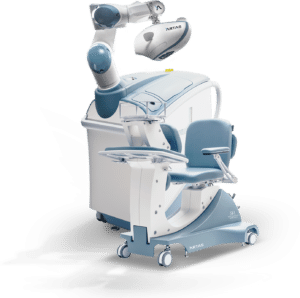
ARTAS 9x Robotic hair restoration
Who is a Good Candidate for ARTAS?
The ARTAS System is a revolutionary approach to hair restoration, but it is essential to recognize that not everyone experiencing hair loss is a suitable candidate for this advanced procedure. Here’s a closer look at the ideal candidates for ARTAS and the factors that determine candidacy.
Ideal Candidates
- Individuals with Stable Hair Loss Patterns:
The ARTAS procedure is most effective for individuals who exhibit stable hair loss patterns. This typically means that the hair loss has reached a plateau and is not expected to progress rapidly. Those in the early stages of hair loss may benefit from medical treatments rather than surgical interventions.
- Men and Women Seeking Natural-Looking Results:
Both men and women can be excellent candidates for the ARTAS System. The procedure is designed to create natural-looking results that blend seamlessly with the patient’s existing hair. Ideal candidates are individuals who desire a fuller head of hair while maintaining a realistic and aesthetically pleasing appearance.
Assessing Hair Loss
Understanding the type and severity of hair loss is crucial in determining candidacy for the ARTAS procedure. Two widely used classification systems are:
- Norwood Scale: This scale is used primarily for men and ranges from Type I (minimal hair loss) to Type VII (extensive hair loss). Candidates typically in the early to moderate stages of hair loss (Types II to IV) may be the most suitable for the ARTAS System.
- Ludwig Scale: This scale is specifically designed for women and categorizes hair loss into three types, with Type I representing minimal thinning and Type III indicating significant loss. Women experiencing Types I and II may be better candidates for ARTAS.
Health Considerations
Before proceeding with the ARTAS procedure, a thorough evaluation of the patient’s medical history, age, and hair characteristics is essential. Health considerations that may affect candidacy include:
- Age: Younger individuals may still experience changes in hair loss patterns, making them less ideal candidates. Generally, individuals over 25 are considered better candidates.
- Medical History: A comprehensive review of any existing medical conditions, medications, and overall health will help determine if the ARTAS procedure is safe and appropriate.
Consultation Process
The consultation process is critical for setting realistic expectations and ensuring the best possible outcomes. During this phase, healthcare professionals will conduct:
- Professional Assessments: These assessments help to evaluate hair density, scalp condition, and overall suitability for the ARTAS procedure.
- Discussion of Expectations: Candidates will have the opportunity to discuss their goals and concerns, allowing the physician to tailor the treatment plan to meet individual needs.
Potential Risks and Considerations
While the ARTAS System presents a significant advancement in hair restoration with many benefits, it’s essential to acknowledge that, like any medical procedure, it carries potential risks and considerations. Here’s a closer look at these factors.
Common Side Effects
- Temporary Pain and Discomfort:
- After the ARTAS procedure, patients may experience mild to moderate pain in both the donor and recipient areas. This discomfort is generally manageable and can be alleviated with over-the-counter pain relievers, as prescribed by the physician.
- Swelling in the treated areas is also common, especially in the days following the procedure. Patients might notice some puffiness around the forehead and scalp, which usually subsides within a week.
- Scabbing and Crusting:
- As the scalp heals, small scabs may form around the transplanted follicles. This is a normal part of the healing process and should resolve on its own within a few weeks. Patients are advised to avoid picking at the scabs to minimize the risk of infection and ensure proper healing.
Rare Complications
- Infection:
- Although rare, infections can occur at the donor or recipient sites. Signs of infection may include increased redness, swelling, and pus discharge. Patients should promptly report any unusual symptoms to their healthcare provider to receive appropriate treatment.
- Following post-operative care instructions meticulously can help reduce the risk of infections.
- Poor Graft Take:
- In some cases, the transplanted hair follicles may not survive or thrive as expected, leading to poor graft take. Factors influencing graft success include the skill of the surgeon, the health of the donor hair follicles, and post-operative care.
- While the ARTAS system enhances the likelihood of graft survival through precise extraction techniques, individual variations in healing and hair growth can still affect outcomes.
Realistic Expectations
- Understanding Results:
- Patients must understand that while the ARTAS System is effective, results can vary based on individual factors, including hair type, existing hair density, and overall scalp condition.
- It’s important for patients to have realistic expectations regarding hair restoration timelines; visible results typically develop over several months as the transplanted hair follicles enter their growth cycle.
- Consultation and Planning:
- A thorough consultation with a qualified physician can help set realistic expectations. This process involves discussing desired outcomes, potential results, and any limitations based on individual hair loss patterns and characteristics.
Long-Term Maintenance
- Ongoing Care:
- Post-procedure, patients may need ongoing care to maintain their results. This can include topical treatments, medications, or lifestyle changes that promote healthy hair growth.
- Regular follow-up appointments with the healthcare provider are encouraged to monitor progress and address any concerns.
- Potential for Additional Treatments:
- Some patients may require additional treatments in the future, particularly if they continue to experience hair loss. This could involve another ARTAS procedure or other hair restoration options, depending on individual circumstances.
Comparing ARTAS with Traditional Methods
When exploring hair restoration options, understanding the differences between the ARTAS System and traditional hair transplant methods is crucial for making an informed decision. Each approach has its strengths and weaknesses, impacting both the patient experience and the overall results.
ARTAS vs. FUT (Follicular Unit Transplantation)
- Procedure Overview:
- FUT involves surgically removing a linear strip of scalp from the donor area, which is then dissected into individual follicular units for transplantation. This method often requires stitches and can result in a linear scar at the donor site.
- ARTAS, on the other hand, utilizes advanced robotic technology to perform follicular extraction with small circular punches. This technique allows for harvesting individual hair follicles without the need for a linear incision.
- Scarring:
- Visible Scarring: The linear incision in FUT typically leaves a noticeable scar that may be problematic for patients who prefer shorter hairstyles. The scar can become more visible with time, especially if the hair is cut short.
- Minimal Scarring: ARTAS’s approach results in tiny circular scars, usually less than 1mm in diameter. These scars are less conspicuous and often become less noticeable over time, allowing for greater styling options post-procedure.
- Recovery Time:
- FUT Recovery: Recovery from FUT can take longer due to the surgical nature of the procedure. Patients may experience swelling, discomfort, and a longer downtime as they heal from the incision.
- ARTAS Recovery: With ARTAS, the minimally invasive technique typically leads to quicker recovery times. Most patients can return to their daily activities within a few days, with less discomfort and faster healing.
ARTAS vs. FUE (Follicular Unit Extraction)
- Extraction Method:
- Manual Extraction in FUE: FUE relies on manual extraction techniques, where the surgeon uses handheld tools to extract individual follicles. While extremely effective, this method can be time-consuming depending on the patient’s hair and skin, requiring significant skill and concentration from the surgeon.
- Automated Extraction in ARTAS: The ARTAS System automates the extraction process, enhancing precision and efficiency. The robotic arms perform the extraction with remarkable accuracy, reducing the time needed for harvesting follicles.
- Precision and Consistency:
- Variability in FUE: The manual nature of FUE can lead to variability in follicle extraction quality and consistency. Surgeons may tire over long procedures, potentially affecting precision. Unless the doctor is an avid needle point and goblen person, Dr Kelemen is both!
- Consistent Results with ARTAS: The robotic assistance of ARTAS ensures consistent and high-quality extractions, minimizing human error and enhancing the overall success rate of the procedure.
Cost Analysis
- Cost Comparison:
- Initial Costs: The upfront cost of ARTAS procedures is generally higher than that of traditional methods like FUT and FUE. This is due to the advanced technology and equipment involved in the ARTAS system.
- Value Justification: Many patients find the benefits of ARTAS—such as reduced recovery time, minimal scarring, and higher satisfaction rates—justify the additional expense. Investing in quality and effective results can lead to better long-term outcomes and improved patient satisfaction.
- Long-Term Financial Considerations:
- Although ARTAS may have higher initial costs, patients may incur fewer expenses in the long run due to fewer follow-up procedures or complications.
Patient Satisfaction Rates
- Higher Satisfaction with ARTAS:
- Surveys and clinical studies have indicated that patients undergoing ARTAS procedures report higher satisfaction levels than those who have traditional methods like FUT and FUE. Factors contributing to this satisfaction include the natural appearance of results, reduced recovery times, and overall comfort during the procedure.
- Aesthetic Outcomes:
- Many patients appreciate the aesthetic results achieved through the ARTAS system, citing natural-looking hairlines and densities that blend seamlessly with their existing hair. This level of satisfaction can significantly enhance the patient’s self-esteem and confidence.
The Future of Hair Restoration
As advancements in technology continue to reshape various medical fields, the future of hair restoration is particularly promising. Innovations in techniques and methodologies are paving the way for more effective, efficient, and patient-friendly options. Here’s a detailed look at what lies ahead in the realm of hair restoration.
Technological Innovations
The field of hair restoration is witnessing the introduction of cutting-edge technologies that enhance the precision and effectiveness of procedures. Innovations such as 3D imaging, augmented reality (AR), and virtual reality (VR) are being explored to improve pre-surgical planning and patient education.
- 3D Imaging: High-definition imaging can help physicians analyze hair density, follicle health, and scalp condition, leading to more informed decision-making during the planning phase. This technology allows for a comprehensive assessment of the patient’s unique hair loss pattern.
- AR and VR: These technologies can be used to simulate potential results of hair restoration procedures, enabling patients to visualize outcomes before undergoing surgery. This not only enhances patient understanding but also helps set realistic expectations.
Integration of AI and Robotics
The future of hair restoration will likely involve the integration of artificial intelligence (AI) and robotics to improve the precision of hair transplants. AI algorithms can analyze vast amounts of data, recognizing patterns and predicting successful outcomes based on individual characteristics.
- Enhanced Precision: AI-driven systems can assist in identifying the best hair follicles for extraction and implantation, optimizing the graft selection process. This level of sophistication could significantly enhance the success rates of hair restoration procedures.
- Automated Processes: Robotic systems may become even more advanced, enabling faster and more accurate follicle extraction and placement. This will not only reduce the duration of surgeries but also improve overall patient comfort.
Patient-Centric Approaches
The future will see a shift toward more patient-centric approaches in hair restoration. This means that procedures will be increasingly customized to meet the specific needs, preferences, and conditions of individual patients.
- Personalized Treatment Plans: Advanced diagnostic tools will allow clinicians to create highly personalized treatment plans based on genetic factors, hair type, and patterns of hair loss. This level of customization can lead to better outcomes and higher satisfaction rates.
- Focus on Patient Experience: Patient experience will become a central focus in the development of hair restoration services. Enhancements in communication, post-operative care, and support will contribute to a more holistic approach to patient care.
Research and Development
- Ongoing Research: Continuous research in the field of hair restoration will yield new insights into the causes of hair loss and innovative treatment options. Researchers are exploring various avenues, including:
- Stem Cell Therapy: Investigating the potential of stem cells to regenerate hair follicles and promote hair growth offers exciting prospects for future treatments. This approach could lead to non-surgical options for hair restoration.
- Genetic Studies: Understanding the genetic factors associated with hair loss could enable the development of targeted therapies that address the underlying causes rather than merely treating the symptoms.
Novel Techniques: As research progresses, new techniques may emerge, such as advanced graft preservation methods, improved surgical tools, and novel biological treatments that enhance follicle survival and growth.
Cons:
- Punch size: punch remains the same size across all models: 18g and 19g respectively (9x and IXI have the same punch sizes)
- Density: robot cannot mimic natural density. Doctor has to make sites manually between those made by the robot
- Implantation: trauma to the graft and some pop out
- Doctor vs machine: most clinics today, use the robot as a replacement for the doctor vs aiding the doctor
- Cost/Price: cost is higher
- Limited Harvesting: Area available for harvesting is limited. Danger of over harvesting will equate to what doctors call the “Window”. This is when a visible area is less dens due to overharvesting, compared to the surrounding area.
- Healing time: longer due to larger punch
- Limited application: robot does not like curly hair and very fine hair.
Conclusion
The ARTAS System represents a significant advancement in hair restoration technology, offering a solution that is not only effective but also minimally invasive compared to FUT. For those grappling with hair loss, ARTAS provides a chance to reclaim confidence and improve self-image. As this technology continues to evolve, patients can look forward to even more refined techniques and results. If you’re considering a hair transplant, discussing the ARTAS system with a qualified specialist may be your first step toward a fuller head of hair.
ARTAS does have a place in a hair transplant practice as long it is used as it was intended, as a tool to aid the doctor and NOT replace the doctor, as it happens too often today. The robot is no replacement for a well-versed physician, who can maximize its strengths and minimize its weaknesses. ARTAS should be part of the doctor’s repertoire but not the sole FUE method.
At Hair 4 Life Medical, ARTAS is part of our FUE repertoire along with WAW and Ugraft. Why the selection? Because there is no tool that fits all!
Schedule your consultations!
I love to educate the patient on what options they have so give us a call at 480-525-4547 and start your journey of hair restorations with me.
Reference:
Hair transplant Clinic in Scottsdale, AZ lead by Dr Kelemen offering every hair transplant method: FUT and FUE: ARTAS, WAW, Ugraft.
How important is post op care?
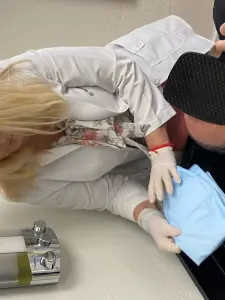
Dr Kelemen teaches the patient to take care of their newly transplanted hair
Received a phone call recently from a person that had a hair transplant with the top surgeon in the valley but could not get hold of him for post op care clarification. Sadly, I could not help him, because he was not my patient, and I would have to see him to provide him with info. My advice is that you must always follow up with your provider, calling another physician will mean that you will have to pay for a consultation which will make you their patient and they can provide care for you.
This was a hard lesson learned by the patient that after he paid 5 figures, he could not find anybody to answer his questions the day after the surgery. The lesson to be learned from this event is that he should have asked more questions during his consultation, and it shows just how important the complete package is i.e. it is not just the hair transplant but the post op and pre op.
At Hair 4 Life, I see the patient personally for the next 3 days, I, the doctor, do the shampoo and teach them how to care for their hair. I feel that post op is just as important as the surgery itself. If you do not take care properly of the new implants, then you waisted your money.
So, for those that did not get post-op instructions from their provider here are Dr. Kelemen’s:
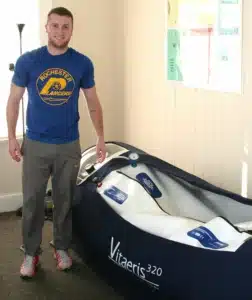
Hyperbaric chamber, same one used by elite athletes, for quicker healing.
Do’s
- DO take care of the implanted area
Your hair transplant recovery heavily depends on how well you care for the implanted area within the first seven days after hair transplant. Post-surgery, your doctor will give you a saline solution with copper peptides that you must spray on the transplanted area. On your own, or with the help of someone, spray the solution every 2-3 hours or as directed by your surgeon to avoid swelling.
You may be allowed to wash your hair 24 hours after the surgery, but water pressure must be kept to a minimum, and its temperature must be lukewarm. To manage it easier, you can use a small jar to wash the location of the transplanted roots. Refrain from putting anything on your scalp or using any products that your doctor hasn’t cleared as it may irritate the area.
Once you’ve finished, lightly dab the area with a soft cloth to dry.
You should expect itchiness, especially as the scabs begin to form, but it should be trivial if the technician trimmed the graft properly. But it’s imperative to avoid directly touching the area with your fingers as this may cause bleeding or inflammation. You can also consult your doctor on properly removing scabs after a hair transplant without affecting the newly-placed grafts.
- DO use pain medication as recommended
It’s normal to experience swelling, headaches, or discoloration of the transplanted area within the first week. It is essential to take your antibiotics as prescribed to help prevent infection. Painkillers and even sleeping pills when you can’t sleep will help relax your body and give you relief.
- DO keep an eye out for infection
Surgical incisions are at risk for infection, which is why unless there’s an absolute need to, avoid touching the donor area with your hands. You’ll also be responsible for keeping your wound dry and changing its dressing.
Always be on the lookout for discharge, pus, excessive bleeding, fever, persistent pain, or increased redness of your scalp. These are signs of a developing infection that needs immediate attention from your doctor.
Don’t
- DON’T smoke, drink or take aspirin
Alcohol in the body interferes with its metabolism, which is crucial for the growth of new hair. Taking aspirin in lieu of what you’ve been prescribed may thin the blood and cause excessive bleeding. It’s better to stick with the pain medication you’ve been given.
Nicotine from cigarettes restricts blood flow. We advise our patients to avoid cigarettes at least four weeks before surgery.
- DON’T engage in strenuous exercise or activities
Workouts that require too much exertion, lifting, or straining may disrupt the healing of your wound. You need to manage your blood pressure and heart rate to lessen the risk of swelling, so avoid excessive movements, especially during the first two weeks post-op. Too much movement may also cause excessive sweating, and perspiration increases the risks of infection.
- DON’T expose your scalp to sunlight
Direct exposure to sunlight can be dangerous to the areas where grafts have been implanted. It is advisable to avoid exposure for at least four months following the FUE hair transplant procedure. But if sun exposure is entirely unavoidable, you must carefully apply sunscreen to the area before heading out. Some patients prefer to use hats to protect themselves from the sun, but there is still a risk of rubbing against the implanted hairs, which is why we don’t recommend it.
More Aftercare Tips
Two important aftercare activities that you will be doing every day are washing your hair and sleeping in a manner that doesn’t affect your surgery. Sleeping with your head elevated will alleviate swelling! Dr. Kelemen recommends you roll a large towel and used it as a neck brace to keep you from rolling left or right the first 3 nights.
The first 3 days after the surgery, I recommend you find hyperbaric center and do 3 sessions to help speed up healing. At my clinic, Hair 4 Life, I offer onsite hyperbaric treatment to my hair transplant patients and the results have been incredible: quicker healing and less scaring!
Here is how you can wash your hair and sleep in the optimal position post-FUE/FUT hair transplant.
Hair Transplant Clinic in Scottsdale
Dr. Kelemen integrates conventional and naturopathic medicine to provide the best of what both worlds have to offer. She creates a unique, compassionate, accepting environment for her patients. You only have to read the reviews to find out how she empowers her clients to look and feel their best. They leave the clinic with their heads held high!
To find out which procedure is best suited to your needs, you are invited to come into Hair4Life for a consultation. Treatments are kept as affordable and accessible as possible so come in and talk to us.
Hair Transplant | Johns Hopkins Medicine
Contact Us or call Hair 4 Life at (480) 525-4547 to schedule an appointment.
Everything You Need to Know About Hairline Lowering Surgery (Forehead Reduction)
Hairline lowering surgery, also known as forehead reduction, is a specialized cosmetic procedure designed to reduce the height of the forehead and create a more balanced facial appearance. This surgery has gained popularity for its ability to enhance facial proportions and boost self-confidence. If you’re considering this procedure, here’s everything you need to know, including the benefits, the process, recovery, and why you might want to choose Hair for Life AZ for your hair transplant needs.
What is Hairline Lowering Surgery?
Hairline-lowering surgery is a surgical technique aimed at reducing the size of the forehead by moving the hairline closer to the eyebrows. This procedure is particularly beneficial for individuals with a high or receding hairline, those experiencing hair loss, or those simply seeking a more aesthetically pleasing facial balance.
Key Objectives of Hairline Lowering Surgery:
- Reduce Forehead Size: Shortens the distance between the hairline and the eyebrows.
- Enhance Facial Proportions: Creates a more balanced and harmonious facial appearance.
- Boost Confidence: This helps individuals feel more comfortable and confident with their appearance.
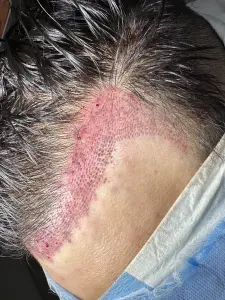
Hairline sites.
Why Consider Hairline Lowering Surgery?
Hairline-lowering surgery can be a transformative option for various reasons. Here’s why many people choose this procedure:
- High Forehead: A high hairline often results in an unusually large forehead, which can disrupt facial harmony and create an imbalance in one’s appearance. By lowering the hairline, you can achieve a more proportional and aesthetically pleasing look.
- Receding Hairline: Genetics, aging, or other factors can cause a hairline to recede, making the forehead appear larger. This condition can be distressing, impacting self-esteem and confidence. Hairline-lowering surgery helps address this issue by repositioning the hairline closer to the eyebrows.
- Aesthetic Preferences: Some individuals have a personal or cultural preference for a lower hairline. For these individuals, the procedure can enhance their facial features and align with their aesthetic goals, contributing to increased satisfaction with their overall appearance.
Benefits of Hairline Lowering Surgery:
- Immediate Results: The procedure offers a noticeable reduction in forehead size right after the surgery, giving you an instant improvement in facial balance.
- Long-lasting Effects: Unlike temporary solutions, hairline lowering surgery provides a permanent fix, delivering long-term results that significantly enhance your appearance.
- Minimally Invasive: Compared to other cosmetic surgeries, this procedure is less invasive, generally involving fewer risks and a shorter recovery time, allowing you to return to your daily activities more quickly.
How is Hairline Lowering Surgery Performed?
The procedure involves several steps, each of which is crucial for achieving the desired outcome.
- Consultation:
- Assessment: A thorough evaluation of your hairline, facial proportions, and overall health.
- Discussion: Discuss your goals and expectations with the surgeon.
- Preparation:
- Anesthesia: Local or general anesthesia is administered to ensure comfort during the procedure.
- Marking: The surgeon marks the new hairline position on your forehead.
- Surgical Procedure:
- Incision: An incision is made along the hairline.
- Tissue Removal: Excess forehead skin and tissue are removed.
- Hairline Adjustment: The hairline is repositioned and secured in place.
- Closure:
- Stitches: The incision is closed with stitches or staples.
- Bandaging: A bandage is applied to protect the area.
- Post-Operative Care:
- Instructions: You’ll receive specific instructions on how to care for your surgical site and manage any discomfort.
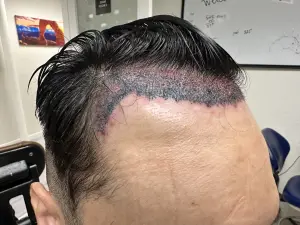
Hairline with grafts inserted.
Recovery and Aftercare
Recovery from hairline lowering surgery is generally straightforward, but following proper aftercare is essential for optimal results.
- Immediate post-op:
- Rest: Rest for the first 24-48 hours.
- Swelling and Bruising: Expect some swelling and bruising, which should subside within a few days.
- Pain Management: Over-the-counter pain relievers may be recommended.
- First Week:
- Avoid Strenuous Activity: Refrain from physical exercise and heavy lifting.
- Follow-Up Visits: Attend follow-up appointments to monitor healing.
- Long-Term Care:
- Hair Growth: New hair growth may take a few months to become noticeable.
- Scarring: Scarring is minimal and typically hidden within the hairline.
- Hair Maintenance: Regular hair care and maintenance are essential for long-term results.
Risks and Considerations
As with any surgical procedure, there are potential risks and considerations to keep in mind:
- Infection: Proper aftercare helps minimize this risk.
- Scarring: While scarring is usually minimal, it may be visible in some cases.
- Uneven Results: There’s a chance of uneven hairline placement, which can be corrected with additional procedures if necessary.
Why Choose Hair for Life AZ?
Hair for Life AZ is a leading provider of hair transplant services, including hairline-lowering surgery. Here’s why you might consider choosing them:
- Expertise:
- Experienced Surgeons: Highly skilled surgeons with extensive experience in hairline lowering and other hair transplant procedures.
- Advanced Techniques: Utilization of the latest surgical techniques and technologies for optimal results.
- Personalized Care:
- Consultation: Comprehensive consultations to understand your goals and tailor the procedure to your needs.
- Support: Dedicated support throughout the entire process, from pre-operative preparation to post-operative care.
- Quality Results:
- Natural Appearance: Focus on achieving a natural-looking hairline that enhances your facial aesthetics.
- High Patient Satisfaction: Proven track record of successful procedures and satisfied clients.
Cost and Financing Options
The cost of hairline lowering surgery can vary based on several factors, including the complexity of the procedure, the surgeon’s experience, and the location of the clinic. Hair for Life Medical offers various financing options to help make the procedure more affordable.
Factors Affecting Cost:
- Surgical Complexity: The extent of forehead reduction required.
- Surgeon’s Expertise: Higher expertise may come with a higher cost.
- Location: Costs can vary based on the clinic’s location.
Financing Options:
- Payment Plans: Flexible payment plans to spread out the cost.
- Insurance: Check if your insurance covers any part of the procedure.
Conclusion
Hairline-lowering surgery is a transformative procedure that can significantly enhance your facial appearance and boost your self-confidence. If you’re considering this surgery, Hair for Life Medical offers exceptional expertise and personalized care to ensure the best possible outcome.
For more information about hairline lowering surgery and to schedule a consultation, visit Hair for Life Medical today. Your journey to a more balanced and confident appearance starts here!
References:
International Society of Hair Restoration Surgery (ishrs.org)
American Board of Hair Restoration Surgery | ABHRS
Fue Europe – HAIR TRANSPLANT SOCIETY (fue-europe.org)
Everything You Need to Know About Female Hair Restoration
Are Hair Transplants an Option for Women?
Hair loss is often associated with men, but it is also a significant concern for many women. Female hair loss can be caused by various factors, including genetics, hormonal changes, and medical conditions. For women who have struggled with thinning hair or bald spots, hair transplants have emerged as a viable solution. In this comprehensive guide, we will explore whether hair transplants are an option for women, how they work, and what you need to know about female hair restoration.
Understanding Female Hair Loss
Causes of Female Hair Loss
Hair loss in women can be attributed to several factors:
- Genetics: Like men, women can inherit hair loss patterns from their families. This is known as female pattern baldness.
- Hormonal Changes: Conditions such as pregnancy, menopause, and thyroid disorders can cause temporary or permanent hair loss.
- Medical Conditions: Autoimmune diseases, such as alopecia areata, and scalp infections can lead to hair loss.
- Medications: Certain drugs, including chemotherapy and antidepressants, may cause hair thinning as a side effect.
- Stress: Emotional or physical stress can trigger hair loss, known as telogen effluvium.
- Nutritional Deficiencies: Lack of essential nutrients, such as iron and vitamins, can affect hair health.
Symptoms of Hair Loss
Women experiencing hair loss may notice:
- Thinning Hair: Gradual thinning of hair, especially at the crown or part line.
- Bald Spots: Small patches of baldness on the scalp.
- Excessive Hair Shedding: Increased hair fall when brushing or washing hair.
What Is a Hair Transplant?
A hair transplant is a surgical procedure that involves moving hair follicles from one part of the body (typically the back of the head) to a thinning or bald area. The two main techniques used are:
- Follicular Unit Transplantation (FUT): This involves removing a strip of scalp from the donor area, dissecting it into individual follicles, and implanting them into the recipient area.
- Follicular Unit Extraction (FUE): This technique extracts individual hair follicles directly from the donor area and transplants them into the recipient area.
Benefits of Hair Transplants
- Natural Appearance: Transplanted hair blends seamlessly with existing hair, providing a natural look.
- Permanent Solution: Once the transplanted hair grows, it is permanent and does not require ongoing treatments.
- Minimal Downtime: Modern techniques result in minimal downtime and quicker recovery.
Are Hair Transplants a Good Option for Women?
Hair transplants can be a suitable option for women, but several factors determine their eligibility and effectiveness. Here’s an expanded look at these factors:
- Cause of Hair Loss
- Androgenetic Alopecia (Female Pattern Baldness): Hair transplants are highly effective for women with this condition. This type of hair loss typically presents as thinning around the crown or top of the scalp, with the hairline generally remaining intact.
- Localized Hair Loss: Women experiencing hair loss in specific areas due to trauma, scarring, or other localized issues can benefit from hair transplants. The procedure can effectively cover these bald patches and restore a natural appearance.
- Diffuse Thinning: Women with widespread hair thinning, where the hair loss is more generalized and less localized, might not see the same level of success with hair transplants. The results can be less predictable in such cases, and other treatments may be recommended in conjunction with or instead of a transplant.
- Hair Density
- Donor Area Quality: A critical factor in the success of a hair transplant is having a donor area with sufficient density and health. This area, typically at the back or sides of the head, should have a good number of healthy, robust hair follicles.
- Extent of Hair Loss: For women with extensive hair loss, the donor area might not provide enough follicles to cover the desired area. In such cases, the available donor hair may be used sparingly, and results may vary.
- Alternative Treatments: If the donor’s hair is insufficient, other treatments such as medication, PRP therapy, or hair restoration products might be recommended either alone or in combination with a transplant to achieve better results.
- Overall Health
- General Health: Candidates for hair transplants should be in good overall health. Conditions that affect the scalp or hair growth, such as autoimmune disorders or chronic illnesses, can impact the success of the transplant.
- Medical Conditions: Women with certain medical conditions or those on specific medications that affect hair growth might need to address these issues before considering a transplant. A thorough evaluation by a specialist is necessary to ensure that the procedure will be safe and effective.
- Healing and Recovery: Good health supports better healing and recovery post-surgery. Candidates need to follow pre-and post-operative care instructions to ensure the best possible outcome.
Each individual’s situation is unique, and a detailed consultation with a hair restoration specialist can provide personalized advice on whether a hair transplant is the right choice.
The Hair Transplant Procedure
Initial Consultation
The process begins with a consultation with a specialist at Hair For Life AZ. During this consultation, the surgeon will:
- Evaluate your hair loss pattern.
- Discuss your medical history and goals.
- Recommend the most suitable transplant technique.
Pre-Surgery Preparation
Before the surgery, you may need to:
- Avoid blood thinners and certain medications.
- Follow specific instructions for hair washing and scalp care.
The Procedure
- Anesthesia: The scalp is numbed with local anesthesia to ensure comfort during the procedure.
- Harvesting: Hair follicles are extracted from the donor area using FUT or FUE techniques.
- Implantation: The follicles are carefully implanted into the thinning or bald areas of the scalp.
- Post-Procedure Care: You will receive instructions on how to care for your scalp, including avoiding strenuous activities and following a prescribed regimen.
Recovery and Results
- Immediate Post-Surgery: Some swelling, redness, and discomfort are normal but should subside within a few days.
- First Few Weeks: Shedding of transplanted hair is common, but new growth will begin within a few months.
- Final Results: Full results can be seen within 6-12 months as new hair grows and matures.
Alternatives to Hair Transplants
If a hair transplant is not suitable, consider these alternatives:
- Medications: Minoxidil and finasteride can help stimulate hair growth.
- Platelet-rich plasma (PRP) Therapy: Involves injecting platelet-rich plasma into the scalp to promote hair growth.
- Laser Therapy: Uses low-level laser light to stimulate hair follicles.
- Hairpieces and Wigs: Non-surgical solutions can provide immediate coverage.
Conclusion
Hair transplants offer a promising solution for women dealing with hair loss, providing a natural and permanent way to restore their hair. Understanding the procedure, evaluating your options, and choosing a reputable clinic are essential steps in achieving the best results. For personalized advice and top-quality hair restoration services, visit Hair For Life AZ to begin your journey towards a fuller head of hair.
References:
HAIR TRANSPLANTATION IN WOMEN – ISHRS
American Board of Hair Restoration Surgery | ABHRS
Hair Transplant Procedures: Average Cost, What to Expect, and More
Hair transplant Clinic in Scottsdale, AZ lead by Dr Kelemen offering every hair transplant method: FUT and FUE: ARTAS, WAW, Ugraft.
Top hair transplant clinic in Scottsdale
Recent Articles


 Hair 4 Life Medical