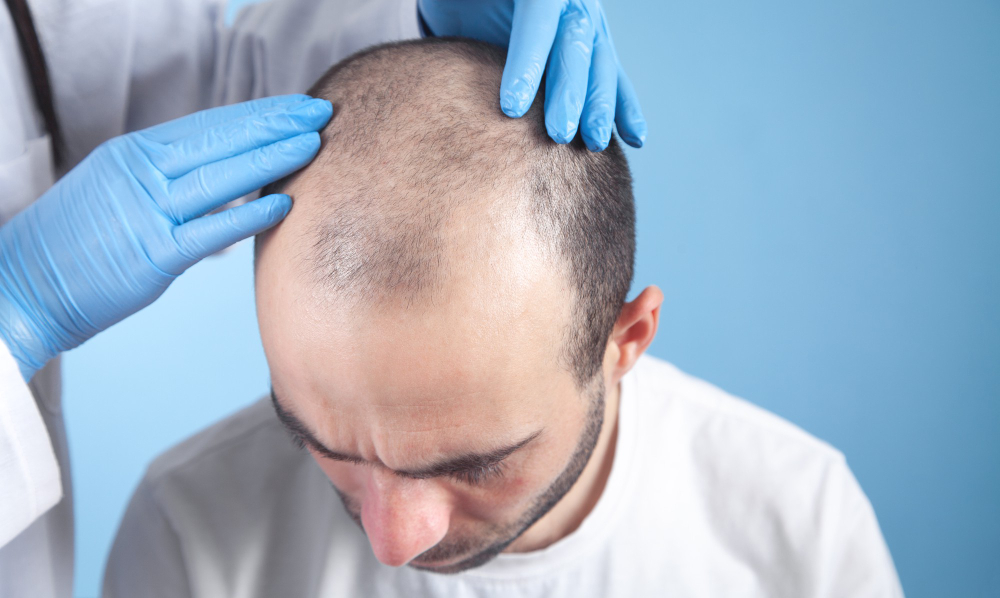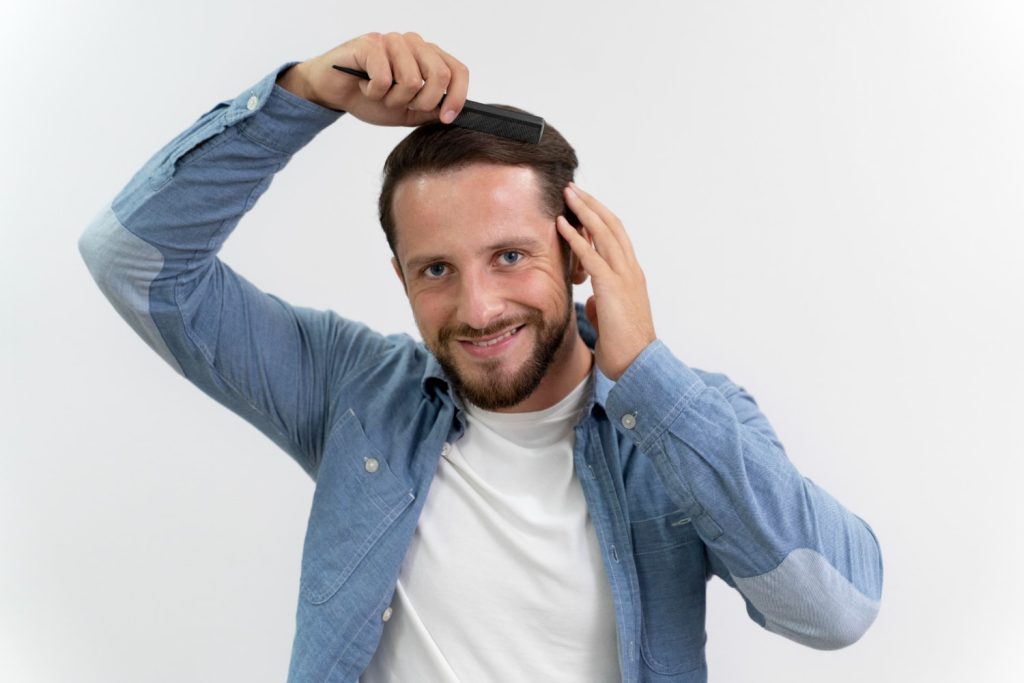
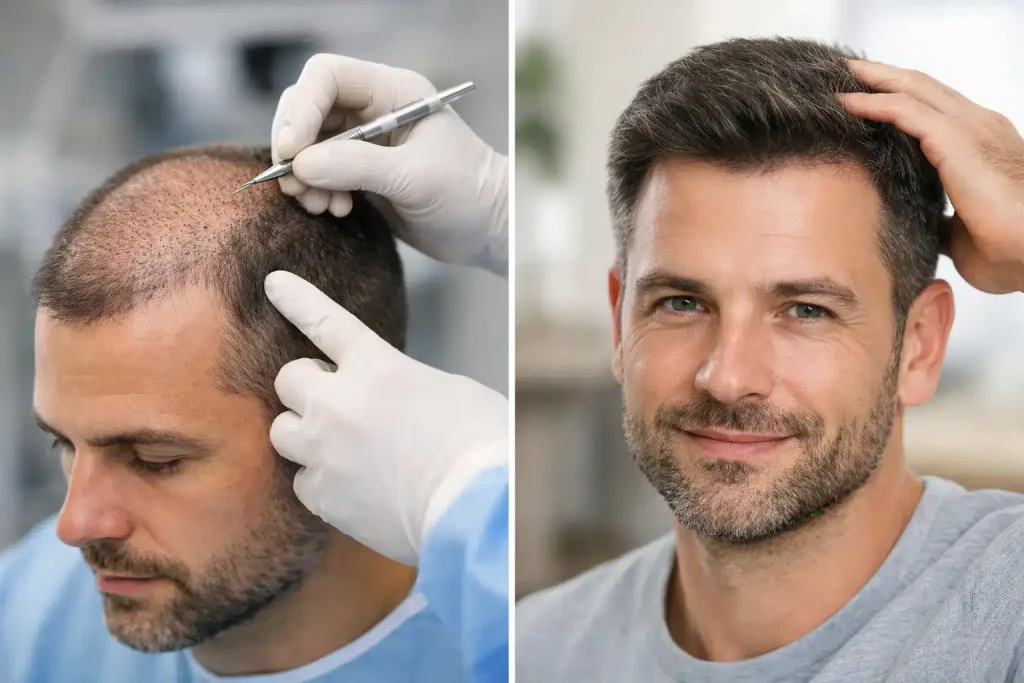
If you are considering surgery, the first question is usually the right one: is hair transplant permanent? The honest answer is yes, transplanted follicles are generally intended to be permanent, but that does not mean every hair on your scalp will stay the same forever. A hair transplant moves living follicles from a more resistant donor area to a thinning or bald area. Those follicles usually keep the characteristics of the donor zone. What changes over time is the native, non-transplanted hair around them, your age, your hormones, and sometimes the quality of the original plan.
That distinction matters. Patients often hear the word permanent and assume a single procedure guarantees lifelong density everywhere. In reality, permanence applies to the transplanted grafts if they are healthy, harvested well, placed well, and supported by a realistic long-term strategy. Hair restoration is not only about moving hair. It is about understanding the type of hair loss, predicting future loss, and building a result that still looks natural years later.
Is hair transplant permanent for everyone?
For most patients with androgenetic alopecia, the donor hair at the back and sides of the scalp is more genetically resistant to DHT, the hormone involved in pattern hair loss. When those follicles are transplanted, they usually continue to grow in their new location for many years.
Usually is the key word. Permanence is strongest when the diagnosis is correct and the donor area is truly stable. If someone has a diffuse or scarring alopecia, active inflammatory hair loss, or a poorly defined diagnosis, a transplant may not behave as predictably. In those cases, surgery without a thorough medical workup can lead to disappointment.
This is why a proper consultation matters so much. A patient with early thinning, hormonal shifts, or shock loss risk needs a different plan than someone with mature, stable hair loss and a strong donor supply. The best outcomes come from matching the procedure to the person, not forcing every patient into the same solution.
What permanent really means in hair restoration
A transplanted follicle is not synthetic material. It is a living structure with a blood supply, growth cycle, and biological limitations. After surgery, the shaft often sheds in the first few weeks. That part is normal. The follicle remains under the skin, enters a resting phase, and then starts producing new hair over the coming months.
Once growth is established, those transplanted hairs usually continue cycling like normal hair. They can be cut, washed, and styled like the rest of your hair. They also age with you. The hair may become finer over decades, turn gray, or appear less dense than it did at age 30. Permanent does not mean frozen in time. It means the transplanted follicles are expected to remain viable and continue producing hair long term.
Why some people think transplants are not permanent
There are a few reasons patients may believe their transplant “failed” years later, even when many grafts survived.
The most common reason is ongoing loss of native hair. If you transplant into the front or mid-scalp but the surrounding native hair continues to miniaturize, the overall look can thin again. The transplanted hair may still be there, but the contrast makes the area appear less full.
Another issue is poor surgical planning. If a hairline is designed too low, too straight, or too dense for the available donor supply, the patient may need more work later to keep the result balanced. This is not because transplanted hair is temporary. It is because the original design did not respect future hair loss.
Technique also matters. Overharvesting, graft dehydration, excessive trauma during placement, or weak angle and direction control can reduce yield and affect how natural the result looks. A transplant can only be as good as the diagnosis, donor management, and execution behind it.
FUE, FUT, and permanence
Patients often ask whether FUE or FUT is more permanent. In terms of graft survival and long-term growth, both methods can produce permanent results when performed properly. The difference is not that one method grows forever and the other does not. The difference is how the follicles are harvested and what trade-offs come with each approach.
FUE removes follicular units individually. It can be an excellent option for patients who want shorter hairstyles, less linear scarring, or more flexibility in certain cases. FUT removes a strip of donor tissue and then dissects grafts under magnification. It may preserve donor resources efficiently in the right patient and can be a strong option for larger sessions.
The best method depends on donor density, scalp laxity, styling preferences, surgical goals, and whether the patient may need future procedures. The permanence of the result depends more on patient selection and surgical skill than on marketing language around the method.
The role of donor hair quality
Not all donor areas are equal. Thick hair, favorable wave, good density, and a stable donor zone usually create better long-term coverage. Fine hair, limited density, or a weak donor area can still be used, but expectations must be adjusted.
This is especially important in corrective surgery, advanced baldness, body hair transplantation, eyebrow work, beard restoration, and transgender hairline design. In each of those situations, permanence is only one part of success. The other part is whether the available donor hair matches the cosmetic goal.
A permanent result that looks unnatural or sparse is not a good outcome. That is why experienced hair restoration practices focus on planning as much as the procedure itself.
What helps a hair transplant last well?
A lasting result starts before surgery. The cause of hair loss needs to be identified. Some patients benefit from medical therapy to stabilize native hair before or after surgery. Others may need hormone evaluation, scalp analysis, regenerative support, or treatment of underlying inflammation.
This is where a comprehensive clinic model becomes valuable. Surgery restores hair where it is already gone, but non-surgical therapies may help protect vulnerable native follicles that have not been transplanted. Combining both approaches often produces a result that looks fuller and stays balanced longer.
Post-operative care matters too. Following instructions on washing, activity limits, sun exposure, and scalp handling supports graft survival during the early healing period. Even the best surgery can be compromised by poor aftercare in the first days and weeks.
Age and timing matter more than many people realize
A 28-year-old with rapidly evolving hair loss needs a different conversation than a 52-year-old with a stable pattern. Younger patients are often excellent candidates, but they also have more future hair loss ahead of them. If surgery is done too aggressively without a long-term plan, the patient may outpace the transplant.
That is why conservative hairline design and donor preservation are so important. The goal is not to create the densest possible look for one year. The goal is to create a natural-looking restoration that still makes sense if hair loss progresses.
A physician who focuses only on the immediate cosmetic win may not be protecting your future options. A physician who focuses on diagnosis, donor stewardship, and staged planning is more likely to deliver a result that ages well.
So, is hair transplant permanent enough to be worth it?
For the right candidate, yes. A well-performed transplant can provide long-lasting, natural growth and a meaningful improvement in appearance and confidence. Many patients enjoy results that remain strong for years because the transplanted follicles retain their donor resistance.
But worth it depends on more than permanence. It depends on whether your diagnosis is accurate, whether the donor hair is adequate, whether the design is age appropriate, and whether there is a plan for native hair that may continue to thin. It also depends on who is performing the procedure and how carefully the grafts are handled.
At Hair For Life Medical, this question is approached the way it should be approached – as a medical and aesthetic planning issue, not a simple sales answer. Some patients need surgery. Some need treatment first. Some need both. The best decision is the one that fits your pattern of loss, your goals, and your long-term donor supply.
A better question to ask at your consultation
Instead of asking only whether a hair transplant is permanent, ask whether your result is likely to stay natural over time. That question gets closer to what patients really want.
Permanent grafts are valuable, but thoughtful planning is what turns those grafts into a result that still looks right in five, ten, or fifteen years. If your evaluation includes diagnosis, donor analysis, future loss prediction, and a clear explanation of trade-offs, you are already in a much stronger position. The most reassuring answer is not just yes – it is yes, with a plan built for your future.