Hair transplant patients today face a dizzying landscape of marketing claims, flashy technology names, and promises of “doctor-led” or “solo” procedures. The truth, however, is that not every claim stands up to scrutiny. Many clinics market themselves as offering “SOLO” or “doctor-only” transplants, but in reality, the surgeon is only involved in a small portion of the procedure, while technicians perform the majority of the work.
In contrast, Dr. Ramona Kelemen at Hair 4 Life Medical delivers the gold standard of SOLO surgery: she personally performs 100% of every procedure—from graft extraction, to site creation, to placement. No shortcuts. No hand-offs to technicians.
This article dives deep into the reality behind true SOLO hair transplants versus copycat claims. We’ll look at what SOLO really means, why it matters, how to spot false advertising, and why Dr. Kelemen’s approach remains unmatched in the United States.
1. What Does a True SOLO Hair Transplant Mean?
The word “SOLO” in hair transplantation has one clear meaning: the surgeon performs the entire procedure alone without delegating critical steps to technicians.
That means the following are performed entirely by the surgeon:
-
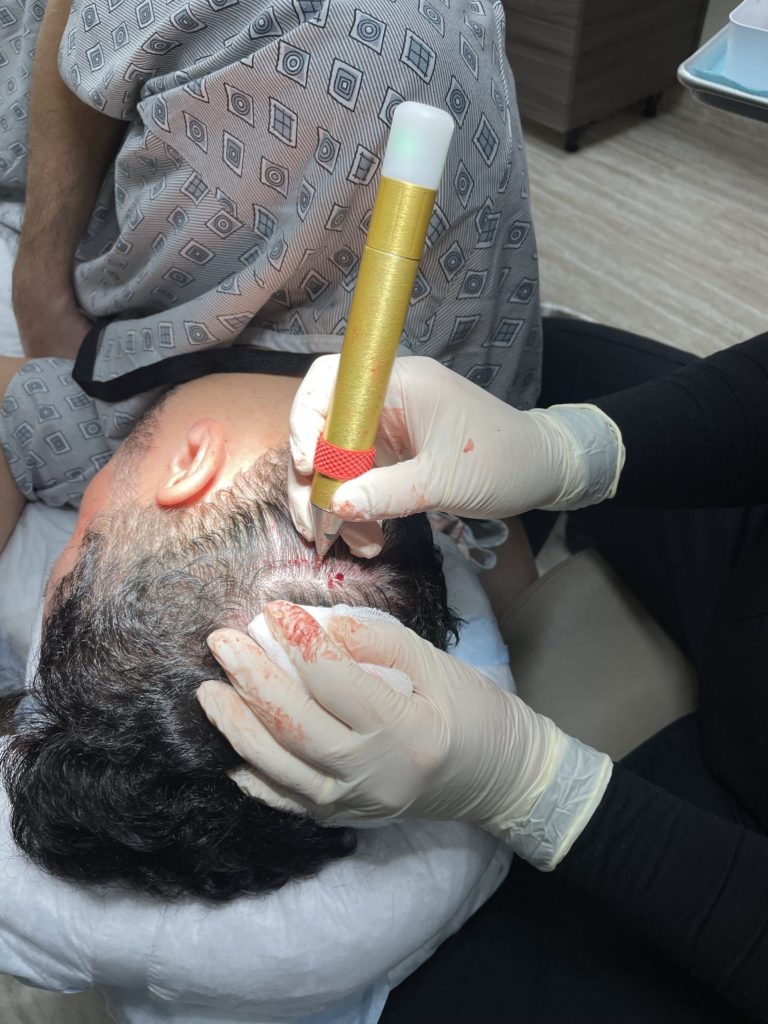
Donor Harvesting (FUE or FUT): Carefully extracting follicles with minimal transection.
-
Recipient Site Creation: Designing and executing hairline placement, angles, and density.
-
Graft Placement: Inserting each graft with precision to ensure survival and natural flow.
In a true SOLO surgery, there is no ambiguity. Every graft is the surgeon’s work.
2. The Rise of “Copycat” Claims
As patients became more educated, many started seeking surgeons who performed the work themselves. Clinics noticed this shift and began advertising “SOLO” or “doctor-only” procedures. But here’s the catch:
-
In many of these cases, the doctor designs the hairline or performs a few initial extractions, then passes the rest to a team of technicians.
-
Some surgeons may perform only the site creation while leaving both harvesting and placement to assistants.
-
Marketing language such as “doctor-supervised” or “doctor-led” is often used as a smokescreen.
The reality? Most “SOLO” claims are marketing gimmicks, not actual surgeon-performed procedures.
3. Why True SOLO Matters More Than Marketing
Patients sometimes ask: “Does it really matter if the doctor or a technician places the grafts?” The answer is a resounding yes.
Benefits of True SOLO Surgery
-
Accountability – There is no passing the buck. The surgeon takes full responsibility for every result.
-
Consistency – One pair of skilled hands controls every step, ensuring uniform angle, depth, and density.
-
Artistry – Hair restoration is not just technical; it’s artistic. A surgeon’s vision cannot be executed by multiple different operators.
-
Safety – Proper graft handling reduces damage, ensuring maximum survival and natural growth.
When a surgeon like Dr. Kelemen commits to SOLO, patients receive results that reflect her expertise, her artistry, and her accountability.
4. Why Most Surgeons Cannot Perform True SOLO
A true SOLO transplant is rare, and here’s why:
-
Time and Stamina: Long procedures (3,000–4,000+ grafts) require endurance and focus. Most surgeons delegate because they cannot sustain the workload.
-
Skill Gap: Many doctors are not fully trained in all steps. They rely on technicians for harvesting or placement.
-
Profit Model: Large clinics prioritize volume. Delegation allows them to run multiple surgeries simultaneously. SOLO surgery, by contrast, prioritizes quality over quantity.
-
Limited Tools: Few doctors master multiple extraction systems. Without experience in devices like WAW, Ugraft, Cole, and ARTAS, surgeons cannot tailor techniques to every patient.
This is why copycats fail: they may claim to be “SOLO” but cannot back it up in practice.
5. Dr. Kelemen’s SOLO Gold Standard
At Hair 4 Life Medical, Dr. Ramona Kelemen is one of the only U.S. hair transplant surgeons performing true SOLO surgeries consistently.
What Sets Her Apart:
-
100% Surgeon Performed: Every graft is harvested, every site created, and every placement done by Dr. Kelemen herself.
-
Device Mastery: She uses WAW DUO, Ugraft, Cole, manual systems, and robotic ARTAS—making her the only doctor in Arizona with such breadth.
-
Unique Innovations: Inventor of the Incognito FUE, and the only surgeon in Arizona offering Long Hair FUE.
-
Patient-Centered: No shortcuts, no delegation, no compromise on quality.
6. Copycat Clinics: The Telltale Signs
Patients need to know how to spot the difference between a true SOLO surgeon and a copycat clinic.
Red Flags of Copycat Claims
-
The doctor meets you only at consultation but is absent during most of the procedure.
-
Technicians are heavily involved in graft extraction or placement.
-
The clinic advertises one specific device as “exclusive” or “the best,” instead of offering multiple.
-
Marketing terms like “doctor-led” or “doctor-supervised” are used instead of “doctor-performed.”
Questions to Ask Your Doctor
-
Will you personally perform all steps of my surgery?
-
Who will extract my grafts?
-
Who will place my grafts?
-
How many surgeries do you perform per day?
-
Do you use multiple extraction devices, or only one system?
If the answers are vague or evasive, the clinic is likely not offering a true SOLO transplant.
7. Technology Alone Cannot Replace Surgeon Skill
Many copycat clinics rely on marketing devices like ARTAS robotics or sapphire blades as if technology alone guarantees quality. But here’s the truth:
-
Robotics are limited to specific hair types and cannot replace human artistry.
-
Sapphire blades are simply a tool; what matters is the surgeon’s ability to design natural patterns.
-
Micro FUE devices like WAW, Ugraft, Cole, and Trivellini are only as effective as the surgeon operating them.
The tool is never the standard. The surgeon is.
8. Patient Outcomes: SOLO vs. Copycat
When you compare results, the difference becomes clear:
-
True SOLO (Dr. Kelemen): Uniform density, natural hairlines, strong graft survival, minimal donor damage.
-
Copycat Clinics: Patchy density, inconsistent angles, higher transection rates, weaker graft survival.
Patients who unknowingly undergo technician-heavy procedures often require corrective surgery—something that could have been avoided with a genuine SOLO transplant.
9. The Future of Hair Transplantation
The hair transplant industry is evolving. Patients are more informed than ever, and demand for surgeon-performed procedures is rising. But as demand increases, so will false marketing.
The future belongs to surgeons who can truly combine:
-
Skill in every step of surgery
-
Stamina to perform large sessions SOLO
-
Technology mastery across multiple devices
-
Artistry for natural design
Dr. Kelemen embodies this future today, setting the gold standard others try—but fail—to copy.
10. Final Thoughts: Don’t Be Fooled by Copycats
Choosing a hair transplant is one of the most personal decisions you’ll ever make. Don’t let marketing buzzwords or half-truths mislead you.
-
True SOLO surgery means the surgeon does it all.
-
Most “SOLO” claims in the market are copycat marketing.
-
Dr. Ramona Kelemen is one of the few surgeons in the United States delivering consistent, authentic SOLO procedures.
Your hair, your confidence, your results—they deserve nothing less than the gold standard.
Ready to restore your hair? Schedule a consultation with Dr. Kelemen today!
Interested in learning more? Contact Us or call Hair 4 Life at (480) 525-4547 to schedule an appointment.