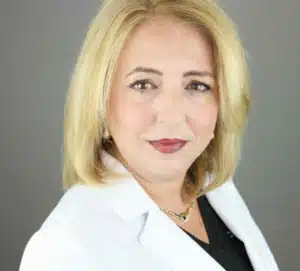
Hair transplant clinic in Scottsdale, Arizona. Hair 4 Life Medical is your gold standard when it comes to hair transplant and hair restoration. Led by Dr Kelemen, who has built her impressive repertoire learning and working side by side with the founder and first president of ABHRS, Dr Shelly Friedman. Not only is she versed in every technique which allows her to customize the approach but has the largest repertoire of tools to choose from for the perfect hair transplant.
Choosing a hair transplant clinic in Phoenix or Scottsdale is not about convenience or price — it’s about who is performing your surgery and whether the results will still look natural years from now.
At Hair 4 Life Medical, hair restoration is practiced the way it was meant to be: by a physician, start to finish.
In a market crowded with med spas and technician-driven clinics, Hair 4 Life Medical stands apart as a true medical hair transplant center serving Phoenix, Scottsdale, and greater Arizona.
Physician-Performed Hair Transplants in Scottsdale and Phoenix
Many patients searching for the best hair transplant doctor in Phoenix are surprised to learn that most clinics do not have a doctor placing grafts.
100% of graft extraction and placement is performed by a physician
No technicians handle surgical steps
One patient is treated at a time
Dr. Ramona Kelemen personally performs every FUE hair transplant procedure. This is not common in Phoenix or Scottsdale — and that’s exactly why outcomes are different.
Patients are not rushed. Procedures are not delegated. Planning is done with long-term hair loss progression in mind — something technician-based clinics simply cannot offer.
Personalized Hair Restoration for Arizona Patients
No two scalps are the same. No two hair loss patterns are identical.
https://hairforlifeaz.com/wp-content/uploads/2024/02/Hair-for-Life-Medical-Logo-web.png00Ioan A Kelemenhttps://hairforlifeaz.com/wp-content/uploads/2024/02/Hair-for-Life-Medical-Logo-web.pngIoan A Kelemen2026-01-23 09:32:252026-01-31 15:16:04Why Hair 4 Life Is the Go-To Hair Transplant Clinic in Phoenix & Scottsdale
If you are searching for a hair-transplant near me, it is critical to understand one foundational truth:
Hair-transplantation is surgery — not a cosmetic add-on.
Yet today, many med spas and aesthetic clinics market hair services alongside injectables, lasers, and skincare. While these environments may appear modern and convenient, they are structurally different from legitimate hair-transplant practices that have produced consistent, long-term results for decades.
Understanding this difference can determine whether your transplant becomes a lifelong success — or a permanent regret.
What Defines a Legitimate Hair-Transplant Practice?
A physician with years of transplant-specific experience
Long-term donor management and hairline planning
Accountability for both results and complications
This traditional model has existed long before marketing-driven aesthetics entered the field — and it still forms the backbone of reliable outcomes today.
The Traditional Hair-Transplant Model
Other local hair-transplant clinics typically represent the traditional surgical model:
An experienced hair-transplant surgeon
A team-based execution (physician plus trained staff)
Emphasis on repetition, volume, and long-established workflows
This approach has produced millions of successful transplants worldwide. For patients who value legacy experience and standard techniques, clinics like Biltmore Surgical Hair Restoration can make sense.
The strength of this model lies in its history and consistency.
The Physician-Centric Hair-Transplant Model
By contrast, Hair 4 Life Medical represents a physician-centric model — one that has evolved as technology and patient expectations have advanced.
This structure is defined by:
Solo surgery: the physician performs 100% of the procedure
Advanced cosmetic FUE techniques
Long-hair and no-shave FUE options
Minimal to zero reliance on technicians
Conservative donor preservation with long-term planning in mind
This model appeals to patients who prioritize total physician control, cosmetic discretion, and precision, particularly professionals, women, public-facing individuals, and corrective cases.
Why Med Spas Don’t Belong in the Same Category
Med spas may offer PRP, microneedling, or limited FUE — but these services do not equate to comprehensive surgical hair restoration.
Key limitations of med-spa hair services:
Hair transplantation demands judgment, restraint, and foresight — qualities that only come from years of dedicated surgical focus.
Choosing the Right Model for You
There is no single “best” option for everyone — but there is a right structural fit for each patient.
If you value legacy experience and standard surgical techniques, the traditional model makes sense.
If you value maximum physician involvement, cosmetic precision, and long-term donor protection, the physician-centric model stands apart.
That distinction is not marketing.
It is structural.
And structure is what determines how well your transplant ages — not just how it looks at six months.
Final Thought
Hair loss is common.
Donor hair is finite.
Mistakes are permanent.
Choose a clinic based on how it is built, not how it is advertised.
https://hairforlifeaz.com/wp-content/uploads/2025/07/IMG_6680-scaled.jpg20481536Ioan A Kelemenhttps://hairforlifeaz.com/wp-content/uploads/2024/02/Hair-for-Life-Medical-Logo-web.pngIoan A Kelemen2026-01-19 13:56:362026-03-25 12:06:34Legitimate Hair-Transplant Practices — Not Med Spas
Graft Survival Comparison: Manual FUE vs Robotic FUE vs DHI
Dr Kelemen the founder of Hair 4 Life Medical
What Actually Keeps Hair Alive After Transplant Surgery
In hair transplantation, nothing matters more than graft survival. You can have the best marketing, the newest device, and the flashiest promises—but if grafts don’t survive, the result fails.
This article compares graft survival rates between Manual FUE, Robotic FUE, and DHI (Implanter Pen), explains why survival differs, and tells patients what clinics rarely say out loud.
What Is Graft Survival—and Why It Matters
Graft survival refers to the percentage of transplanted follicles that:
These are realistic clinical ranges, not marketing claims.
Manual FUE: Highest Survival When Done Correctly
Why manual FUE leads the field:
Controlled extraction depth and angle
Minimal follicle trauma
Precise graft handling and hydration
Custom site creation for each follicle
When the physician performsextraction, site creation, and implantation, grafts spend less time out of the body and experience less mechanical stress.
Manual FUE respects a principle older than any device: hair survives best when handled slowly, gently, and deliberately.
Robotic FUE: Consistency Without Judgment
Robotic systems can reduce fatigue and improve punch consistency, but they introduce limitations:
Challenges affecting survival:
Fixed algorithms that can’t adapt to scarring or curl
Higher transection risk in non-ideal donors
Delayed graft placement when workflow is inefficient
When used as an assistive tool under direct physician control, robotic FUE can achieve good survival. When used as an automated system with minimal oversight, survival drops.
Technology assists—it does not replace surgical judgment.
DHI (Implanter Pen): Speed at a Biological Cost
DHI is often promoted as superior for survival, but clinical reality says otherwise.
Why survival can suffer:
Repeated graft loading and unloading
Compression trauma inside the pen
Extended out-of-body time
Technician-based placement in many clinics
High-speed implantation looks efficient. Biologically, it increases stress on follicles. Hair roots are living tissue, not hardware.
Why Clinics Get Different Results Using the Same Method
Graft survival is influenced more by who performs the surgery than by the device used.
Critical variables include:
Time grafts remain outside the body
Hydration solutions and temperature
Handling force and frequency
Recipient site quality and vascularity
Implantation angle and depth
Ignore these fundamentals, and no method will save the outcome.
Common Myths About Graft Survival
Myth: “Robots eliminate human error” Truth: They introduce different errors—and cannot correct them.
Myth: “DHI guarantees better survival” Truth: The pen does nothing if the operator lacks skill.
Myth: “All clinics get the same survival rates” Truth: Outcomes vary dramatically based on involvement and experience.
The Traditional Rule That Still Wins
For decades, successful surgeons followed the same rule:
The less you traumatize the graft, the more hair you keep.
That rule has not changed—no matter how advanced the tools become.
Final Verdict: Which Method Has the Best Graft Survival?
Best overall: Manual FUE performed entirely by the physician
Acceptable with limits: Robotic FUE as a physician-controlled tool
Highest risk: DHI in high-volume, technician-driven clinics
There is no shortcut to living hair. Precision, patience, and accountability still determine survival.
Book Your Consultation Today
Want the most discreet, technically advanced, and artistically guided procedure available?
Schedule your personal consultation with Dr. Ramona Kelemen at Hair 4 Life Medical today.
See what happens when medicine, science, and art align.
https://hairforlifeaz.com/wp-content/uploads/2023/09/FUE-hair-transplant-Dr.-Kelemen-at-Hair-4-Life.jpg13331000Ioan A Kelemenhttps://hairforlifeaz.com/wp-content/uploads/2024/02/Hair-for-Life-Medical-Logo-web.pngIoan A Kelemen2026-01-08 17:17:252026-03-19 17:40:13Graft Survival Comparison: Manual FUE vs Robotic FUE vs DHI
What Really Determines Success—and What Still Goes Wrong
Hair transplantation has come a long way. The fundamentals, however, have not changed: hair survives or it doesn’t. Despite glossy marketing and trendy devices, failure still occurs—and it occurs far more often with certain methods and practice models.
This article breaks down hair transplant failure rates by method, explains why failures happen, and tells patients the unvarnished truth about what separates lasting results from permanent disappointment.
What Is Considered a Hair Transplant Failure?
A failure does not mean zero growth. That’s rare. Most failures fall into these categories:
https://hairforlifeaz.com/wp-content/uploads/2024/05/Mask-Group-188@2x.jpg9721264Ioan A Kelemenhttps://hairforlifeaz.com/wp-content/uploads/2024/02/Hair-for-Life-Medical-Logo-web.pngIoan A Kelemen2026-01-08 16:19:262026-03-19 17:40:12Hair Transplant Failure Rate Analysis by Method
Do Hair Transplants Look Natural? | Hair 4 Life Medical’s Expert Guide
Dr Kelemen the founder of Hair 4 Life Medical
For many people considering hair restoration, one question rises above the rest: Do hair transplants look natural?
At Hair 4 Life Medical, this is one of the first concerns patients share with us — and the answer is a confident yes. With today’s advanced techniques and our clinic’s meticulous approach, hair transplants can blend seamlessly with your existing hair for results that look authentic, age‑appropriate, and long‑lasting.
In this guide, we break down exactly what makes a transplant look natural and how Hair 4 Life Medical ensures exceptional outcomes.
⭐ Do Hair Transplants Look Natural Today?
Modern hair transplantation has evolved far beyond the outdated “pluggy” look of decades past. Using refined FUE methods, No‑Shave FUE, and strategic hairline artistry, our team creates results that are virtually undetectable.
At Hair 4 Life Medical, naturalness isn’t just a goal — it’s our standard.
🔑 What Determines a Natural‑Looking Hair Transplant?
1. Hairline Design
A natural hairline is never straight or uniform. Our surgeons design hairlines with soft, subtle irregularities that mimic natural growth patterns.
A natural transplant requires more than technical skill — it requires artistry. Our team carefully angles each graft to match your natural growth direction.
Our mission is simple: results that look like you — only fuller, stronger, and more confident.
📝 Final Thoughts
Yes, hair transplants absolutely can look natural — especially when performed with precision, artistry, and modern techniques. At Hair 4 Life Medical, we take pride in delivering results that enhance your appearance without ever revealing you had a procedure.
If you’re ready to explore your options, our team is here to guide you every step of the way.
If you want, I can also create:
📍 Located in Arizona, Hair 4 Life Medical is a boutique, physician-led clinic focused on custom hair restoration solutions. 📞 Call or visit hair4lifemedical.com to schedule your private 45–60 minute consultation with Dr. Kelemen.
A Critical Reality: Correcting Turkish Hair Transplants
Dr Kelemen the founder of Hair 4 Life Medical
This needs to be said plainly.
Hair transplants performed in Turkey often require significantly more corrective work—and ultimately cost more to fix. Because of this, many experienced surgeons are reluctant to take these cases on at all.
That’s not prejudice. That’s experience.
Why Turkish Hair Transplants Often Need Corrections
Turkey has become known for high-volume, low-cost hair transplant clinics. While the marketing is aggressive, the surgical standards are often inconsistent.
Common issues seen in Turkish hair transplant patients include:
Hair transplants performed in Turkey often require significantly more corrective work—and ultimately cost more to fix. Because of this, many experienced surgeons are reluctant to take these cases on at all.
That’s not prejudice. That’s experience.
Why Turkish Hair Transplants Often Need Corrections
Turkey has become known for high-volume, low-cost hair transplant clinics. While the marketing is aggressive, the surgical standards are often inconsistent.
Common issues seen in Turkish hair transplant patients include:
Over-harvested donor areas
Poor graft survival
Pluggy, unnatural hairlines
Incorrect hair angles and direction
Technician-performed extractions and placement
Robotic or semi-automated harvesting with little physician oversight
Many of these procedures are performed on multiple patients per day, with the doctor briefly appearing—or not at all.
That model prioritizes speed and volume, not long-term outcomes.
Why Corrections Are More Difficult—and More Expensive
Correcting a poorly done transplant is far more complex than doing it right the first time.
Turkish transplant corrections often involve:
Scar tissue with compromised blood supply
Depleted or uneven donor areas
Grafts placed too low or in unnatural patterns
Limited remaining donor reserves
The need for graft removal, redistribution, or camouflage
This requires:
Advanced surgical skill
Longer operative time
Conservative planning
Sometimes multiple staged procedures
As a result, correction cases frequently cost more than a primary hair transplant, even though the patient initially paid less overseas.
Cheap surgery has a long tail.
Why Many Doctors Decline These Cases
Experienced hair transplant surgeons are cautious for good reason.
Doctors may refuse Turkish correction cases because:
Donor hair is already exhausted
The risk of making things worse is high
Expectations are unrealistic given remaining resources
The original damage cannot be fully undone
Turning down surgery is not a lack of skill—it’s professional responsibility.
A surgeon who accepts every case without limits is not doing patients a favor.
The Hard Truth Patients Learn Too Late
Many patients come to this realization after the fact:
“I saved money upfront—but now I’m paying more to fix it, and not everything can be fixed.”
If you want a DHI hair transplant done correctly—with precision, honesty, and genuine surgical craftsmanship—schedule a consultation with Dr. Kelemen at Hair 4 Life Medical.
Can I Have Multiple Hair Transplant Procedures or Corrections?
Dr Kelemen the founder of Hair 4 Life Medical
One of the most common—and most important—questions patients ask is:
“Can I have more than one hair transplant, or fix a previous one?”
The short answer is yes. The longer, more truthful answer is yes—but only if it’s done correctly, conservatively, and by the right surgeon.
Hair transplantation is permanent surgery. Every graft removed from the donor area is a limited, non-renewable resource. Multiple procedures are possible, but only when planned with long-term strategy in mind.
This article explains when multiple hair transplants make sense, when they don’t, and what it takes to safely correct a prior procedure—including poorly performed transplants.
Why Patients Need More Than One Hair Transplant
Multiple procedures are not a failure. In many cases, they are part of a responsible long-term plan.
Hair loss is progressive. A transplant does not stop future loss in untreated areas. That reality hasn’t changed, no matter how advanced the tools become.
Is There a Limit to How Many Hair Transplants You Can Have?
Yes. And anyone who says otherwise is lying.
The limiting factor is donor supply.
Each patient has a finite number of permanent follicles that can be safely harvested without:
Visible thinning
Patchiness
Over-harvesting
Scar exposure
A responsible surgeon plans:
Not just the first surgery
But the second, third, or corrective procedure before the first graft is ever placed
That’s old-school surgical discipline—and it matters.
Typical Scenarios for Multiple Hair Transplants
1. Staged Hair Restoration (Planned in Advance)
This is the ideal scenario.
A patient may start with:
Hairline and frontal density first
Crown addressed later if needed
Why?
Hairline frames the face
Crown loss progresses slowly
Donor hair must be preserved
This approach produces natural, age-appropriate results.
Yes, you can have multiple hair transplant procedures or corrections.
But:
Donor hair is finite
Each surgery must be planned carefully
Correction requires advanced expertise
Timing and restraint matter
Done correctly, multiple procedures can produce:
Natural results
Long-term satisfaction
A restoration that ages well
Done poorly, they can make things worse.
Experience, honesty, and surgical discipline still matter—just as they always have.
Ready to Learn More?
If you want a DHI hair transplant done correctly—with precision, honesty, and genuine surgical craftsmanship—schedule a consultation with Dr. Kelemen at Hair 4 Life Medical.
https://hairforlifeaz.com/wp-content/uploads/2024/07/shutterstock_2340507093-scaled.jpg17072560Ioan A Kelemenhttps://hairforlifeaz.com/wp-content/uploads/2024/02/Hair-for-Life-Medical-Logo-web.pngIoan A Kelemen2025-12-21 10:52:412026-02-21 13:38:15Can I Have Multiple Hair Transplant Procedures or Corrections?
How Long Until I See Real Growth After a Hair Transplant?
Dr Kelemen the founder of Hair 4 Life Medical.
If you’re considering a hair transplant—or you’ve already had one—there’s one question that comes up more than any other:
“How long until I see real growth?”
Not marketing growth. Not baby fuzz. Not wishful thinking.
Real, visible, confidence-changing hair growth.
Let’s tell it like it is.
Hair transplants work. They are permanent when done correctly. But they do not deliver instant gratification. Hair grows on nature’s schedule, not on your calendar. Understanding the timeline is the difference between peace of mind and unnecessary anxiety.
This article breaks down exactly what happens month by month, what’s normal, what’s not, and when you can realistically expect results that matter.
Quick Answer: When Does Real Growth Start?
Most patients begin to see meaningful growth between 4 and 6 months after a hair transplant.
However:
Noticeable cosmetic improvement usually appears around 6–8 months
Final density and maturation occur at 12–15 months
Some patients continue improving up to 18 months
That’s the honest timeline. Anyone promising faster results is selling hope, not medicine.
Why Hair Transplants Take Time (And Always Have)
A hair transplant does not create new hair. It relocates genetically resistant follicles from the donor area to thinning or bald areas.
Once transplanted:
Follicles must re-establish blood supply
Enter a resting phase
Then resume their natural growth cycle
This is biology. It hasn’t changed in decades.
The technique may evolve. The tools may improve.
But hair growth speed is still governed by nature.
The Hair Transplant Growth Timeline (Month by Month)
Days 1–10: Healing, Not Growth
Immediately after surgery:
Grafts are secured
Scabs form and fall off
Redness is common
No growth occurs
At this stage, nothing you see reflects your final result.
Important:
If grafts look “thin” now, that’s normal. Density comes later.
https://hairforlifeaz.com/wp-content/uploads/2025/12/HAIRGROWTHTIMELINE.png10241536Ioan A Kelemenhttps://hairforlifeaz.com/wp-content/uploads/2024/02/Hair-for-Life-Medical-Logo-web.pngIoan A Kelemen2025-12-20 20:02:542026-02-21 13:38:16How Long Until I See Real Growth After a Hair Transplant?
When people start researching hair restoration, their first stop is usually Google. And year after year, the same questions dominate search results. These questions reflect real concerns — about naturalness, safety, cost, and long-term results.
1. Do Hair Transplants Look Natural?
This is the number one hair transplant question asked online — and for good reason. Nobody wants a pluggy or artificial hairline.
The truth is simple: Hair transplants look natural when the doctor is skilled and performs the entire procedure themselves.
At Hair 4 Life Medical, every graft is harvested and placed personally by Dr. Ramona Kelemen. No technicians. No delegating. Your result reflects the work of an expert, not a clinic assembly line. Dr Kelemen performs 2 surgeries a week! Quality over quantity!
2. How Long Does a Hair Transplant Last?
A well-executed hair transplant is permanent. The follicles come from the “safe donor zone,” which is genetically resistant to hair loss. Once transplanted, they continue to grow normally for life.
3. Is a Hair Transplant Painful?
Most patients report far less discomfort than they expected. You’ll feel the numbing injections at the beginning. After that, the procedure is very tolerable. Mild soreness or tightness afterward is common but short-lived.
Dr Kelemen has her own post op protocol that speeds up recovery.
4. How Much Does a Hair Transplant Cost?
Costs vary depending on technique (Long hair FUE, NO Shave, DHI etc.) and graft count, but most patients invest $6,500–$30,000.
These numbers reflect real, doctor-performed medical treatment — not bargain clinics where unlicensed techs do most of the surgery.
Removes a strip of tissue from the back of the scalp
Leaves a linear scar
Used for specific cases needing high graft counts
Most modern patients choose FUE for its natural appearance and easier recovery. The tools used matter but what matters the most is the abilities of the doctor!
6. How Long Is Recovery?
Most people resume regular daily activities in 2–3 days. Redness improves within a week. Gym workouts and heavy activity usually resume after 10–14 days.
Patience pays off — the transformation is worth the wait.
8. Is a Hair Transplant Safe?
Yes — as long as it’s done by a trained physician.
Most complications happen in clinics where technicians, not doctors, perform the surgery.
At Hair 4 Life Medical, your procedure is performed start to finish by Dr. Kelemen, ensuring precision, safety, and medical oversight at every step.
There is a lot of hype and marketing jargon on the interne! Dr Kelemen highly recommends that prospective patients take their time and due diligence in order to choose wisely! For example a doctor might advertise SOLO hair transplant only to find out that they use technicians for most of work!
9. Can a Hair Transplant Fix a Receding Hairline or Crown?
Absolutely. Both areas respond very well to FUE. The design is customized based on age, long-term pattern, donor density, and personal goals.
A natural, age-appropriate plan ensures your results look great now and decades from now.
A personal evaluation — including photos — will confirm your custom plan.
Final Thoughts
These are the most searched hair-transplant questions online, and it’s easy to see why. People want honesty, skill, and long-term reassurance.
If you want results crafted by a true hair transplant specialist — with 100% of your procedure performed by Dr. Kelemen herself — you’re already in the right place.
https://hairforlifeaz.com/wp-content/uploads/2025/07/IMG_6680-scaled.jpg20481536Ioan A Kelemenhttps://hairforlifeaz.com/wp-content/uploads/2024/02/Hair-for-Life-Medical-Logo-web.pngIoan A Kelemen2025-12-08 10:30:122026-03-19 17:40:12The Most Asked Hair Transplant Questions on the Internet — Answered by Dr. Ramona Kelemen
Why Choose a Hair Transplant Physician in Phoenix vs. Turkey: The Truth Patients Need to Hear
Dr Kelemen the founder of Hair 4 Life Medical
Hair transplant tourism has exploded over the last decade. Turkey became the bargain destination, promising “celebrity hair” for the price of a weekend getaway. Phoenix, on the other hand, has built its reputation on skill, safety, and long-term results—not quick, flashy promises.
There’s a reason more American patients are choosing Phoenix over Turkey. It goes far beyond price. It comes down to your health, the integrity of your donor area, and the quality of your final result. And those are not things you gamble with.
This guide lays out the real differences between choosing a hair transplant physician in Phoenix and rolling the dice with an overseas package deal. No fluff—just the truth.
1. The Rise of Turkey: Low Prices, High Volume, Unpredictable Outcomes
Let’s be blunt. Turkey isn’t popular because the care is better. It’s popular because the price is lower—sometimes dangerously low.
The typical Turkish clinic uses a factory-style model:
Dozens of patients per day
Technicians doing almost all the work
The “physician” you meet never touches a punch
Fast, high-volume procedures
Cookie-cutter hairlines
Patients are sold the illusion of physician-directed surgery. The reality is that most of the extraction and implantation is done by unlicensed, minimally trained teams.
Some patients walk away lucky. Many do not. And by the time you discover the truth, you’re back home with no recourse.
Common Problems With High-Volume Overseas Clinics
Over-harvested donor areas
Unnatural, poorly planned hairlines
Low graft survival due to rushed handling
Infection, scarring, or necrosis
Zero accountability once you leave the country
When volume is the business model, patient care becomes secondary.
2. The U.S. Standard: Why Phoenix Physicians Operate at a Higher Level
A hair transplant physician in Phoenix doesn’t work under the same loose, profit-driven system overseas clinics use. Physicians here follow strict medical regulations, ethical guidelines, and must answer to state medical boards.
When you choose Phoenix, you choose:
A licensed physician who actually performs the procedure
A real medical evaluation prior to surgery
Regulated anesthesia and sterile technique
A clinic that’s accountable for your outcome
In-person follow-up, not WhatsApp messages
In the United States, a physician’s license is on the line—every single day. That alone increases the quality of care.
3. Phoenix Physicians Perform One Patient Per Day, Not 20
This is a massive difference most patients overlook.
A quality Phoenix hair transplant physician typically treats one patient per day. A high-volume Turkish clinic might treat 20–40.
That difference impacts everything:
Focused Attention
Your physician is present. They examine, extract, implant, and supervise every detail.
Natural Design
Hairline planning is an artistic skill, not a template. When a physician is involved from start to finish, your hairline matches your face, your age, and your ethnic background—not the “same one we did this morning.”
Donor Protection
American physicians typically take a conservative approach, preserving grafts for your future. Turkey’s mass-production approach often burns through donor supply for a fast “after photo.”
4. Follow-Up Care: A Huge Advantage Turkey Cannot Offer
Even the best procedure requires monitoring. Normal issues include:
https://hairforlifeaz.com/wp-content/uploads/2025/01/turkeyrisks.webp400712Ioan A Kelemenhttps://hairforlifeaz.com/wp-content/uploads/2024/02/Hair-for-Life-Medical-Logo-web.pngIoan A Kelemen2025-11-21 10:44:082026-04-04 22:27:35Why Choose a Hair Transplant Physician in Phoenix vs. Turkey: The Truth Patients Need to Hear
ID used to identify users for 24 hours after last activity
24 hours
_gat
Used to monitor number of Google Analytics server requests when using Google Tag Manager
1 minute
_gac_
Contains information related to marketing campaigns of the user. These are shared with Google AdWords / Google Ads when the Google Ads and Google Analytics accounts are linked together.
90 days
__utma
ID used to identify users and sessions
2 years after last activity
__utmt
Used to monitor number of Google Analytics server requests
10 minutes
__utmb
Used to distinguish new sessions and visits. This cookie is set when the GA.js javascript library is loaded and there is no existing __utmb cookie. The cookie is updated every time data is sent to the Google Analytics server.
30 minutes after last activity
__utmc
Used only with old Urchin versions of Google Analytics and not with GA.js. Was used to distinguish between new sessions and visits at the end of a session.
End of session (browser)
__utmz
Contains information about the traffic source or campaign that directed user to the website. The cookie is set when the GA.js javascript is loaded and updated when data is sent to the Google Anaytics server
6 months after last activity
__utmv
Contains custom information set by the web developer via the _setCustomVar method in Google Analytics. This cookie is updated every time new data is sent to the Google Analytics server.
2 years after last activity
__utmx
Used to determine whether a user is included in an A / B or Multivariate test.
18 months
_ga
ID used to identify users
2 years
_gali
Used by Google Analytics to determine which links on a page are being clicked
30 seconds
_ga_
ID used to identify users
2 years
Clarity is a web analytics service that tracks and reports website traffic.
Registers a unique ID on mobile devices to enable tracking based on geographical GPS location.
1 day
VISITOR_INFO1_LIVE
Tries to estimate the users' bandwidth on pages with integrated YouTube videos. Also used for marketing
179 days
PREF
This cookie stores your preferences and other information, in particular preferred language, how many search results you wish to be shown on your page, and whether or not you wish to have Google’s SafeSearch filter turned on.
10 years from set/ update
YSC
Registers a unique ID to keep statistics of what videos from YouTube the user has seen.
Session
DEVICE_INFO
Used to detect if the visitor has accepted the marketing category in the cookie banner. This cookie is necessary for GDPR-compliance of the website.
179 days
LOGIN_INFO
This cookie is used to play YouTube videos embedded on the website.


 No growth at all by 6 months