Tag Archive for: BHT

What is the big deal about low-level laser therapy – LLLT?


We see ads on TV, in the large chain stores like Costco that have LLLT caps for sale and promise new hair, fuller hair, thicker hair. The claims are a little far fetched but what I have seen in my practice is that patients who use LLLT regularly loose less hair and their hair is healthier thicker. Now does it grow NEW hair? NO, it does not! I know, I know what it says on the box. What it does do is help those hair follicles that are struggling to perk up from the increase in blood flow that you would lose them without this treatment!
Xtrallux Extreme RX Hair Regrowth Laser Cap

So why do we lose our hair?

The medical consensus is that every day, most people lose about 100 hairs from their scalp. While the majority of people grow those hairs grow back, some people don’t due to:

  • age
  • heredity
  • hormonal changes
  • medical conditions, such as lupus and diabetes
  • poor nutrition
  • side effects of a medical treatment, such as chemotherapy
  • stress

What is the science behind it?

Low-level laser therapy (LLLT), aka photobiomodulation, is a noninvasive, pain-free treatment that uses low-intensity light to stimulate biochemical changes in cells, helping repair tissue and reduce inflammation.

One of the most common types of LLLT treatment is the stimulation of hair regrowth in men and women with hereditary hair loss. It’s also commonly used in physical therapy, sports medicine, and chiropractic treatment.

The precise biochemical mechanism underlying the therapeutic effects of LLLT isn’t yet fully known, but it appears to have a wide range of effects at various levels. For instance, within cells, LLLT acts on the mitochondria (the cellular “power plants”) to increase energy. This stimulates regeneration and healing of damaged muscles, ligaments, nerves, bones, joints, and soft tissue. The technique is referred to as “cold” laser therapy because the low levels of light aren’t enough to heat your body’s tissues, so it produces no sensation or burning.

At low doses, LLLT has been shown to increase the proliferation of these types of cells:

  • Fibroblasts, the cells that produce collagen and elastin
  • Keratinocytes, the cells that produce the protein that makes up skin, hair, and nails
  • Endothelial cells, commonly found in blood vessels, lymph vessels, and the heart 
  • Lymphocytes, a type of white blood cell that’s an important part of the immune system
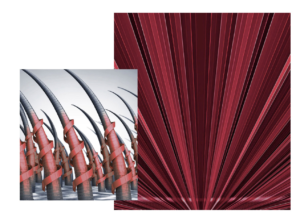
Hair Regrowth Laser Cap

How long until you see results?

The time it takes to see results from LLLT treatment varies depending on the individual and the severity of hair loss. According to a study, patients who underwent LLLT treatment for 24 weeks showed a significant increase in hair density compared to those who received a placebo. However, it is important to note that LLLT is not a quick fix and requires continued commitment to see and maintain results. A series of treatments is usually necessary to see benefits.

More research is needed, but some studies have yielded encouraging results:

According to a 2014 study Trusted Source, low-level laser therapy appeared to be safe and effective for hair growth in both men and women.

A 2013 study Trusted Source of 41 males ages 18 to 48 found that laser hair treatment provided a 39 percent increase in hair growth over a period of 16 weeks.
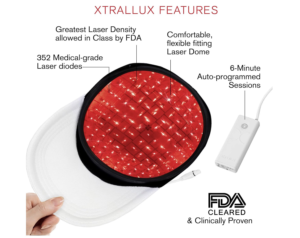
Xtrallux Extreme RX Hair Regrowth Laser Cap

What are the pros and cons of low-level laser therapy?

Pros

The treatment is noninvasive and painless.

LLLT is considered safe and isn’t associated with any side effects. (the most important pro)

A growing body of research shows that it may be effective for a wide variety of conditions and concerns, including hair loss.

Cons

Depending on the application, a series of treatments is usually necessary to see benefits. 

LLLT hair loss devices like Xtralux are expensive and require continued commitment to see and maintain results.   The commitment is minimal at 6 minutes a day while the reward is more retained hair, thicker hair in some cases. Yes, results vary from patient to patient but at my practice I have had on person complain and when I did the follow with the patient it turned out that she was not following the directions. I always ensure that my patients understand the level of commitment required before purchasing. I have personally use one daily and have seen first hand the impact it had in my own hair loss. Ah, you thought because I am a hair loss physician, I do not have hair loss? Every non-surgical procedure I offer, I first tried in on myself! There is no better way to feel secure that the procedures you offer actually work!

Some claims for LLLT may be unsubstantiated. More rigorous research is needed to evaluate the effects of LLLT. Because of the inconsistency in studies, this remains a controversial therapy.

How much does low-level laser therapy cost?

Most health insurance carriers consider LLLT experimental and investigational, so be sure to speak to your plan provider before having treatment, to see if any of the costs for your therapy will be covered. They tend to run 3K+ for a hat but the ROI far outweighs the cost. Why? Because the very first thing I ask my hair transplant candidates is: “What are you doing to stop your hair loss?” LLLT is the first line of defense against hair loss. Some patients are about to spend tens of thousands of dollars on hair transplant when they could have avoided it by doing something so easy as LLLT.

The RX version, the one that is medical grade, is only sold in medical offices by doctors, you cannot purchase them at Costco etc. The rest all have LLLT but their potency is lower and the testing mentioned above has been conducted using the RX LLLT, so purchase wisely.
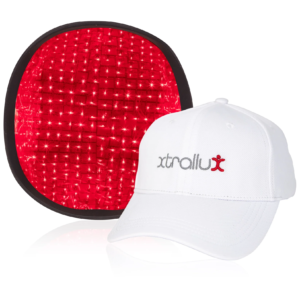
Xtrallux Extreme RX Hair Regrowth Laser Cap

Xtrallux Extreme RX Hair Regrowth Laser Cap

The Xtrallux Extreme RX Hair Regrowth Laser Cap is exclusively available through selected providers. like Dr. Keleman at Hair 4 Life in Scottsdale. 

What is Xtrallux Extreme RX?

It is the most powerful laser hat we offer, boasting 352 laser diodes, which is more than any other wearable device currently available. These FDA-cleared laser regrowth caps are designed to treat hereditary hair loss and balding, and they provide the convenience and safety of just 6-minute daily treatments.

The XTRALLUX Extreme RX Hair Regrowth Cap is a wearable device that uses red laser energy to treat androgenetic alopecia (AGA) and promote healthy hair growth. With daily 6-minute treatment sessions, this FDA-cleared device stimulates viable hair follicles on the scalp. It is suitable for both males and females with AGA.

Please use the XTRALLUX device for 6 minutes daily. Do not exceed the recommended usage as it does not offer any additional benefits. To achieve optimal results, it is recommended to consistently use the XTRALLUX device without discontinuing. If you happen to miss a treatment, simply resume your daily treatments. The XTRALLUX device should be used indefinitely to maintain healthy hair growth.

Xtrallux Extreme RX benefits

Benefits of the Xtrallux Extreme RX

This product increases the volume of hair on the scalp and is a medically-accepted solution for stabilizing and preventing hereditary hair loss. It works by revitalizing scalp follicles and promoting healthy hair growth. The treatment is clean and mess-free, suitable for both men and women. It is drug-free and safe, using light energy with no known adverse side-effects. Each session is auto-programmed and lasts for 6 minutes. The device is hands-free and comes with a rechargeable Li-Ion Battery Pack.

It has a comfortable and flexible interior that adapts to the shape of the head. The FDA has approved it with the highest laser density allowed in its class. It comes with a carrying case for travel and storage, a universal power adapter that works with 100-230 V input, and 3 international blades. The laser wavelength used is 650nm.

Additional Laser Cap Benefits:

• Increases volume of hair on scalp
• Medically-accepted way to treat hereditary hair loss.
• Restores healthy hair growth by revitalizing scalp follicles. 
• Clean, mess-free treatment for both men & women.
• Drug-free & safe treatment using light energy. 
• No known adverse side-effects.
• Quick & easy protocol. Wear just 6 minutes each day.

What’s included with our Xtrallux Extreme RX?

  • Flexible Fitting Extreme RX Laser Dome
  • Sports Cap
  • Rechargeable Li-Ion Power Pack (with Optional Belt Clip)
  • AC Adapter with 4 Interchangeable Input Blades
  • Travel & Storage Case with Strap
  • Accessories Storage

Xtrallux_Laser_Cap_Hair_Growth

Results with the Xtrallux Extreme RX laser cap?

Extra Lasers. Extra Density.

Our laser caps have up to 352 laser diodes, providing a larger coverage area on your scalp compared to other leading devices on the market. This means that during each 6-minute daily session, Xtrallux treats more of your scalp for greater hair treatment.

Our devices have the ability to specifically target and treat hair follicles with lasers. Not only that, but they are also designed to treat a larger number of unhealthy follicles with each use. With Xtrallux, you can achieve faster and more noticeable results thanks to the numerous laser diodes included in our devices.

For more information or to purchase the Xtrallux Extreme RX Hair Regrowth Laser Cap, please contact us Dr. Keleman at Hair 4 Life in Scottsdale. 

Article citations and references

https://www.realself.com/nonsurgical/low-level-laser-therapy

https://www.hims.com/blog/low-level-light-therapy-for-hair-loss

https://www.xtrallux.com       

Xtrallux Extreme RX Hair Regrowth Laser Cap

Contact Hair 4 Life in Scottsdale

Dr. Kelemen integrates conventional and naturopathic medicine to provide the best of what both worlds have to offer. She creates a unique, compassionate, accepting environment for her patients. You only have to read the reviews to find out how she empowers her clients to look and feel their best. They leave the clinic with their heads held high!

To find out which procedure is best suited to your needs, you are invited to come into Hair4Life for a free consultation. Treatments are kept as affordable and accessible as possible so come in and talk to us.

Contact Us or call Hair 4 Life at (480) 525-4547 to schedule an appointment and get your free consultation.

For more information on our FUE Hair Transplants, visit fue-waw-system.
What is FUE?


Follicular Unit Extraction (FUE) hair transplant is a minimally invasive surgical procedure used to treat pattern baldness and hair thinning in both men and women. Unlike traditional hair transplant methods that involved removing a strip of scalp from the donor area, FUE involves individually extracting hair follicles from the donor site and transplanting them to the recipient area. This is done by using either a robot, a hand-held motorized device or a manual punch.

Which device is better for FUE?

There is no simple, cut and dry answer for this question. It depends on the skin type (hard, soft), hair type (curly, wavy or straight) and hair thickness. The most versatile device is the motorized hand-held device. There are many devices out on the market and preference range from doctor to doctor. Here in my clinic, I prefer to use the WAW or Ugraft systems. I said I prefer. Some doctors may use the Trivellini, or the Safe system, whatever the system the results should do the talking. A device is as good as the operator using it! And the operator should be the doctor!

How does the FUE procedure unfold?

The procedure is performed under local anesthesia, and the recovery time is relatively quick compared to other hair transplant methods. The reason for this is the small punch used usually 0.8mm or 0.9mm. The FUE hair transplant results in natural-looking hair growth, as it mimics the natural hair pattern and density. The procedure is suitable for individuals with small to medium-sized balding patterns, and it is also a viable option for those who want to maintain shorter hair styles after the transplant.

What is the exact process for FUE hair transplant? 

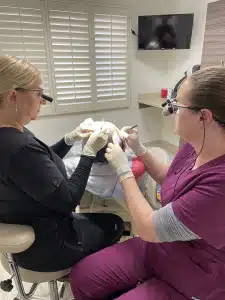
At my clinic, upon the patient’s arrival we go over the plan one more time, before meds are administered. Then meds are administered and while the meds take effect, we prepare the patient for the surgical part. Depending on the patient I will use one of the 3 tools I have at my disposal.  If the FUE is via robot I am positioned at the head of the patient where I can give instructions to my robot operator the parameters based on the what I see when I extract the graft. I extract every graft and hand over to a technician who will trim them and prepare them for implantation. If I used one of the hand-held devices I harvest manually and extract each graft, if the surgery is large my trusted tech, Jessica, will do the remove the already harvested graft and count them.

Once extraction is over it is lunch time and the patient along with staff will have an hour-long break. The next step is site making and I will be making all the sites based on the game plan agreed on with the patient. Once all the sites I made we are ready for implantation of the grafts. This process is done together with my trusted tech, Jessica C., and we finish a 3400 graft hair transplant normally between 5-7pm. The last step is to check all the work and bandage the head of the patient, give them their meds, post op instructions and make sure they have a ride home.

The next day they come in for shampoo which I do personally, this gives me an opportunity to check the hair transplant, answer any questions that the patient might have and teach him how to take care of his fresh hair transplant.

Why FUE and not FUT?

One of the main advantages of FUE hair transplant is that it does not leave a linear scar at the donor site, making it an ideal choice for individuals with a preference for shorter haircuts. Additionally, the procedure allows for a wider range of donor options, including body hair, for individuals with limited scalp donor hair. As a reminder body hair is used only as a filler to add density.

FUE hair transplant conclusion

In conclusion, FUE hair transplant has become the premier choice a popular and effective option for individuals experiencing hair loss. Its minimally invasive nature, quick recovery time, and natural-looking results make it a favorable choice for those seeking to restore their hair density and improve their overall appearance. I would be remiss to not mention again, to do your homework and shop around. Price should NOT be the deciding factor. Remember if you buy a bad car you can always sell it, you cannot do that with a bad hair transplant so chose wisely.

Article citations and references

www.healthonline.com

https://techbullion.com/the-pros-and-cons-of-fue-hair-transplant-is-it-worth-it/

https://www.realself.com/surgical/fue-hair-transplant

Contact Hair 4 Life in Scottsdale

Dr. Kelemen integrates conventional and naturopathic medicine to provide the best of what both worlds have to offer. She creates a unique, compassionate, accepting environment for her patients. You only have to read the reviews to find out how she empowers her clients to look and feel their best. They leave the clinic with their heads held high!

To find out which procedure is best suited to your needs, you are invited to come into Hair4Life for a free consultation. Treatments are kept as affordable and accessible as possible so come in and talk to us.

Contact Us or call Hair 4 Life at (480) 525-4547 to schedule an appointment and get your free consultation.

For more information on our FUE Hair Transplants, visit fue-waw-system.
 

So, what is FUE – hair transplant?

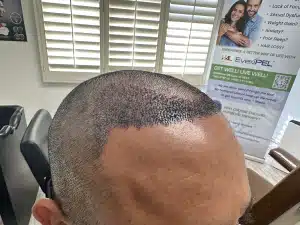
In a nutshell Follicular Unit Extraction (FUE) hair is harvested through small circular incisions over a considerably larger area of the donor zone leaving tiny, round, white scars. FUE can be done with manual punch, with motorized hand devices (SAFE, Ugraft, WAW, Trivellini, Smartgraft, Neograft) and ARTAS robotic (limited in harvesting hair follicle and area around donor grafts).

The main difference between FUT hair transplantation and FUE hair transplants is that in FUT the surgeon removes a strip of donor skin from the scalp tissue which to extract individual follicular units to be transferred to the areas of hair loss, whereas in FUE individual follicular units are excised directly from the scalp.

Why FUE- hair transplant?

FUE was meant to replace the “classic” follicular unit transplantation (FUT) technique. This procedure was done by taking an entire piece of skin or scalp along with the surrounding hair and follicles and transplanting the skin on the target area.

FUE vs FUT

FUE has become more popular than FUT because it’s less likely to lead to a “hair plug” look, where sections of skin or hair don’t match the surrounding hair growth or areas. It also won’t leave a large scar like FUT does.

The best candidate for a FUE hair transplant is someone with thinning hair or balding who still has new hair or has enough hair nearby to use for a body hair transplantation too.

You may not be eligible for a FUE hair transplant if you don’t have enough healthy or thick hair to give fue hair transplantation to the thinning or balding area.

Fue Hair Transplant

FUE hair restoration surgery also allows the harvesting of other body hair from the chest, back, arms and legs. Hair harvested from the body are used hair transplanted as fillers to increase the density and only used when the donor area is poor or it has been depleted by prior FUE hair transplants.

The complete recovery time for FUE hair transplant surgery should be around two weeks. Dr. Kelemen uses hyperbaric chamber sessions to speed up recovery. This usually cuts down healing time significantly. During the hair transplant recovery period, it is advised that you avoid strenuous activity, sweating, raising your blood pressure, alcohol, and tobacco as much as possible. All hairs will regrow from the two transplanted hair follicles within 4 to 5 months strip surgery.

Hair 4 Life Medical - Dr. Kelemen

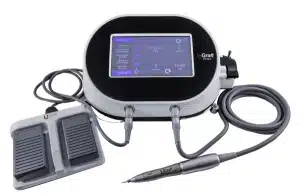
Zeus Ugraft handheld device.

What type of tools does Dr Kelemen use?

All hand-held motorized devices have their own particular advantages, but it usually boils down to punch size and how the hand-held device operate i.e. does it rotate, vibrate and oscillate or a combination of these or just one.

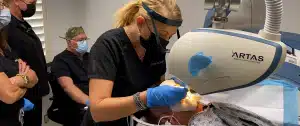
Dr. Kelemen for FUE has: ARTAS Robotic, WAW and Ugraft. ARTAS robotic is limited in its harvesting area so if a smaller surgery is required ARTAS can be an option. For larger surgeries where the doctor has to tap into all available donor hair and area in the donor site scalp, she uses either the WAW or the Ugraft. The patient is given options and the doctor will recommend a device depending on the skin type (hard or soft) and hair type (curly, straight, fine hair, coarse hair).


Is the ARTAS faster than a human?

With experience comes speed, so a new doctor will take longer with a manual motorized device then with the robot for sure! In Dr Kelemen’s case, she is as fast and sometimes faster than the Robot but it depends on many factors that impact both the doctor’s and the robots speed, like patient may move around, grafts get stuck in the punch to the particular hardness of the scalp skin. As a side note, if the doctor only offers FUT and FUE via robot, that may be because the doctor is not versed enough to do manual FUE and relies on the robot to do his job! (that should be a red flag) Doctors tend to let technicians operate the robot without his presence in the operating room (another red flag)! Doctors always advertise that they are part of the essential part of the surgery! Well, in Dr Kelemen’s humble opinion, being present in the whole surgery is essential! At her clinic, she is part of the surgery from the beginning to the end! One thing that sets her apart is that she can actually do a small surgery, 1500 grafts and less, by herself! Dr. Kelemen is often copied but never duplicated!

To settle this question: it depends on the experience of the doctor and how well versed they are with the manual motorized device.

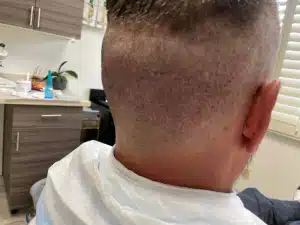
FUE via manual motorized has exploded in popularity due to its versatility and small punch sizes which help the patient heal faster with virtually undetectable donor site!

FUE is the new rave for sure! Among the many devices out on the market the leaders are: Ugraft (US), Cole (US), WAW (Belgium) and Trivellini (Paraguay). Results with these devices will vary depending on the skill of the physician using them, like the old saying goes: “A tool is a good as the person using it!”

Having returned from another conference in Europe, I can convey to you that FUE via manual motorized device was voted KING over other devices/types of procedures! Live workshops have supported this by demonstrating the speed and quality of grafts harvested when the procedure was done by an experienced physician!

WAW system FUE handheld device

WAW system FUE handheld device

In conclusion if you are looking for a hair transplant surgeon, is FUE better than FUT? The jury is still out on that! Old timers love FUT because according to them it gives you max number of hair grafts done, true, BUT it also leaves a nice scar that the patient might feel uncomfortable with later. The scar size depends solely on how good your doctor is in stitching! FUE on the other hand leaves virtually no marks (depending on the punch size used for extraction), heals quickly and provides and allows the harvesting, even harvesting, from all donor area. In other words, FUE is taking over the hair transplant field and younger doctors prefer the FUE method!

Article citations and references

Devroye Instruments

Dr. UGraft® Zeus FUE Hair Transplant System | Intelligent Punch

New Home

ugraft.com

Products – Trivellini (trivellinitech.com)

Cole Instruments – Automated Hair Transplant Tools, FUE Punches

BHT – Body Hair Transplant – A Comprehensive Overview


Are you struggling with hair loss and finding traditional hair transplant methods insufficient to meet your needs? There’s an innovative solution that might just be the answer you’ve been searching for: BHT -body hair transplant. This groundbreaking procedure offers hope to those with limited scalp donor supply, and in this comprehensive overview, we’ll delve into the intricacies of BHT and its potential benefits for hair restoration.

Join us on this journey to discover the ins and outs of BHT- body hair transplant, from understanding the procedure and donor areas to comparing it with traditional hair transplants. Learn about the ideal candidates, benefits and limitations, post-transplant hair growth expectations, and expert tips for successful outcomes. We’ll also share real-life success stories and introduce you to a renowned BHT clinic in Scottsdale, Arizona.

Key Takeaways

  • Body Hair Transplant (BHT) is an effective solution to hair restoration, utilizing the FUE technique and donor areas such as back, chest, and beard.

  • BHT provides more comprehensive coverage than traditional transplants but may not be suitable for all individuals. Ideal candidates should consider cost & financing options before proceeding.

  • Successful outcomes can be achieved by selecting experienced professionals who understand potential risks & complications of the procedure and have experience with this type of procedure.

Understanding BHT: Body Hair Transplant

Understanding BHT- Body Hair Transplant

Body hair transplantation (BHT) is a groundbreaking surgical procedure in medicine that offers a new lease on life for those struggling with hair loss. Harvesting hair from various body parts, such as the beard, chest, back, stomach, legs, and arms, body hair transplants provide an effective solution for hair restoration.

It allows BHT to serve as a viable alternative to traditional hair transplant methods, especially for those with a limited scalp donor supply.

Despite its many advantages, BHT also has some drawbacks, such as:

However, choosing appropriate donor areas and adhering to expert advice can help mitigate many of these drawbacks, leading to successful hair restoration.

The BHT Procedure

The BHT procedure involves extracting hair follicles from donor areas and implanting them onto the scalp with precision, typically utilizing the FUE method. It’s worth mentioning that butylated hydroxytoluene (BHT) is unrelated to the hair transplant procedure, despite sharing the same acronym. It is actually a common antioxidant found in various products and cosmetics.

For those considering BHT, choosing the most appropriate donor areas and adopting a strategic approach to transplantation is of utmost importance. For example, transplanting thick beard hair grafts in the hairline and temple region should be avoided to achieve a natural look in these delicate hair regions.

Instead, body hairs from legs and arms, which are finer and shorter compared to scalp donor area hair, can be used for a softer, more natural outcome. Mixing body hair with existing scalp hair is recommended to achieve a more unified, aesthetically pleasing appearance.

For more information on our BHT services, visit BHT – Body Hair Transplant.

Donor Areas for BHT – body hair transplant

When it comes to BHT, the most common donor areas include the back, chest, and beard. Beard and chest hair are preferred sources due to their structure and abundance. Beard hair, in particular, has a higher visual density and unique chemical characteristics that make it a valuable donor source.

The outcomes of animal studies on transplanting chest hair micro grafts to the scalp have shown promising results. These grafts have demonstrated an extended growth and an approximate fourfold increase in their length, mirroring the growth attributes of native scalp hairs in the crown area.

Harvesting beard hair should be done strategically, with hair follicles collected from the cheeks, submandibular area, and along the mandibular region first, leaving the moustache and chin areas for last.

Comparing BHT to Traditional Hair Transplants

Comparing BHT to Traditional Hair Transplants

BHT is more labor-intensive and costly than traditional hair transplants. However, it can be a viable choice for individuals with inadequate scalp donor hair. Using body hair from other areas than from the beard can be difficult to extract due to its thin nature, and the position of extraction can be uncomfortable for both the patient and surgeon.

Combination grafting, a technique that utilizes both scalp and body hair, has been used in cases such as:

  • Norwood grade IV

  • Diffuse pattern hair loss

  • Norwood grade III

  • Norwood grade VII

This approach offers a promising solution for those seeking to restore hair through a more comprehensive hair restoration option.

Ideal Candidates for BHT

BHT is ideal for adults aged 18 and above, within the preferred age range of 25 to 65. They should meet the following criteria:

  • Suffer from severe baldness or hair loss

  • Desire an increase in coverage on specific areas

  • Have limited donor hair available from traditional sites such as the scalp and back of the neck

  • Have body hair with similar qualities to scalp hair

  • Be in good overall health.

A consultation with a medical professional is necessary to assess your eligibility for a body hair transplant. During this meeting, the doctor will evaluate your general health and the condition of your hair to ascertain if you are eligible for a body hair transplant procedure. Additionally, you and your doctor will decide on the preferred donor site and the estimated number of hair grafts necessary to achieve the desired outcome.

Benefits and Limitations of BHT

Ideal Candidates for BHT

BHT offers several benefits for those seeking hair restoration solutions, including additional grafts and coverage for more severe baldness. However, BHT may have limitations in terms of density, texture, and growth rate compared to natural scalp hair.

The rationale behind utilizing body hair follicles in BHT is to address the lack of donor hair follicles and consequently boost the visual density and coverage for higher degrees of baldness. Bear in mind that transplanted body hair tends to curl once it reaches a certain length and may not completely match the native scalp hair in terms of thickness, growth rate, and hair cycle.

Post-Transplant Hair Growth and Expectations

Hair growth after BHT can vary, generally starting within a few weeks to a couple of months following the procedure. Initially, the new hair may have a thin and curly texture, similar to body hair.

Full growth from the transplants can be expected after 12 months, although it may take up to 18 months in some cases. During this time, the hair is likely to become longer and thicker, and may also experience changes in texture.

It’s important to have realistic expectations about the results, based on limited evidence from scientific literature, and understand that data and individual outcomes may vary.

Cost and Financing Options for BHT

The cost of BHT procedures can range from $7,500 to $20,000, depending on factors such as the number of grafts, experience of the surgeon, and location of the clinic. Although this procedure may require a substantial investment, the potential benefits and enduring results that BHT can provide should be taken into account.

Certain clinics, including Hair 4 Life, provide financing options for those seeking BHT. This means that you can potentially access BHT treatments without having to pay the full amount upfront, making it a more feasible option for those interested in this innovative hair restoration solution.

Expert Tips for Successful BHT Outcomes

Expert Tips for Successful BHT Outcomes

Choosing an experienced surgeon with a proven record in BHT procedures is key to ensuring a successful outcome. Additionally, having realistic expectations about the results and understanding the risks and potential complications associated with the procedure is crucial. A thorough safety assessment can help in evaluating these factors.

Another important factor for a successful BHT outcome is considering a combination of scalp and body hair in the transplant process. This approach can create a more natural-looking hairline and provide additional coverage, ultimately leading to a more aesthetically pleasing result.

Real-Life BHT – body hair transplant Success Stories


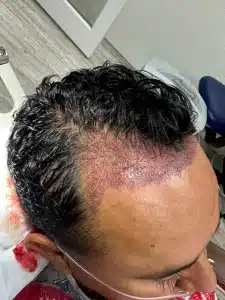
Real-life BHT success stories showcase impressive density and aesthetic results achieved through the procedure. These stories serve as a testament to the potential benefits and transformative power of BHT for those struggling with hair loss or thinning.

Bear in mind that individual results may differ based on factors such as hair type, scalp condition, and the surgeon’s expertise. However, hearing about the success stories of others can provide inspiration self confidence, and hope for those considering BHT as a solution for their hair restoration needs.

BHT by Hair 4 Life in Scottsdale

Hair 4 Life in Scottsdale, Arizona, is a renowned hair loss and transplant clinic that offers a comprehensive range of hair loss treatments tailored to suit all stages and causes of hair loss. The clinic specializes in the following procedures to effectively halt hair loss:

Surgical:

Non-Surgical:

Testing:

  • Trichotest

  • Trichlab

In addition, the clinic offers BHT services performed by Dr. Ramona Kelemen and her assistant Jessica.

Choosing Hair 4 Life for your BHT procedure ensures you’re in the capable hands of seasoned professionals committed to helping you achieve optimal results on your hair restoration journey.

Dr. Ramona Kelemen

Dr. Ramona Kelemen is the founder of Hair 4 Life and holds two doctorate degrees: M.D. (EU) and N.D. As a hair restoration and transplant physician, she specializes in both surgical and non-surgical methods to restore lost hair and revitalize existing hair follicles.

With 22 years of expertise in the hair transplant field, Dr. Kelemen is highly knowledgeable in BHT and other hair restoration techniques. Opting for Dr. Kelemen for your BHT procedure instills confidence in her ability to deliver exceptional, personalized results that meet your specific needs and goals.

Summary

In conclusion, body hair transplant (BHT) offers a fresh perspective on hair restoration solutions for individuals with limited scalp donor supply. By understanding the procedure, donor areas, and comparing it to traditional hair transplants, you can make a more informed decision about whether BHT is the right option for you.

Remember to seek consultation with a medical professional, such as Dr. Ramona Kelemen at Hair 4 Life in Scottsdale, to evaluate your eligibility for BHT and discuss your specific hair restoration goals. With the right approach and expert guidance, BHT can potentially transform your life and help you regain the confidence that comes with a full head of hair.


For more information on our BHT services, visit BHT – Body Hair Transplant.

Frequently Asked Questions

What is BHT?

Body hair transplant, also known as body hair transplantation, is a surgical procedure that involves harvesting hair from other parts of the body and transplanting it onto the scalp. This technique can be beneficial for individuals who have limited donor supply on their scalp or those who have experienced unsuccessful hair restoration surgeries in the past.

The process begins with the selection of an appropriate donor area, which typically includes regions such as the back, chest, or beard. The hairs in these regions are often resistant to baldness and, therefore, serve as ideal candidates for transplantation onto the scalp. Once the donor area is chosen, hair follicles are extracted using a specialized technique such as FUE (Follicular Unit Extraction) via Ugraft.

After the extraction, the harvested hair follicles are then carefully implanted onto the scalp, ensuring their proper alignment and orientation to achieve a natural appearance. The surgeon skillfully places each hair follicle, considering factors such as density, direction, and angle, to achieve optimal results. The implantation is key, and at Hair 4 Life, this step is done by Dr. Kelemen and Jessica, her assistant, who have a combine experience of 49 years!

What is the success rate of BHT -body hair transplant?

The beard hair is closer to the hair on shin than in the chin. This is also a common place to receive donors without scalping. Typically, beards are used over chests for donating because beards are longer with shorter textures. Beards are successful in 80-90% cases.

How much does body hair to head transplant cost?

The cost of removing bald spots from your hair is determined by several different factors. However, costs are mostly dependent upon how much equipment you need. Grafts can cost between Rs 40 and Rs 120. Hair transplants usually need between 500 – 500 grafts.

Can you transplant hair from your chest to my head?

Is chest hair transplantable for the heads? Definitely chest hair is suitable for a hair transplant. The transplant type is typically employed in situations where the donor site is not sufficient.

Can you transplant hair from your chest to my head?

Is chest hair transplantable for the heads? Definitely chest hair is suitable for a hair transplant. The transplant type is typically employed in situations where the donor site is not sufficient.

How long does hair take to grow after BHT transplant

The length of time it takes for hair to fully grow after a body to scalp transplant can vary based on individual factors and the specific circumstances of the transplant. Generally, hair can start to grow within a few weeks to a couple of months after the transplant. However, it may take several months or even up to a 18 months for the hair to fully grow and achieve its desired length. It’s important to note that the growth rate and outcomes can also be influenced by factors such as the health and condition of the scalp, the type of transplant procedure performed, and the skill and expertise of the surgeon.

What is the success rate of BHT transplant?

The success rate of BHT transplant in humans is quite satisfactory at 60-95%, with hair from the beard donor area having the highest success rate at 80-85%. These figures remain comparable to the industry standard of FUE and FUT transplants.

How much does body hair to head transplant cost?

The cost of a body hair to head transplant procedure typically ranges from $7500 to $20,000.

What is the BHT procedure?

Body Hair Transplantation (BHT) is a unique procedure that involves extracting hair follicles from other parts of the body and transplanting them to the scalp. This technique combines body and scalp hair grafts, and is best suited for patients whose donor sites lack viable amounts of follicles. BHT is performed using Follicular Unit Extraction (FUE) and is a no stitch technique.

Can you transplant hair from your chest to my head?

Chest hair can be used for a body-to-scalp transplant, as it will retain the same properties such as length, density and texture when transplanted to the scalp. Mixing body hairs from different sources helps create a natural look when completely bald areas on scalp are restored. However, chest hair should not be used in the frontal hairline. Therefore, yes, chest hair can be transplanted to your head.

What is the BHT procedure?

Body hair transplants involves the extraction of follicular unit hair follicular tissue from the body: chest, arms, legs and back and implanting them in the scalp. This procedure is used when the donor hair from the scalp has been exhausted. This procedure requires careful consideration of the implantation site, to yield the maximum coverage and blending them so the hair transplant will look as close to normal as possible.

Can I transplant hair from my chest to my head?

Do chest hairs have any effect on the head of a person? No! Body hairs are used as fillers to increase the density of the hair transplant.

What are the advantages of Body to Scalp hair transplant? 

Firstly, it widens the donor supply options by utilizing hair from different parts of the body. This is particularly useful for patients with limited scalp donor areas, such as those with advanced hair loss. Additionally, body hair transplantation can be a viable option for individuals who have previously undergone unsuccessful scalp hair restoration procedures or have inadequate donor areas due to scarring or previous trauma.

However, it is important to note that body to scalp hair transplant may not always yield the same density and characteristics as natural scalp hair. The hair characteristics, such as texture and growth rate, vary across different body regions. Careful selection of the donor area and appropriate patient counseling are crucial to manage expectations and ensure patient satisfaction.

In conclusion, body to scalp hair transplant is a technique that provides an alternative solution for individuals with limited donor supply or previous unsuccessful hair restoration surgeries. The procedure involves transferring hair follicles from body regions with high resistance to baldness onto the scalp. While it offers several benefits, there are certain limitations to consider. Through proper patient evaluation and precise surgical techniques, body to scalp hair transplant can be a valuable option for individuals seeking to increase their hair density.

Contact Hair 4 Life in Scottsdale

Dr. Kelemen integrates conventional and naturopathic medicine to provide the best of what both worlds have to offer. She creates a unique, compassionate, accepting environment for her patients. You only have to read the reviews to find out how she empowers her clients to look and feel their best. They leave the clinic with their heads held high!

To find out which procedure is best suited to your needs, you are invited to come into Hair4Life for a free consultation. Treatments are kept as affordable and accessible as possible so come in and talk to us.

Contact Us or call Hair 4 Life at (480) 525-4547 to schedule an appointment and get your free consultation.

For more information on our BHT services, visit BHT – Body Hair Transplant.


References

International Society of Hair Restoration Surgery – ISHRS

American Board of Hair Restoration Surgery | ABHRS

Can Hair Be Transplanted From Body to Scalp? – Wimpole Clinic