
When the hairline keeps inching back and the outer eyebrows start thinning, people often assume it is routine aging or standard pattern hair loss. Frontal fibrosing alopecia is different. If you are searching for the best options for frontal fibrosing alopecia, the first step is understanding that this is a scarring inflammatory condition, and timing matters.
Unlike common genetic thinning, frontal fibrosing alopecia, often called FFA, can permanently damage follicles if the inflammation stays active. That changes the treatment strategy. The goal is not simply to make hair look fuller. It is to calm the disease, preserve what can still be saved, and only consider restoration procedures when the scalp is stable.
What makes frontal fibrosing alopecia different
FFA usually shows up as a band-like recession along the frontal or temporal hairline. Many patients also notice eyebrow loss, facial papules, scalp itching, burning, tenderness, or a smooth shiny appearance where hair used to grow. Some people have obvious symptoms. Others have very little discomfort even while the condition progresses.
This is one reason self-diagnosis goes wrong so often. A receding hairline can resemble traction, hormonal thinning, or female pattern hair loss. But FFA behaves differently because it involves inflammation around the follicle and can lead to scarring. Once a follicle is fully scarred, regrowth is unlikely. That is why a proper scalp evaluation is not optional here.
The best options for frontal fibrosing alopecia start with diagnosis
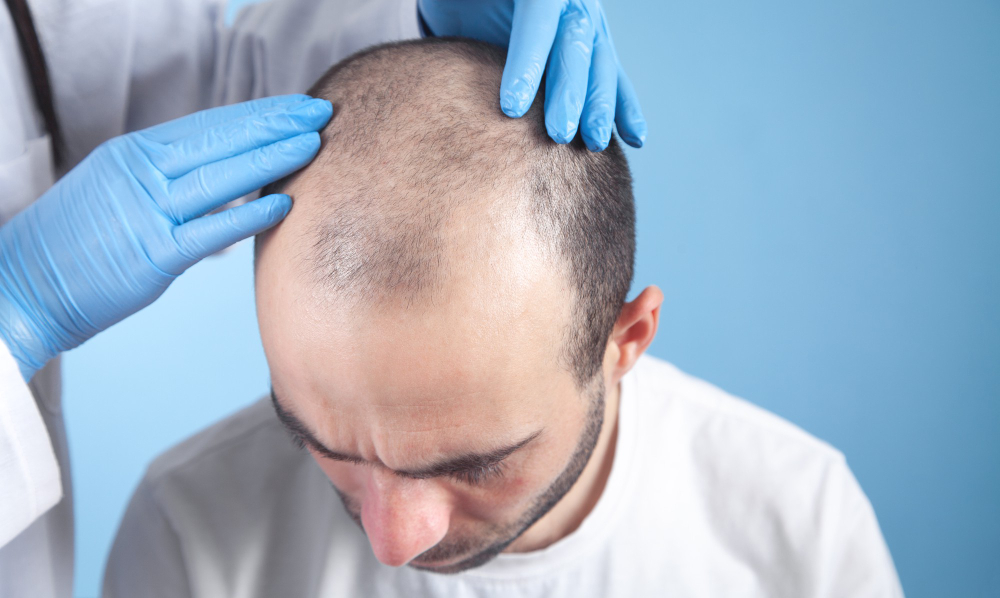
Before discussing treatment, a physician needs to confirm what is actually happening. An experienced hair restoration doctor will usually look at the pattern of recession, check for perifollicular scale and redness, evaluate eyebrow loss, and assess whether there are signs of other forms of alopecia happening at the same time. In some cases, a biopsy helps confirm the diagnosis.
This distinction matters because FFA can overlap with androgenetic alopecia. That means one patient may need anti-inflammatory treatment to stop scarring and a separate plan to address ongoing miniaturization. Treating only one piece of the problem often leads to disappointment.
A strong workup may also include a review of hormones, autoimmune history, medications, and nutritional factors. Not every patient needs every test. The right approach depends on the speed of loss, symptom pattern, medical history, and treatment goals.
Medical treatment is usually the foundation
For most patients, the best options for frontal fibrosing alopecia begin with medical management, not surgery. The reason is straightforward. If the disease is still active, transplanting hair into an inflamed scalp can produce poor growth and wasted grafts.
Topical corticosteroids or calcineurin inhibitors may help reduce inflammation in selected patients, especially when symptoms are mild or localized. Intralesional steroid injections are also commonly used when there is active redness, scale, itch, or tenderness along the hairline or brows. These treatments can be helpful, but they are not one-size-fits-all, and long-term steroid use has to be managed carefully.
Many patients also benefit from systemic therapy. Depending on the case, this may include medications such as hydroxychloroquine, doxycycline, finasteride, or dutasteride. The choice depends on whether the goal is primarily anti-inflammatory control, hormonal modulation, or both. Postmenopausal women with progressive FFA may respond differently than younger patients, and men with concurrent pattern loss require their own tailored plan.
This is where physician-led treatment planning matters. There is no single medication that works for every patient, and the trade-offs are real. Some options act gradually. Some require lab monitoring. Some are not appropriate during pregnancy or for patients with certain medical histories. Good care means matching the treatment to the person, not forcing everyone into the same protocol.
Supporting therapies can help, but they are not substitutes
Patients often ask whether regenerative or adjunctive treatments can improve FFA. Sometimes they can support the scalp environment or help with concurrent non-scarring hair loss, but they should not be presented as replacements for controlling inflammation.
Low-level laser therapy may be considered in selected patients, especially when androgenetic thinning is also present. Certain injectables or biologically focused therapies may have a role in a broader restoration plan, but their value depends on whether the primary disease is active, stable, or burned out. If inflammation remains uncontrolled, supportive treatments alone are unlikely to solve the core problem.
This is an area where honest guidance matters. A broad menu of services is valuable only when it is used responsibly. Patients with FFA need a clinic willing to say not yet when a procedure is poorly timed.
Eyebrow loss needs its own plan
Eyebrow thinning is one of the most distressing parts of FFA because it changes facial expression quickly and visibly. Sometimes medical treatment can slow additional loss or preserve remaining brow hairs. In early cases, there may be some improvement. In more advanced cases, restoration becomes a cosmetic and surgical conversation rather than a regrowth conversation.
Eyebrow transplantation can be a strong option, but only after the disease appears stable. That timing is critical. If inflammation is still active in the brow region, transplanted follicles may be at risk just like native ones. Patients do best when the medical and surgical planning are coordinated instead of treated as separate issues.
When is hair transplantation appropriate?
Hair transplantation for FFA is possible in some patients, but it is not the first move and it is not right for everyone. The best candidates are those with documented stability over time, minimal signs of active inflammation, and realistic expectations about density and long-term maintenance.
Even in the right candidate, the conversation should be nuanced. A transplanted hairline in FFA often requires conservative design. The surgeon must respect blood supply, scarred tissue characteristics, donor limitations, and the possibility that future change could still occur. Naturalness matters more than aggressiveness.
Technique selection also matters. In a condition where every graft counts, physician experience is especially important. Patients benefit from a surgeon who understands both medical hair disease and aesthetic restoration, because placing grafts beautifully is only part of the challenge. Choosing whether to operate at all is just as important.
What a realistic treatment timeline looks like
FFA rarely resolves overnight. Most successful treatment plans unfold in phases. First comes diagnosis and assessment of activity. Then medical therapy is adjusted over months, not weeks, to reduce inflammation and monitor progression. Only after the condition shows stability should restorative procedures be discussed.
That timeline can feel frustrating, especially for patients who want immediate correction of a receding hairline. But with scarring alopecia, patience protects results. Rushing toward surgery before the disease is quiet often creates more disappointment than benefit.
It also helps to remember that success is not always defined by dramatic regrowth. In FFA, stopping further loss can be a meaningful win. Preserving the existing hairline, preventing eyebrow progression, reducing symptoms, and improving appearance in a measured way can dramatically change quality of life.
Choosing care for frontal fibrosing alopecia
The best options for frontal fibrosing alopecia usually come from a clinic that understands diagnosis, medical treatment, and restoration as one continuum. Patients should look for careful scalp examination, thoughtful discussion of biopsy or testing when needed, clear communication about whether the disease is active, and transparency about what treatment can and cannot do.
It also helps to work with a practice that is not limited to one solution. If a clinic only offers surgery, you may be pushed toward surgery too early. If it only offers medication, cosmetic reconstruction may be overlooked when stability is achieved. A more complete approach gives you better odds of getting the right treatment at the right time.
At Hair For Life Medical, that philosophy is central to care. Hair loss is not treated as a sales category. It is evaluated as a medical and aesthetic problem that deserves precision, honesty, and an individualized plan.
If you think you may have FFA, the most helpful next step is not guessing which product to try. It is getting a focused evaluation while there is still time to protect vulnerable follicles and make smart decisions about what comes next.