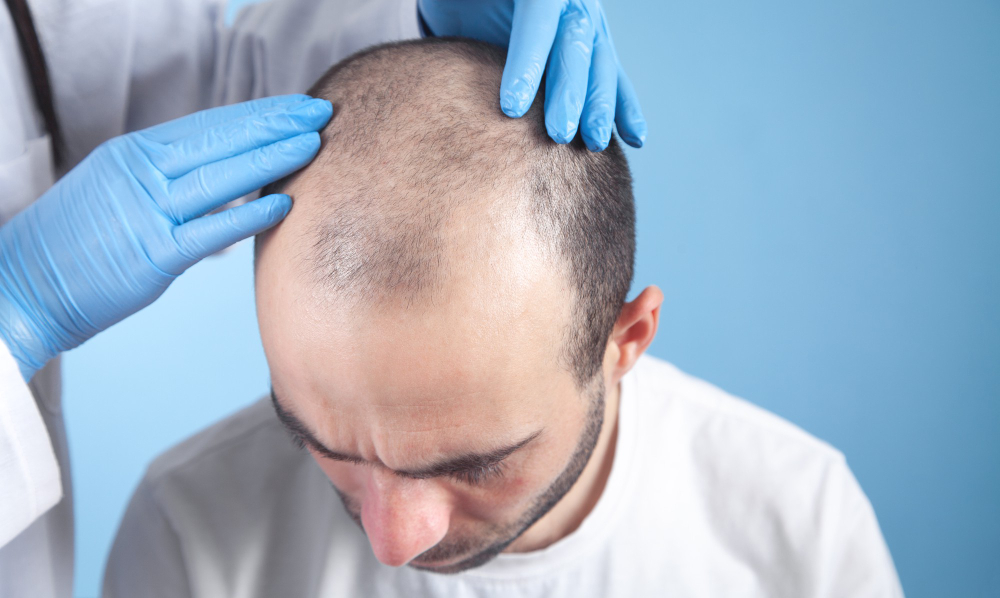

A widening part can feel easy to hide until it suddenly is not. Many women spend months changing styling habits, trying supplements, or wondering whether the shedding is temporary before asking the harder question – is a female hair transplant Arizona patients consider actually the right next step?
Sometimes the answer is yes. Sometimes it is clearly no. The key is not starting with a procedure. The key is starting with a diagnosis.
When a female hair transplant in Arizona makes sense
Female hair loss is different from the classic male recession pattern most people picture when they hear the word transplant. Women often lose density diffusely across the top of the scalp while keeping the frontal hairline relatively intact. That matters, because transplantation works by moving permanent hairs from a stable donor area, usually the back or sides of the scalp, into areas that have thinned. If the donor hair is not stable, or if the thinning is active and widespread, surgery may not be the first recommendation.
A female hair transplant in Arizona usually makes the most sense for women with specific, defined areas of loss. That can include traction-related thinning, a naturally high hairline, temple recession, thinning from prior surgery or injury, eyebrow loss, or localized density loss where the donor zone remains strong. It may also help women with pattern hair loss who have enough donor density and whose condition has been medically evaluated and stabilized.
This is where a specialist matters. The question is not simply whether hair can be moved. The real question is whether moving it will produce a natural result that still looks good years from now.
Not all female hair loss should be treated surgically
One of the biggest mistakes in hair restoration is treating every thinning problem as a transplant problem. Women can lose hair for hormonal, autoimmune, inflammatory, nutritional, genetic, and stress-related reasons. Thyroid shifts, menopause, iron deficiency, polycystic ovarian syndrome, postpartum shedding, and scarring disorders can all change the treatment plan.
If the root cause has not been identified, surgery can disappoint even when technically performed well. Existing hair may continue to miniaturize. New areas may thin around transplanted grafts. A patient may spend time and money on a procedure when medical treatment, regenerative therapy, hormone support, or a combined plan would have been more appropriate.
That is why a physician-led evaluation is so important. Scalp analysis, a close review of the pattern of loss, medical history, and in some cases lab work or more advanced testing can help separate women who are strong surgical candidates from women who need to stabilize the process first.
The best procedure depends on your pattern and lifestyle
There is no single best transplant technique for every woman. The right approach depends on how much hair is needed, where it needs to go, whether the donor area should remain hidden, and how the patient wears her hair in daily life.
FUE for women
Follicular unit extraction, or FUE, removes individual follicular units from the donor area and places them into thinning zones. For many women, FUE is appealing because it avoids a linear scar and can be adapted for discreet approaches such as no-shave FUE or long-hair FUE. That can matter a great deal for professionals and anyone who wants a more private recovery.
FUE can be excellent for hairline refinement, temple restoration, smaller density sessions, and eyebrow work. It is precise, versatile, and often favored when scar minimization is a priority. The trade-off is that not every patient is the ideal FUE candidate, and overharvesting must be avoided, especially in women with finer hair caliber.
FUT strip in selected cases
FUT, also called strip harvesting, remains a valuable option in the right patient. It can allow for the collection of a high number of grafts while preserving the surrounding donor hair in a different way than FUE. For women who wear their hair longer and are appropriate candidates, FUT may provide strong graft yield and efficiency.
The obvious trade-off is the linear donor scar. Some women are comfortable with that. Others are not. Neither choice is inherently better. It depends on goals, donor characteristics, and how the hair is typically worn.
DHI, robotic FUE, and other advanced methods
Direct hair implantation, robotic-assisted FUE, and other specialized methods can all play a role depending on the case. The important point is not the marketing label. It is whether the surgeon has selected the method for a medical reason and can explain why it fits your pattern of loss.
Women usually benefit from a highly customized approach because their thinning patterns are less predictable than standard male pattern baldness. Precision in graft angle, direction, and density is especially important at the front and along the part line, where even small irregularities can look unnatural.
What natural-looking results actually depend on
Most women are not asking for dramatic change. They want to look like themselves again – just with fuller density, a softer hairline, or less visible scalp in bright light. That is why artistry matters as much as graft count.
Natural results come from careful planning of hairline design, correct follicular unit placement, donor management, and an honest conversation about what surgery can and cannot achieve. Fine single hairs may be used at the leading edge. Denser groupings may be placed behind them. Curl, caliber, color contrast, and native hair direction all influence the final appearance.
This is also why overpromising is a red flag. Hair transplantation can improve coverage and framing, but it does not create unlimited density. If a woman has significant diffuse thinning, the smartest plan may be conservative grafting combined with medical and regenerative support to protect existing hair.
Recovery is usually manageable, but planning matters
Recovery after a female hair transplant is often easier than patients expect, but it still requires planning. The transplanted grafts need time to anchor. The donor area needs to heal. There can be temporary redness, tenderness, swelling, or shedding of transplanted hairs before new growth begins.
Most patients do not see meaningful cosmetic growth right away. Early shedding is normal. Visible improvement often starts over several months, with maturation continuing longer after that. This timeline can be frustrating if someone expects an immediate change, so setting realistic expectations from the beginning is part of good medical care.
For women who need discretion, procedural choice matters. No-shave or long-hair FUE may allow recovery with less obvious evidence of surgery. That is not ideal for every patient, but for the right person it can make the process feel far more manageable.
Questions to ask before choosing a clinic
If you are considering female hair transplant Arizona providers offer, do not focus only on before-and-after photos. Ask how the diagnosis is made. Ask whether non-surgical options are discussed alongside surgery. Ask who performs the critical steps of the procedure. Ask how donor stability is evaluated in women. Ask what happens if your thinning progresses later.
These questions matter because female hair restoration is not just a technical service. It is a long-term medical and aesthetic decision. The best consultation should feel educational, not pressured. You should come away understanding your pattern of loss, your candidacy, your alternatives, and the trade-offs involved.
In Scottsdale and the greater Phoenix area, patients often have access to many cosmetic options, but genuine hair restoration expertise is narrower than it appears. A practice that focuses exclusively on hair loss and restoration can offer something more valuable than a menu of trendy procedures – it can offer judgment.
Hair For Life Medical is built around that idea. The goal is not to push every woman toward surgery. The goal is to match the right treatment to the right patient, whether that means transplant, medical therapy, regenerative treatment, or a staged combination plan.
A transplant can be part of the answer, not the whole answer
For many women, the best outcome comes from combining treatments. A transplant can rebuild an area that has already lost density, while medical therapies help preserve the surrounding hair. That combination is often what creates a result that not only looks natural at first but stays natural over time.
This is especially relevant in female pattern hair loss, where miniaturization may continue unless the underlying process is addressed. Surgery may improve the visible problem, but long-term management protects the investment.
If you are at the point of researching your options, the most useful next step is not guessing which technique sounds best. It is getting a real evaluation from a physician who understands how female hair loss behaves, how to identify good candidates, and when not to operate. The right plan should leave you feeling informed, respected, and more confident about what comes next.