Tag Archive for: hairline lowering

Hair Transplant Timeline: Growth, Recovery & What to Expect


Hair transplantation has emerged as a beacon of hope for those experiencing hair loss, offering a chance to regain not just hair but also confidence and self-esteem. This surgical procedure, involving the transfer of hair follicles from one part of the head to another, promises a permanent solution to hair loss. 

However, the journey from the decision to undergo a hair transplant to the full fruition of its results is a path paved with patience, care, and understanding of the process.

In this article, we’ll navigate through the hair transplant timeline, detailing each stage from immediate recovery to the emergence of full, healthy hair growth, and set realistic expectations for those considering or having undergone the procedure.

What is a Hair Transplant?

Definition and Purpose:

      • Hair transplantation is a surgical technique for moving hair follicles from a “donor site” to a “recipient site” that is balding.
      • It’s primarily used to treat male pattern baldness but also applies to restoring eyelashes, eyebrows, beard hair, chest hair, and filling in scars.

Techniques:

        • Involves removing a strip of skin with hair follicles from the donor area.
        • The strip is then divided into individual grafts for transplantation.

Considerations:

    • Each technique has its own set of advantages and considerations.
    • Scarring: FUT may leave a linear scar in the donor area, whereas FUE leaves tiny, dot-like scars.
    • Recovery Time: Recovery time can vary between the two techniques, with FUE generally offering a quicker recovery due to less invasiveness.
    • Naturalness of Outcome: Both techniques aim to achieve a natural-looking hairline, but the choice of technique can affect the final appearance.

Immediate Post-Procedure Recovery

  • First 24 Hours Post-Procedure:

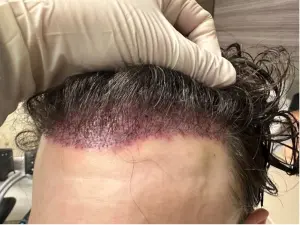
      • Expect swelling, redness, and discomfort around treated areas.
      • Crucial to follow the surgeon’s post-operative care instructions to minimize complications and ensure optimal healing.
  • First Week Considerations:

      • The scalp may feel tender; some patients might need to wear bandages over the transplantation site.
      • Medications may be prescribed, including pain relievers, antibiotics (to prevent infection), and anti-inflammatory drugs (to reduce swelling).
      • Advised to avoid strenuous activities and direct sunlight exposure.
      • Recommended to sleep with the head elevated to help reduce swelling.
  • Scabbing Process:

Short-Term Recovery Phase (1-3 months) 

This phase spans from the first to third-month post-transplant, marking the transition from initial healing to the visible emergence of new hair.

Physical Recovery

  • Reduction in Surgery Signs: By the end of the first month, redness and swelling significantly decrease.
  • Healing of Donor and Recipient Areas: Scabs fall off, making surgical sites less noticeable.
  • Shock Loss: Temporary shedding of hair in the transplanted and surrounding areas is common, indicating that new grafts are settling in.

Hair Growth Initiation

  • Emergence of New Hair: Around 2-3 months post-transplant, fine and lightly colored new hairs begin to grow, signaling the start of the growth phase.
  • Growth Rate: New hairs typically grow at about a half-inch per month, though this rate can vary among individuals.

Emotional and Psychological Aspects

  • Emotional Challenges: The initial excitement may diminish due to shock loss and the anticipation of new hair growth.
  • Importance of Realistic Expectations: Understanding that this phase is temporary and essential for achieving final results is crucial for emotional well-being.

This short-term recovery phase is a critical period where patients begin to see the first signs of the fruits of their procedure, navigating through physical healing, the start of new hair growth, and the emotional rollercoaster that can come with waiting for visible results. Patience and adherence to post-operative care are key during this time.

Mid-Term Growth Phase (3-6 months)

The mid-term growth phase is a crucial period where the emergence of new hair becomes more apparent, and the overall texture and density of the hair improve significantly.

  • Continuous Hair Growth:

  • Changes in Hair Appearance:

      • The texture of the new hair might differ initially, appearing curlier or straighter.
      • Over time, it usually adjusts to match the patient’s natural hair texture.
      • Hair density increases as more follicles enter the growth phase and the existing hairs thicken, enhancing the overall look.
  • Patient Experience:

    • This phase offers reassurance to patients, affirming their decision to undergo the transplant.
    • Visible improvements lead to increased satisfaction levels.
    • There’s a significant boost in emotional and psychological well-being as patients begin to see the fruits of their patience and investment.

Long-Term Results and Full Recovery (6-12 months)

The long-term results phase, spanning from 6 to 12 months post-procedure, is critical for evaluating the success of a hair transplant. This period allows patients to see the majority of the transplanted hair grow in, providing a clear view of the outcome.

Final Hair Growth and Density

  • Culmination of Growth Process: By six to twelve months, the hair transplant process reaches its peak, with transplanted hair achieving final density and length.
  • Improved Appearance: The hair and scalp’s appearance significantly improves, with any initial texture differences normalizing. The hairline and previously balding areas are now populated with natural-looking hair.

Maintaining Hair Health

  • Healthy Lifestyle and Care Regimen: Patients are encouraged to maintain the health and appearance of their transplanted hair through a healthy lifestyle and proper care, including gentle washing, avoiding harsh chemicals, and protecting the scalp from the sun.
  • Regular Check-ups: Ongoing consultations with the transplant surgeon are advisable to address any concerns and ensure the transplanted hair’s health.

Emotional and Psychological Impact

  • Satisfaction and Confidence Boost: Achieving the final results often brings profound satisfaction, significantly boosting self-esteem, confidence, and overall quality of life.
  • Importance of Realistic Expectations: It’s crucial for patients to have realistic expectations from the start and to have openly communicated with their surgeon throughout the recovery process.

Factors Affecting the Hair Transplant Timeline

The hair transplant timeline can vary significantly among individuals due to several factors:

Is the Hair Transplant Recovery Process Painful?

The recovery process after a hair transplant involves various sensations but is generally not considered intensely painful. Here’s what you might expect and some tips for managing discomfort:

  • Typical Symptoms:
    • Mild tenderness
    • Itchiness
    • Redness
    • Numbness
    • Minor pain

These symptoms are most noticeable in the initial weeks following the procedure. However, they tend to be mild and improve significantly after the first couple of days.

  • Managing Discomfort:
    • Over-the-counter medications: Many patients find relief using anti-inflammatory drugs like aspirin, ibuprofen, or naproxen. These medications can effectively alleviate mild symptoms.
    • Follow Doctor’s Post-Op Instructions: Adhering strictly to your surgeon’s post-operative care instructions is crucial. Proper care can not only reduce discomfort but also accelerate the healing process, ensuring your scalp recovers correctly and efficiently.

Conclusion 

Navigating the hair transplant timeline requires patience, care, and realistic expectations. From the immediate recovery following the procedure through the various phases of hair growth, understanding what to expect at each stage can make the journey more manageable and fulfilling. By the end of the first year, the rewards of perseverance become evident, with most patients enjoying natural-looking hair growth and a significant boost in confidence. Remember, the key to a successful hair transplant lies not just in the hands of skilled surgeons but also in the patient’s commitment to follow post-operative care instructions and maintain a positive outlook.


References:

American Board of Hair Restoration Surgery | ABHRS

Everything You Need to Know About a Beard Transplant

Beard and Mustache Transplant – ISHRS

Beard Transplant: Pros & Cons, Risks, Recovery | RealSelf


When it comes to addressing hair loss, the array of options available can be overwhelming. Among the most discussed solutions are hair transplants, hair replacement systems, and hair implantation techniques. Each approach offers unique benefits and considerations. In this comprehensive guide, we’ll explore these options in detail, helping you make an informed decision on your hair restoration journey.

Hair Transplant

  • What It Is: Hair transplantation is a surgical method that involves transferring hair follicles from a donor site (usually the back or sides of the head where hair is more abundant) to the balding or thinning areas of the scalp. This process aims to restore the hair in areas where it has thinned or disappeared.
  • Benefits:

Permanent and Natural-Looking Solution: One of the most significant advantages of hair transplants is their ability to produce results that blend seamlessly with your natural hair, growing, and aging in the same way as the rest of your locks.

  • Considerations:
    • Surgical Procedure Required: Undergoing a hair transplant means you’ll need to prepare for a surgical process, which includes a recovery period and the potential for side effects such as swelling and discomfort.
    • Recovery Time: Post-surgery, some downtime is needed for the scalp to heal properly, which might involve taking a break from certain activities and following a specific care routine.

Hair Replacement Systems

  • What It Is: This category includes wigs and toupees, which can be made from synthetic materials or real human hair, offering an aesthetic solution to hair loss without the need for surgery.
  • Benefits:
      • Immediate Results: Unlike surgical options, hair replacement systems offer an instant change, allowing for an immediate improvement in appearance.
      • Non-invasive: With no surgery required, this option eliminates the risks associated with surgical procedures, such as infection or scarring.
  • Considerations:
    • Regular Maintenance: To maintain the appearance and longevity of hair replacement systems, regular cleaning and adjustments are necessary.
    • Temporary Solution: Unlike hair transplants, these systems do not offer a permanent fix and will need to be replaced or maintained over time.

Hair Implantation (Hair Implants)

  • What It Is: Hair implantation can refer to two distinct approaches: the surgical implantation of hair, akin to traditional hair transplants, and the use of artificial hair fibers that are inserted into the scalp.
  • Benefits:
  • Considerations:
    • Risk of Rejection and Infection: Particularly with artificial fibers, there’s a risk that the body may reject the material, or it could lead to scalp infections.
    • Natural Appearance: There’s a possibility that artificial implants may not mimic the look and feel of your natural hair as closely as other options.

Delving Deeper

1. Procedure and Technique

Category Procedure/Technique Description
Hair Transplant Follicular Unit Extraction (FUE) Individual follicles are extracted and transplanted. Minimally invasive with less downtime.
Follicular Unit Transplantation (FUT) A strip of skin with hair is removed, and follicles are transplanted. More invasive but efficient for large areas.
Hair Replacement Systems Custom Fit and Style Custom-fitted and styled to match your natural hair.
Attachment Methods Attached using adhesive, clips, or weaving, requiring regular adjustments.
Hair Implantation Surgical Implantation Surgical options mimic traditional hair transplants.
Artificial Fiber Implantation Artificial fibers are implanted into the scalp one by one.

2. Look and Feel

Feature Hair Transplant Hair Replacement Systems Hair Implantation
Natural Appearance Grows like normal hair, allowing for haircuts, styling, and natural aging. None Artificial Implants: May lack the completely natural look and feel of biological hair.
Texture and Color Matching Uses your own hair, ensuring a perfect match. None Surgical Implants: Uses your own hair, ensuring results are natural.
Versatility in Styles None Wide range of colors, textures, and styles. None
Feel None May not feel exactly like natural hair but advancements have made them more realistic. None

3. Durability and Maintenance

Treatment Option Feature Description
Hair Transplant Long-Term Solution Permanent results that will last a lifetime with proper care
Maintenance Follow post-op care initially; regular hair care suffices
Hair Replacement Systems Lifespan Can last several months to a year with proper care
Maintenance Requires regular cleaning, attachment, and potential replacement
Hair Implantation Artificial Fibers May need replacements and adjustments over time
Surgical Implants Similar to hair transplants in terms of durability

4. Cost and Accessibility

Treatment Option Cost Considerations Accessibility Considerations
Hair Transplant Higher upfront cost but considered an investment due to its permanence. Requires a qualified surgeon and clinic.
Hair Replacement Systems Lower initial cost compared to surgical options. Widely available and customizable.
Hair Implantation Variable Costs: Depending on the type (artificial vs. surgical), costs can vary widely. Specialist Required: Particularly for surgical options, a qualified professional is necessary.

5. Risks and Considerations

Treatment Option Risks and Considerations Recovery or Maintenance
Hair Transplant – Infection

– Scarring

– Potential for unnatural-looking results if not done properly

Short-term recovery with possible discomfort
Hair Replacement Systems – Risk of allergic reactions to adhesives or materials May affect lifestyle activities like swimming or high-intensity sports
Hair Implantation – Rejection and Infection (especially with artificial fibers)

– Risk of looking less natural

Depends on the type of implantation; maintenance may vary for artificial fibers

Making the Right Choice in Hair Restoration

When facing hair loss, selecting the best treatment method can feel daunting. The journey towards hair restoration is not just about choosing a procedure; it’s about making a lifestyle choice that aligns with your personal needs, expectations, and long-term well-being. Here, we delve deeper into how to make the right choice for your hair restoration needs, emphasizing the importance of professional guidance, lifestyle considerations, and the long-term outlook.

Consult with Professionals

  • Expert Evaluation: Begin by consulting with experienced surgeons or hair loss specialists who can provide a thorough evaluation of your hair loss. This step is crucial as it helps determine the most effective treatment method based on the cause and pattern of your hair loss, your scalp’s condition, and your overall health.
  • Tailored Recommendations: Each individual’s hair loss situation is unique, and a professional can offer personalized recommendations. They can outline the pros and cons of each treatment option, helping you understand what to expect in terms of results, maintenance, and costs.
  • Quality of Care: Seeking advice from reputable professionals ensures you receive the highest standard of care. It also minimizes the risks associated with treatments, whether you opt for a surgical procedure like hair transplants or a non-surgical solution like hair replacement systems.

Consider Your Lifestyle

  • Daily Activities and Maintenance: Your daily routine and willingness to maintain the hair restoration solution play a significant role in your decision-making process. For instance, if you lead an active lifestyle and engage in water sports or high-intensity activities, a non-surgical hair replacement system may require frequent adjustments and care, which could be inconvenient.
  • Appearance and Confidence: Consider how each option aligns with your desired appearance and its impact on your confidence. While hair transplants offer a permanent, natural look, you may prefer the versatility of hair replacement systems, which allow for different styles and immediate results.
  • Time and Commitment: Evaluate how much time you are willing to dedicate to the maintenance and care of the chosen solution. Hair transplants, for example, have a one-time surgery followed by a recovery period, but the results are long-lasting with minimal maintenance. On the other hand, hair replacement systems require ongoing care and regular visits to a specialist for adjustments.

Think Long-Term

  • Durability and Changes Over Time: Assess the longevity of the hair restoration option. A hair transplant, while initially more costly, provides a permanent solution that ages with you. Conversely, hair replacement systems and hair implants may require future updates or replacements, adding to the long-term cost and effort.
  • Health and Safety: Long-term health implications and safety should be a priority. Surgical options carry risks such as scarring and infection, but choosing a skilled surgeon can minimize these risks. For non-surgical options, consider potential allergies or reactions to materials used in hair systems.
  • Evolving Hair Loss: Recognize that hair loss might continue to evolve over time. A comprehensive approach, sometimes combining treatments like hair transplants with medical therapies, may offer the most sustainable outcome. Discuss with your specialist how to address future changes in your hair loss pattern.

Conclusion

In conclusion, while hair transplants offer a permanent, natural solution, they require surgery and recovery time. Hair replacement systems provide immediate results with ongoing maintenance, and hair implantation offers a middle ground with both surgical and non-surgical options. Your decision should be based on a careful consideration of your needs, lifestyle, and the advice of professionals in the field.


References:

International Society of Hair Restoration Surgery – ISHRS

American Board of Hair Restoration Surgery | ABHRS

Fue Europe – HAIR TRANSPLANT SOCIETY

Corrective hair transplant surgery

The topic of corrective hair transplant surgery is back………again

Lately, I have been performing way way too many corrective surgeries on work performed by doctors that see the patient as a money-making opportunity instead of what they are, an individual looking to improve/restore their confidence by having a hair transplant! This type of surgery that is so visible can have a life altering effect on the patient, a detail lost on many doctors.

Now there are many tools out there, many marketing schemes that promise you they have the latest technology, the only technology, the magical team, this type of slit or the other, “dense packing” etc. but sometimes customers forget:

Hair transplants are not done by machines, they are done by doctors! The Machine is only a tool that aids the doctor and is as good as the doctor.

That is IF the doctor is wholly involved! I remember somebody who came in for a reconstructive surgery done at a prestigious clinic on the east coast. When I looked up the webpage the doctor was performing up to 5 surgeries a day! How? Does he have 5 twins? This tells me that most of the work is done by the staff and not the doctor. The results were poor and that is why he ended up at my clinic! 

Many people think that they can buy a tool and voila, they are a hair transplant guru…. but far from it! My workload proves it, without a doubt!

Again, I cannot stress or emphasize enough how important: experience, passion for this type of work, immense patients and having an artistic eye are a must in this field!

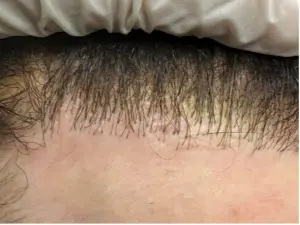
We are talking about basic knowledge i.e. no two and three hair grafts in the hair line! Why? Because a 2 and 3 graft hairline does not exist, our hairline is made up of ONE hair graft!


corrective hair transplant surgery


The above picture is a perfect example of what you DO NOT want the result to look like. There is no replacement for experience, period!

No hairline is the same as no two hair transplants are the same. A physician must be able to frame the face when designing a hair line, a hair line that will look natural aka as it belongs there!

corrective hair transplant surgery

The above picture is right after the corrective surgery! For me, as a doctor, when I showed him the first time what it looks like, his face lit up, he was grinning ear to ear, that was my personal satisfaction, seeing all his worries just vanish! Poof…….with a corrective surgery!

Yes, any doctor can open a hair transplant clinic, and they can buy any tool out there, but we go back to a tool is as good as the operator! What these devices need is competent and trained doctors. Doctors that understand the pros and cons of the device and they are able to maximize the pro and minimize the con! In my practice I choose very carefully what devices I use, and I am always looking at the end result! I can make any outrageous claims, but the results are what ultimately matters!

Details that impact the results:

Let’s look at punches for a second regardless of the claim people make: a 22g will be smaller than a 19g, and it is very obvious that one is significantly smaller than the other! Therefore the scaring will be that much smaller, which in turn means healing time will be greatly improved! 

Some doctors need large teams some don’t! It depends on the doctor!

In my case I was fortunate enough to be able to work both sides of the isle! I was a nurse so did the “grunt” work and then when I got my medical license, I was able to do other side easily. Some of my fellow doctor friends fawn over my machine like stitching, I attribute that to my youth when I used to do needle point with my grandmother, sew “goblen” for my fiancée…….little did I know then how helpful these will be in the future: patients, attention to detail, repetitive work for long periods, visualizing what the results will look like, artistry.

Now, to pad myself on the back: I challenge you to find a hair transplant doctor that used to do needle point? Yes, I am that rare of a breed indeed.

Now after reading the above, you may wonder what is a goblen? It is a type of needle point popular in Europe! It is a type of sewing where there you need to fill in the grid with the right color thread to yield a picture. It requires attention to detail and repetitive work. Below is an example of a kit and what the results might look like.

corrective hair transplant surgery

corrective hair transplant surgery

So, why do I have so many corrective surgeries?  “Every physician, MD or DO, has the legal right to pick up a scalpel and proclaim him/herself a qualified hair transplant surgeon.” So, new clinics popped up on the horizon that thought that they can do what the top doctors can without any training, or just by buying a certain machine or tool! Some learned the hard way that it is not so easy, and others are learning on their patients that end up at my clinic! So how do YOU, the patient, avoid this pitfall?

Remember, clinics compete for a small niche market, and they need to set themselves apart, sometime doing so by outrageous claims, by misleading advertising or just by omitting certain cons about their device.

Now let’s return to you the patient who is bombarded by ads from every angle.

What should you do?

  1. Look at reviews: read all of them……should give you a basic idea.
  2. Scope of practice i.e. hair transplant only or spa or cosmetic surgery where hair transplant is just part of portfolio.
  3. Time in the field
  4. Experience of the doctor i.e. how long has the doctor been doing hair transplant and how many.
  5. Their results: this can be misleading because pictures can be doctored, taken in a particular angle etc
  6. Avoid doctors with claims of grandeur! Avoid claims: “The best hair transplant doctor!”, look for “among the best!
  7. Avoid cheap hair transplants, if you are going to save money save it on something else, you will wear your head for the rest of your life 😊
  8. Doctor involvement i.e. are they doing “essential” work, and the rest is left to the staff.
  9. There should be no pressure to do a hair transplant, it is an elective surgery after all.
  10. Consultation should be with the doctor that will be performing the surgery, if you do not get to see your doctor during a consultation walk away as fast as possible.

At my clinic I have days when I do only consultations and the other days, I do hair transplant only. I have one assistant, yes just one! Between the two of us we can tackle even the most difficult and large session FUE. We have done 4500 graft surgeries in 10h. How? First, we have 49 years of combined experience doing nothing but hair transplants. Two we have been together for 19 years. Lastly, we just click, and we know what needs to be done, like a fine-tuned machine we perform. I also do not perform surgeries day after day! I am not a mill!

Now let’s be clear, we are not miracle workers so when we do FUT, which is more tech laborious, we do have two trusted techs that come in and help out.

You want your doctor to be fresh. At Hair 4 Life Medical, I do a surgery, followed by a day of consultations, followed by a surgery, followed by a day of consultations, then another surgery.

Another aspect that sets me apart is that after your surgery your post op care is with ME, the doctor, and not with an assistant. I check my work, I teach YOU to take care of the fresh grafts, I answer any questions/concerns you may have, and I am available to my patients 24/7/365! Yes, I do come in on the days that we are supposed to be closed to do your shampoo! You thought I would just give you a written piece of paper for you to figure it out! Not my style! Once you had hair transplant with me, you become my extended family!

Lastly, I leave you with these words of wisdom from another hair transplant doctor that felt the same frustration as me:

“Behind these devices there needs to be a competent doctor, and with the doctor, a competent team. Otherwise, no robot or vacuum-assisted gizmo will help you. But here is the big problem: these companies are advertising, selling and promoting these devices to doctors all over the country and the world who have no training in the complex procedure of hair restoration surgery. And they couldn’t care less. Their investors need to make their money, so therefore machines need to be sold … to whoever is buying.”

References

FOLLOWUP HAIR RESTORATION PROCEDURES – ISHRS

Revision and Repair of Previous Hair Transplants – ISHRS

Different options in revision surgical hair restoration | Hair Transplant Forum International

Revision and Repair of Previous Hair Transplants – ISHRS

Contact Hair 4 Life in Scottsdale

Dr. Kelemen integrates conventional and naturopathic medicine to provide the best of what both worlds have to offer. She creates a unique, compassionate, accepting environment for her patients. You only have to read the reviews to find out how she empowers her clients to look and feel their best. They leave the clinic with their heads held high!

To find out which procedure is best suited to your needs, you are invited to come into Hair4Life for a consultation. Treatments are kept as affordable and accessible as possible so come in and talk to us.

Contact Us or call Hair 4 Life at (480) 525-4547 to schedule an appointment.