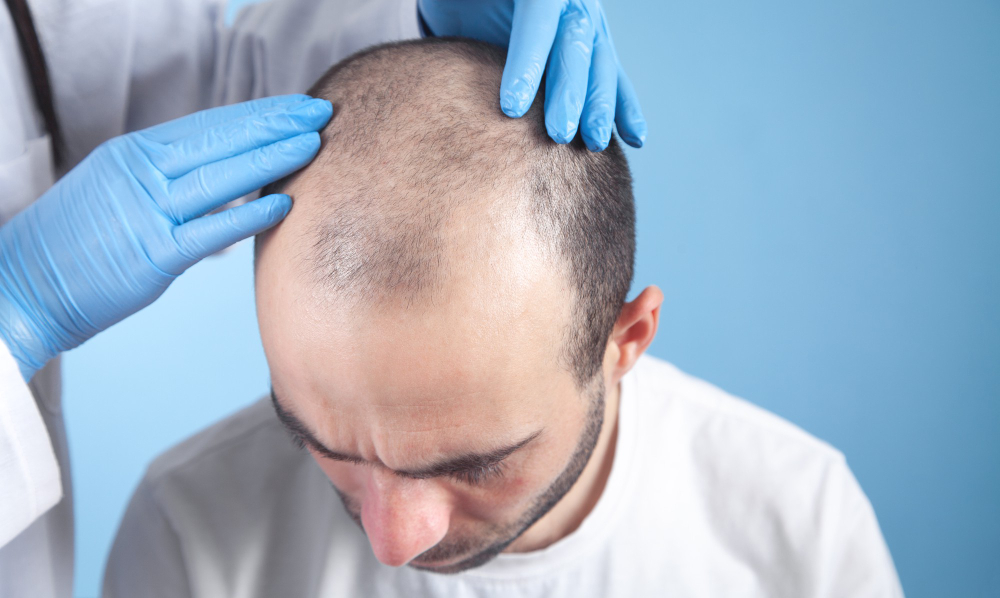

Hair loss gets personal fast. One day it is a little more scalp at the crown, a widening part, a thinner beard edge, or a scar that shows more than it used to. The next day, you are comparing procedures, reading reviews, and trying to figure out whether a Scottsdale hair restoration specialist can actually tell you something useful beyond selling a transplant.
That question matters because hair restoration is not one treatment. It is a medical and aesthetic decision that should start with diagnosis, not a sales pitch. The right specialist looks at why the hair is changing, how stable the loss is, what areas are available as donor supply, and what kind of result will still look natural years from now.
What a Scottsdale hair restoration specialist should actually do
A true hair restoration practice does more than offer one popular procedure and call it a solution. Hair loss can come from androgenetic alopecia, hormonal shifts, traction, inflammation, prior surgery, scarring, stress-related shedding, or a mix of causes. If the evaluation stops at a quick glance and a quote, that is a problem.
A specialist should assess the pattern and stage of loss, scalp condition, donor density, hair caliber, medical history, and long-term progression. In many cases, diagnostic tools such as scalp analysis, medical review, and selective testing help clarify whether the goal should be to preserve existing hair, restore lost density, revise a poor prior result, or combine several approaches over time.
This is also where experience shows. Hairline design, graft placement, angle control, donor management, and scar planning are not interchangeable skills. They directly affect whether the outcome looks soft and natural or obvious and overdone.
Not every patient needs surgery first
Many people start their search assuming a transplant is the answer. Sometimes it is. Sometimes it is too early, too aggressive, or not the first move.
A careful specialist will explain when non-surgical treatment makes more sense. If you are actively thinning, stabilizing loss can be just as important as replacing what is already gone. Medical therapies, regenerative options, laser-based support, injectables, scalp micropigmentation, hormone-focused care, and other physician-guided treatments may help preserve native hair or improve the scalp environment before surgery is even considered.
That is especially relevant for women with diffuse thinning, younger men whose pattern is still changing, patients with inflammatory scalp issues, and anyone with limited donor supply. Surgery can create density, but it does not stop future loss. That trade-off should be discussed clearly.
When surgery is the right next step
If hair loss is established and the donor area is suitable, surgical restoration may offer the most meaningful visual change. But even then, the best procedure depends on your anatomy, styling preferences, and goals.
FUE is often chosen for patients who want individual follicular unit extraction and smaller dot scars. It can be a strong option for hairline work, crown restoration, facial hair restoration, and patients who want flexibility with shorter hairstyles. Variations such as no-shave FUE and long-hair FUE can be helpful for people who need discretion during recovery.
FUT strip surgery may still be the better choice in some cases, especially when a larger number of grafts is needed and donor management is critical. It is not outdated simply because FUE gets more attention. The right conversation is not FUE versus FUT as a trend contest. It is which approach gives the patient the best graft quality, donor preservation, and long-term plan.
Then there are highly specific scenarios: eyebrow restoration, beard transplant, body hair transplant, transgender hairline design, scar revision, and corrective surgery after poor prior work. These are not side services. They require a refined understanding of aesthetic proportion, growth direction, and the differences between one body area and another.
Experience matters more than marketing
The hair restoration field is crowded with before-and-after photos, package pricing, and clinics that rely heavily on technicians. Patients often do not realize how much of a procedure may be delegated until they are already committed.
That is why physician involvement matters. A specialist with deep, procedure-level experience brings consistency to graft harvesting, recipient site creation, hairline artistry, and intraoperative decision-making. For corrective cases especially, there is very little room for guesswork. Overharvested donor zones, pluggy hairlines, widened scars, and poor angulation need strategy, not speed.
An experienced clinic should also be comfortable saying no. If your donor area is weak, if your expectations are unrealistic, or if non-surgical management should come first, the safest answer may be to pause. That kind of honesty is usually a sign that the practice is protecting your future result rather than chasing a quick conversion.
How treatment planning should work
The best hair restoration plans are individualized. That sounds obvious, but many consultations still reduce patients to a standard package.
A thoughtful plan considers how visible the loss is, how much density is realistic, how the hair may change over the next five to ten years, and how much downtime you can accept. A business executive may care deeply about discretion and choose no-shave or staged treatment. A woman with diffuse thinning may need a medical workup and supportive therapies before deciding on grafting. A patient with a failed transplant may need scar revision and careful redistribution rather than simply adding more grafts.
This is where broad treatment availability helps. A clinic that offers both surgical and non-surgical options is better positioned to match the treatment to the patient instead of steering every patient toward the same answer. That broader view often leads to better long-term outcomes because it addresses both appearance and progression.
Questions worth asking in your consultation
When meeting with a Scottsdale hair restoration specialist, pay attention to how the evaluation is done and how the recommendations are explained. Ask what is causing the hair loss, whether the loss appears stable, what your donor capacity looks like, and what level of density is realistic for your hair type.
You should also ask who performs the key parts of the procedure, what non-surgical options could support the result, what the recovery process looks like, and how the clinic plans for future loss. If you have had prior surgery, ask how corrective work changes the risk profile. If you want discretion, ask whether techniques like no-shave FUE or long-hair FUE are appropriate.
The quality of the answers matters as much as the answers themselves. Clear, pressure-free education is usually a better sign than exaggerated promises.
Why natural results depend on restraint
Patients often focus on graft numbers. Specialists focus on design. The reason is simple: natural results come from proportion, transition, and planning.
A lower hairline is not always a better hairline. Maximum density is not always the safest use of grafts. In some patients, a conservative design with strategic density creates the strongest cosmetic improvement while preserving donor reserves for later. In others, restoring the frontal forelock and mid-scalp matters more than chasing the crown.
This is one of the biggest it depends areas in hair restoration. Age, facial structure, ethnicity, hair texture, donor strength, and future loss all affect what will look believable over time. Good work should not draw attention to itself. It should simply look like you.
A specialist should treat more than the visible symptom
Hair restoration works best when the clinic respects both the cosmetic and medical sides of hair loss. That may include reviewing hormones, scalp health, inflammation, genetics, and healing factors alongside surgical candidacy. Some patients benefit from a combined conventional and naturopathic perspective, especially when multiple factors are involved.
That full-spectrum mindset is one reason patients in Scottsdale and the greater Phoenix area often seek out practices that focus only on hair. A dedicated center can usually offer more nuanced options than a general cosmetic office where hair restoration is one service among many. At Hair For Life Medical, that philosophy is simple: present the real options, explain the trade-offs, and build a plan around the patient rather than the procedure.
If you are considering treatment, look for the specialist who helps you understand your hair loss before asking you to commit. Confidence tends to follow when the plan feels medically sound, aesthetically natural, and genuinely your own.