
Are you tired of seeing your hair thinning or balding? Wondering “what is an FUE hair transplant?” FUE hair transplant might be the solution you’ve been searching for! Follicular Unit Extraction (FUE) is a minimally invasive technique that has revolutionized the field of hair restoration. With its advanced technology (WAW system, Trivellini and Ugraft) minimal scarring, and faster recovery time, FUE offers a promising solution for those who wish to regain their confidence and youthful appearance. This blog post will guide you through everything you need to know about FUE hair transplants, from the procedure itself to the factors affecting its success, cost, and more.
Key Takeaways
-
FUE is a minimally invasive hair transplant technique with reduced scarring, shorter recovery time and natural-looking results.
-
Factors affecting FUE success include the surgeon’s experience, donor area quality and patient suitability.
-
When selecting a clinic for an FUE procedure, research patient testimonials & qualifications of the surgeon to ensure successful outcomes.
Understanding FUE Hair Transplant
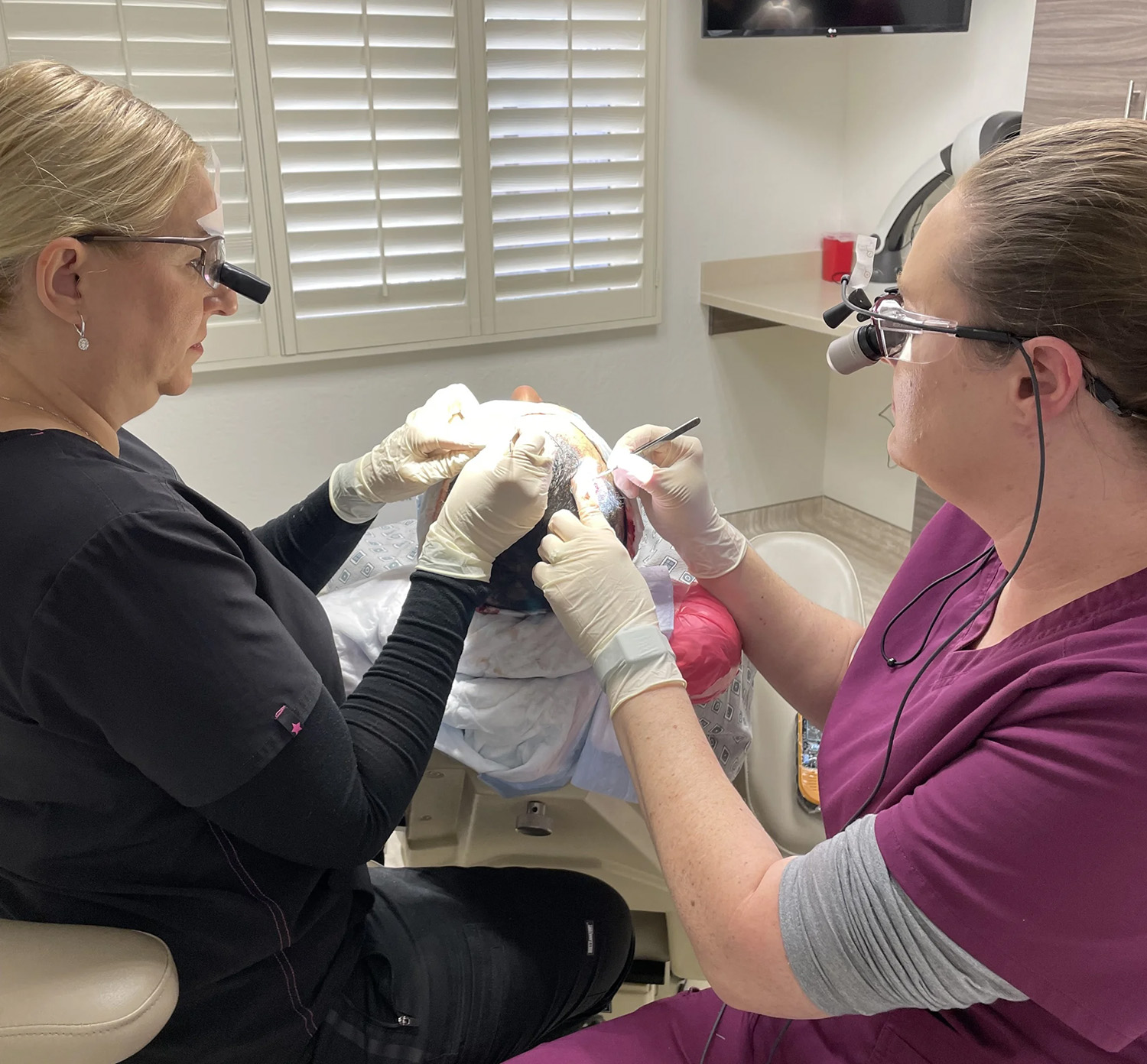
FUE hair transplant is a cutting-edge hair restoration technique that offers a number of benefits over traditional hair transplant methods. Here are some key advantages of FUE hair transplant:
-
Individual hair follicles are extracted from the donor area (usually the back and sides of the head) and implanted into the recipient area (the area with thinning hair or balding).
-
The procedure is minimally invasive, resulting in reduced scarring.
-
The recovery time is shorter compared to other hair transplant methods.
-
FUE hair transplant is suitable for patients with various hair loss patterns and preferences.
Wondering how this innovative procedure operates? Let’s delve into the fundamental principles of FUE hair transplantation.
The Basics of FUE
FUE hair transplant involves the use of small punches (typically 0.6-1.0 mm in diameter) to extract individual hair follicles from the donor area. This method results in minimal scarring and allows for a faster recovery time compared to traditional hair transplant techniques, such as follicular unit transplantation (FUT) or body hair transplantation.
The surgeon’s experience and expertise play a crucial role in the success of the FUE procedure, as it requires a thorough understanding of the angle of the hair below the skin, appropriate punch size, and proper hand movements. The use of sharp punches helps reduce the twisting needed to cut into the dermis, while blunt punches reduce the follicular transection rate.
Benefits of FUE
The benefits of FUE hair transplant are numerous. One of the main advantages is the reduced scarring compared to traditional hair transplant methods, making it an ideal choice for those who wish to wear short hairstyles or have tight scalps. Additionally, FUE offers a shorter recovery period, allowing patients to return to their normal activities within a few days.
Moreover, FUE hair transplant offers several advantages.
-
It yields natural-looking results, minimizing the chances of the “hair plug” appearance often associated with older hair transplant techniques.
-
It provides a more comfortable procedure for the patient.
-
It offers an aesthetically pleasing solution for those suffering from hair loss.
Types of FUE Hair Transplants

FUE hair transplants can be performed either manually, manual motorized or with the assistance of robotic technology. Manual FUE is conducted by an experienced surgeon using handheld tools to extract and implant hair follicles, while robotic FUE utilizes advanced technology for improved precision, speed, and consistency during the procedure.
We’ll delve deeper into these two variants of FUE hair transplants.
Manual FUE
In a manual FUE hair transplant, the surgeon uses handheld punches or motorized version of those punches to carefully extract individual hair follicles from the donor area and then implant them into the recipient area. This hair transplant procedure requires skill and accuracy and is often considered more time-consuming than its robotic counterpart.
However, manual FUE allows the surgeon to have greater control over the extraction and implantation process, potentially leading to more natural-looking results.
Robotic FUE
Robotic FUE hair transplant leverages advanced technology to enhance precision, speed, and consistency in the hair transplant process. The use of robots in hair transplantation offers several benefits.
-
High level of accuracy
-
Rapid rate of transplantation
-
No fatigue
-
Increased productivity and efficiency
However, there are also some disadvantages associated with robotic FUE, such as the high cost and lack of versatility, limited harvesting area. As research and development continue, it is expected that robotic FUE will become more accessible and affordable for patients in the near future.
ARTAS® Robotic Hair Restoration by Dr. Kelemen
For those seeking a cutting-edge FUE technique, Dr. Kelemen at Hair 4 Life in Scottsdale, Arizona, offers ARTAS® Robotic Hair Restoration. This advanced FUE method uses robotic and AI technology to carry out minimally invasive hair restoration procedures, providing permanent and natural-looking outcomes without the use of plugs.
The ARTAS® Robotic System is the first and only robotic system for Follicular Unit Extraction (FUE) hair transplant, ensuring accuracy, efficacy, and a tailored approach to restoring a fuller hairline.
FUE – WAW SYSTEM at Hair 4 Life in Scottsdale
Another advanced FUE method available at Hair 4 Life is the FUE – WAW SYSTEM, which offers efficient and precise hair follicle extraction. This sophisticated hair transplant technology is designed to provide optimal results for patients seeking a solution to their hair loss concerns.
With the expertise and personalized care offered by Hair 4 Life, patients can feel confident in their decision to undergo an FUE hair transplant.
FUE-Ugraft at Hair 4 Life in Scottsdale
Ugraft is a revolutionary FUE hair transplant system that changed how we do FUE, by allowing the physician to harvest long hair. This alleviates the need shave the head and yields a virtually undetectable hair transplant to the untrained eye. This FUE method is the preferred method used by Hollywood and it is appropriately called “Celebrity FUE.
Factors Affecting FUE Hair Transplant Success
The success of an FUE hair transplant depends on several factors, including the surgeon’s experience, the quality of the donor area, and the patient’s suitability for the procedure. All these factors play a crucial role in determining the overall outcome of the hair transplant.
Let’s examine each of these determining factors in more detail.
Surgeon’s Experience
A skilled and experienced surgeon is crucial for a successful FUE hair transplant. Precision and speed, essential components of the procedure, are acquired over time and with practice/experience.
An experienced surgeon has the necessary expertise and skill to guarantee a successful outcome, ensuring that the procedure is conducted accurately and securely.
Donor Area Quality
The quality of the donor area can impact the overall success of the transplant. Here are some factors to consider.
-
Hair density: A high hair density in the donor area is important for a natural and orderly appearance.
-
Follicle health: Healthy follicles in the donor area ensure the viability of the transplanted hair.
-
Graft quality: High-quality grafts in the donor area are essential for a natural look and to minimize the risk of complications.
Poor quality grafts can cause an unnatural look and increase the probability of complications.
To preserve donor area quality, it is important to avoid activities that can damage the hair follicles, such as excessive styling, chemical treatments, and heat styling, and maintain a healthy lifestyle to keep the hair follicles healthy.
Patient’s Candidacy
A patient’s candidacy for FUE is determined by factors such as hair loss pattern, hair type, and overall health. Before the procedure, the surgeon must assess if the patient is suitable for FUE, taking into consideration factors such as hair density, donor hair quality, and realistic expectations.
Proper assessment and selection of the patient play a crucial role in the success of the hair transplant.
Cost of FUE Hair Transplant
The cost of an FUE hair transplant varies depending on several factors, including the number of grafts required and the clinic’s location. Typically, the cost ranges between $6,000 and $25,000 per session, and in some cases, multiple sessions may be necessary, with the total cost reaching up to $50,000 or more.
We’ll delve into the factors that determine the cost of an FUE hair transplant.
Pricing Factors
Pricing factors for FUE hair transplants include:
-
The surgeon’s experience
-
The complexity of the procedure
-
The number of grafts needed
-
The clinic’s geographical location
Clinics in urban areas or those with higher living costs may charge more for the procedure.
These factors should be taken into account when comparing the cost of FUE hair transplants to ensure the decision aligns with your needs and budget.
Comparing FUE and FUT Costs
FUE hair transplants typically cost more than FUT procedures due to the increased time and skill required for the extraction process. While FUE offers several advantages, including minimal scarring and faster recovery time, it’s important to weigh these benefits against the potential additional cost when comparing the two hair transplant methods.
Keep in mind, as previously stated, the cost of an FUE hair transplant can fluctuate depending on various factors. Therefore, it’s prudent to research and compare clinics before finalizing your decision.
Preparing for an FUE Hair Transplant
Preparing for an FUE hair transplant involves a thorough consultation with the surgeon, during which they will evaluate the patient’s scalp and hair quality, discuss the patient’s goals, and provide an estimate of the number of grafts required for the hair transplant surgery.
Before the procedure, patients should provide the surgeon with information regarding their medical history, current medications, and any allergies. Furthermore, it’s important to follow the pre-operative instructions provided by the surgeon, which may include refraining from certain medications, abstaining from alcohol and smoking, and obtaining a medical checkup.
The FUE Procedure: Step by Step
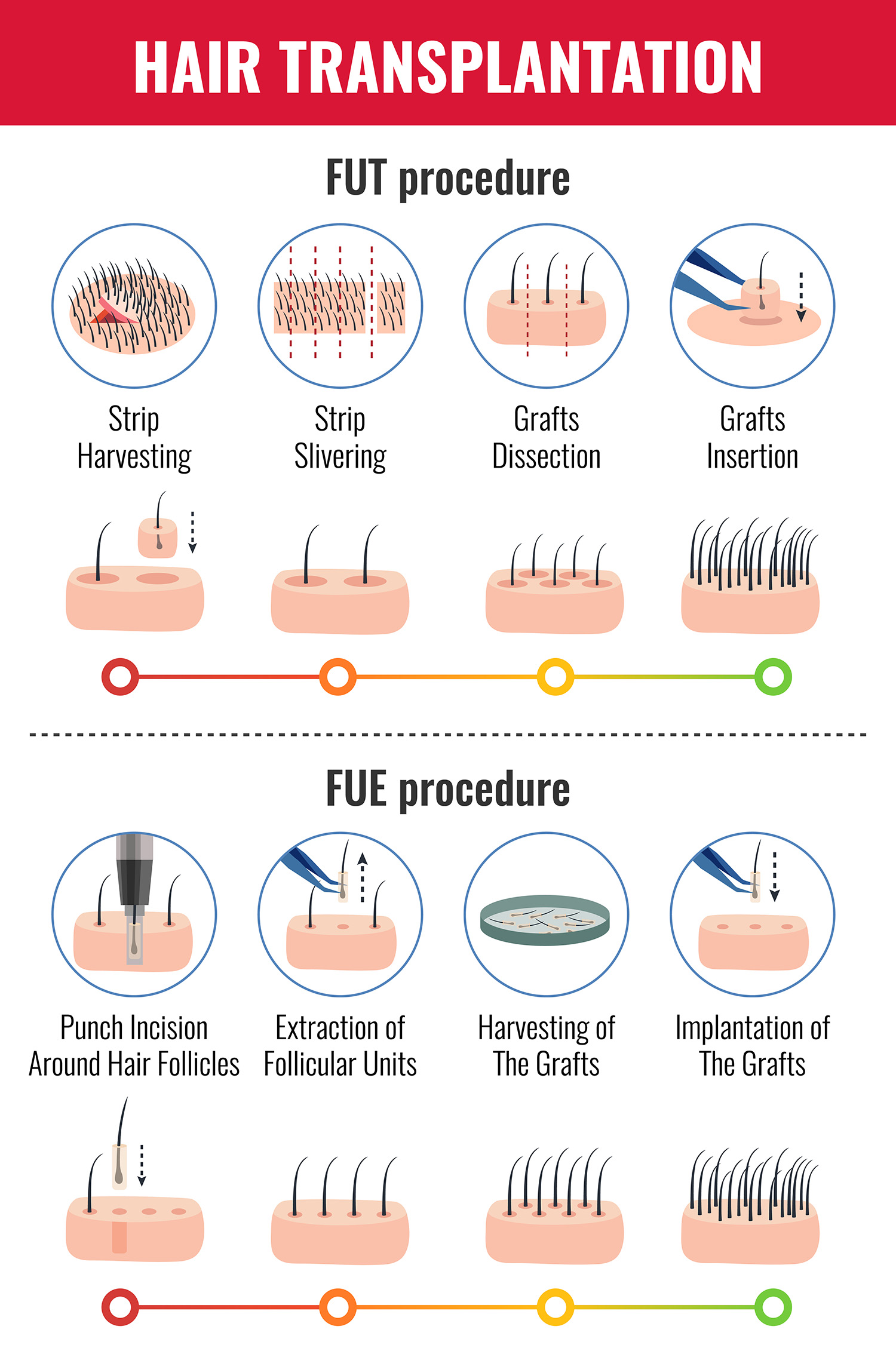
Methods of hair transplantation with stages of procedure infographics on white background vector illustration
The FUE procedure involves several steps, including donor area preparation, follicle extraction, recipient site creation, and follicle implantation.
First, the donor area (usually the back and sides of the head) is prepared by trimming the hair to a short length. Local anesthesia is administered to the donor area, and hair grafts are carefully extracted using small punches.
The extracted grafts are then preserved in a saline solution until they are ready for implantation. The recipient site is created by making small incisions at the appropriate angle and orientation. This is the sight making part of the surgery. Next the hair follicles are carefully implanted. Dr Kelemen uses a special device that allows her to dial in the right size to match the patients’ natural hair separation.
Recovery and Results
Recovery and results from an FUE hair transplant can vary, but most patients experience minimal discomfort and can return to normal activities within a few days.
The final outcome of the hair transplant may take up to 12 months to become apparent, as the hair follicles go through a growth cycle of resting, shedding, and regrowth.
Adherence to the surgeon’s aftercare instructions and maintenance of a healthy lifestyle are key to achieving the best possible outcomes from the procedure.
Long-term Hair Growth and Maintenance
Long-term hair growth and maintenance after an FUE hair transplant depend on factors such as post-operative care, hair growth cycles, and the patient’s overall health. Appropriate post-operative care, which includes following the surgeon’s aftercare instructions and avoiding scalp-traumatizing activities, is vital for the success of the hair transplant.
In addition, gaining insight into the hair growth cycles and their influence on long-term hair growth is key to preserving the results of the procedure.
Lastly, the patient’s overall health plays a significant role in long-term hair growth and maintenance, as certain medical conditions, such as diabetes, can impede the healing process and the success of the hair transplant.
Choosing the Right Hair Transplant Clinic
Choosing the right hair transplant clinic is essential for a successful FUE hair transplant experience. Factors to consider when researching a hair transplant clinic include patient testimonials, the qualifications of the surgeon, and the clinic’s success rate.
Additionally, verifying that the clinic holds accreditation from either the Joint Commission International (JCI) or the International Society of Hair Restoration Surgery (ISHRS) is critical. One reputable clinic offering advanced FUE techniques is Hair 4 Life in Scottsdale, Arizona.
Hair 4 Life in Scottsdale
Hair 4 Life in Scottsdale, Arizona, offers ALL advanced FUE techniques currently available, and personalized care from experienced professionals (Dr. Kelemen has 23 years of experience in the field of hair transplant). With a 5.0-star rating based on 54 reviews, the clinic has a proven track record of success in providing exceptional hair transplants.
In addition to ARTAS® Robotic Hair Restoration, Hair 4 Life also offers the FUE – WAW system and Ugraft, which provide efficient and precise hair follicle extraction. By choosing a reputable clinic like Hair 4 Life, patients can feel confident in their decision to undergo an FUE hair transplant.
Summary
In conclusion, FUE hair transplant is a groundbreaking hair restoration technique that offers a range of benefits, including minimal scarring, faster recovery time, and natural-looking results. With advanced methods such as ARTAS® Robotic Hair Restoration and the FUE – WAW SYSTEM, patients have more options than ever before to address their hair loss concerns. By carefully considering factors such as surgeon experience, donor area quality, patient candidacy, and clinic reputation, individuals can make an informed decision about their hair transplant journey and achieve the best possible outcome.
Frequently Asked Questions
Is FUE hair transplant permanent?
Hair transplants are a permanent solution to hair loss, offering results that will last a lifetime. A qualified surgeon will be able to move healthy hairs to areas with thinning hair. The results can be washed, cut and dyed just like your own natural hair.
This procedure is a great option if you’re looking for a lasting answer to hair loss.
What is the average cost of a FUE hair transplant?
The average cost of a FUE hair transplant ranges between $6,000 and $25,000. Price depends on the number of grafts needed, the experience of the surgeon, and the location of the surgery.
A multiple-session procedure may cost up to $50,000 or more.
What is the difference between FUE and traditional hair transplant?
FUE hair transplants involve the individual extraction of hair follicles before transplanting, while traditional hair transplants require the removal of a strip of scalp with the follicles attached.
This method of hair transplantation is becoming increasingly popular due to its minimally invasive nature and the fact that it leaves no visible scarring.
Is an FUE hair transplant painful?
Hair transplants are generally not painful, as local anaesthesia is administered using a very fine needle. Most patients report only slight discomfort when the numbing agent is applied and minimal to no pain during and after the procedure.
Disclaimer! Pain tolerance may vary from person to person.
What is the recovery time for an FUE hair transplant?
The recovery time for an FUE hair transplant is typically a few days, allowing patients to return to their normal activities. At Hair 4 Life, Dr. Kelemen uses her own Post-Op which reduces the recovery time significantly.
Contact Hair 4 Life in Scottsdale
Dr. Kelemen integrates conventional and naturopathic medicine to provide the best of what both worlds have to offer. She creates a unique, compassionate, accepting environment for her patients. You only have to read the reviews to find out how she empowers her clients to look and feel their best. They leave the clinic with their heads held high!
To find out which procedure is best suited to your needs, you are invited to come into Hair4Life for a free consultation. Treatments are kept as affordable and accessible as possible so come in and talk to us.
Contact Us or call Hair 4 Life at (480) 525-4547 to schedule an appointment and get your free consultation.


 H4L Medical