DHI vs Regular FUE: The Truth About Direct Hair Implantation vs Follicular Unit Excision
 Hair 4 Life Medical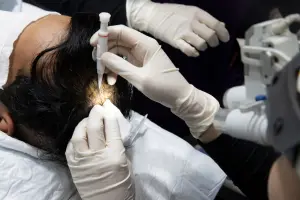
Dr Kelemen using implanters
Hair transplantation has advanced dramatically over the past several decades. Modern procedures can restore hairlines, improve density, and deliver natural results when performed correctly.
However, patients researching hair restoration often encounter confusing terminology. Two of the most commonly discussed techniques are DHI (Direct Hair Implantation) and FUE (Follicular Unit Excision).
Many clinics advertise DHI as a revolutionary new procedure that is superior to traditional FUE. This marketing can make patients believe the two techniques are completely different surgeries.
In reality, DHI is not a separate hair transplant method. It is simply a variation of the implantation technique used after follicles are harvested through Follicular Unit Excision.
Understanding how these procedures actually work is essential for anyone considering hair restoration.
At Hair 4 Life Medical, Dr. Ramona Kelemen focuses on surgical precision, natural hairline design, and long-term donor area management rather than marketing buzzwords.
This article explains the real differences between DHI and traditional FUE, how implantation tools affect results, and what patients should know before choosing a hair transplant clinic.
Understanding Modern Hair Transplant Surgery
Hair transplantation works by relocating healthy hair follicles from a permanent donor area to areas affected by hair loss.
The donor hair is typically located in the back and sides of the scalp, where follicles are genetically resistant to male pattern baldness.
These transplanted follicles retain their resistance to hair loss even after being moved to a new location.
Modern hair transplant procedures transplant follicular units, which are natural groupings of:
-
1 hair
-
2 hairs
-
3 hairs
-
occasionally 4 hairs
By transplanting these natural groupings, surgeons can recreate natural hair patterns and density.
The key elements that determine success include:
-
Proper graft harvesting
-
Careful graft handling
-
Strategic hairline design
-
Correct implantation angle and direction
-
Long-term planning for future hair loss
Regardless of whether DHI or traditional implantation techniques are used, these factors ultimately determine the quality of the final result.
What Is FUE (Follicular Unit Excision)?
FUE stands for Follicular Unit Excision, which is one of the most widely used hair transplant techniques in modern hair restoration.
During an FUE procedure, individual follicular units are excised one by one from the donor area using specialized micro-surgical instruments.
These grafts are then transplanted into thinning or balding areas.
The typical steps of an FUE procedure include:
-
Donor area preparation
-
Extraction of individual follicular units
-
Creation of recipient sites
-
Placement of grafts into those sites
Because grafts are removed individually, the procedure avoids the large linear scar associated with older strip surgery techniques.
Instead, FUE leaves behind tiny circular extraction sites that heal quickly and are often difficult to detect once healed.
Advantages of Follicular Unit Excision
Follicular Unit Excision has become the dominant hair transplant method worldwide because of several important advantages.
Minimal Scarring
FUE avoids the long linear scar created by strip surgery. The tiny extraction sites typically heal as small dots that are difficult to detect.
Faster Recovery
Most patients return to normal activities within a few days.
Natural Results
When performed by an experienced surgeon, FUE can produce extremely natural hairlines and density.
Flexibility With Hairstyles
Because there is no linear scar, patients often have greater flexibility with shorter hairstyles.
For these reasons, FUE has become the preferred technique for modern hair transplantation.
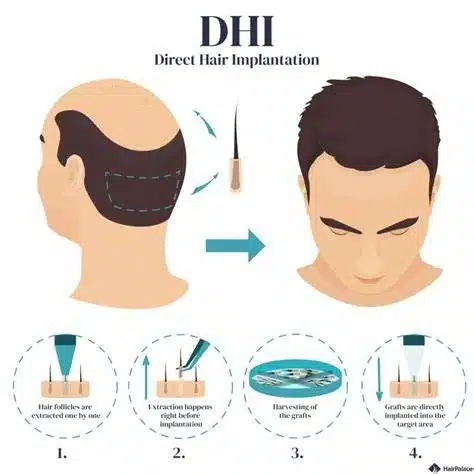
What Is DHI (Direct Hair Implantation)?
DHI stands for Direct Hair Implantation.
Despite being promoted as a unique procedure, the follicles used in DHI procedures are still harvested using Follicular Unit Excision.
The difference lies in how the grafts are placed into the scalp.
In a DHI procedure:
-
Hair follicles are harvested using FUE.
-
The grafts are loaded into a specialized implantation pen.
-
The pen is used to create a site and insert the graft simultaneously.
This device is often referred to as an implanter pen.
It combines the creation of the recipient site and graft placement into a single step.
Implantation Tools: Implanter Pens vs Custom Site Blades
One of the most important differences between traditional FUE implantation and DHI involves the size and design of the tools used to create recipient sites.
In traditional FUE procedures, many experienced surgeons create recipient sites using custom-made blades or micro needles.
These blades are designed specifically to match the size of the graft being implanted.
Because they are custom made, they can be extremely small and precise.
This precision allows surgeons to:
-
Create dense recipient site patterns
-
Control hair direction and angle
-
Recreate natural hair growth patterns
-
Minimize trauma to surrounding tissue
With DHI implantation pens, the graft must fit inside the needle tip of the implanter.
Because the follicle must be loaded into the device, the needle opening typically needs to be larger than the custom blades used for traditional site creation.
This size difference can limit how tightly grafts can be placed in certain areas.
For surgeons focused on maximum density and natural hairline design, custom site blades often provide greater flexibility and precision.
Why Marketing Around DHI Can Be Misleading
The hair transplant industry is highly competitive.
Some clinics promote DHI as if it were a revolutionary new technique that produces superior results.
In reality, the extraction method remains exactly the same: Follicular Unit Excision.
The difference is simply the implantation tool used.
Both DHI and traditional FUE implantation can produce excellent outcomes in skilled hands.
Patients should be cautious of marketing claims suggesting that one method is dramatically superior.
What matters far more than the instrument used is the experience and skill of the surgeon performing the procedure.
Why Surgeon Skill Matters More Than Technique
Hair transplantation is both a medical procedure and an artistic discipline.
The surgeon must design a hairline that looks natural not only today, but also years into the future as hair loss progresses.
Key elements that determine a successful hair transplant include:
Hairline Design
The hairline must match the patient’s facial structure, age, and natural growth patterns.
Graft Survival
Proper handling of follicles during surgery is critical for long-term growth.
Angle and Direction
Hair grows at very specific angles depending on location on the scalp.
Improper angles can make transplanted hair look unnatural.
Donor Area Management
Removing too many grafts from the donor area can permanently damage the donor supply.
These factors depend on the surgeon’s experience—not the name of the technique used.
When DHI May Be Useful
Although DHI is not fundamentally different from FUE, it can be useful in certain situations.
Examples include:
Small Procedures
DHI can work well for smaller graft counts.
Facial Hair Transplants
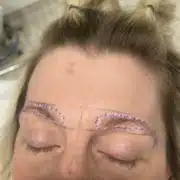
Some surgeons prefer implanter pens for procedures involving eyebrows or beards.
Hairline Refinement
The pen can allow precise placement of individual grafts.
However, these benefits do not necessarily mean that DHI is the best option for every patient.
When Traditional FUE Implantation Is Preferred
Traditional FUE implantation using custom site blades is often preferred for larger hair transplant sessions.
Benefits can include:
-
Greater control over graft density
-
More precise hairline creation
-
Ability to create extremely small recipient sites
-
Efficient workflow for large graft numbers
Many experienced hair transplant surgeons continue to rely heavily on this approach because it offers maximum control over hairline artistry and graft placement.
Hair Transplant Recovery
Recovery following both DHI and traditional FUE procedures is very similar.
Patients typically experience:
-
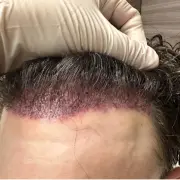
Mild redness for several days
-
Small scabs around transplanted follicles
-
Temporary shedding of transplanted hairs
The shedding phase is completely normal.
New hair growth usually begins around three to four months after surgery.
Significant improvement occurs by six months, with full results typically visible between 10 and 12 months.
Choosing the Right Hair Transplant Clinic in Arizona
Patients considering hair restoration should focus on choosing a surgeon with:
-
Extensive hair transplant experience
-
Natural-looking results
-
Strong donor area management
-
A personalized treatment approach
At Hair 4 Life Medical, Dr. Ramona Kelemen performs hair transplant procedures with a focus on surgical precision and individualized treatment planning.
Dr. Kelemen is known for performing hair transplant procedures personally, ensuring that patients receive care directly from an experienced physician rather than relying heavily on technicians.
This physician-driven approach helps ensure:
-
careful graft handling
-
natural hairline design
-
long-term donor preservation
DHI vs FUE: Final Thoughts
Patients researching hair restoration are often overwhelmed by technical terms and marketing claims.
The most important thing to understand is that DHI and traditional FUE are closely related techniques.
Both rely on Follicular Unit Excision to harvest hair grafts.
The primary difference lies in the implantation method used to place those grafts.
When performed by an experienced hair transplant surgeon, both approaches can produce excellent results.
However, natural hair restoration ultimately depends on:
-
surgical expertise
-
artistic hairline design
-
careful graft placement
-
responsible donor area management
For patients considering hair transplantation in Arizona, choosing the right surgeon is far more important than choosing between DHI and traditional FUE.
Considering FUE Hair Transplant in Scottsdale or Hair Transplant in Phoenix?
Start with a consultation led by a hair transplant physician, not a salesperson. Technology can assist—but medical judgment still matters most.
Then Hair 4 Life Medical is not just an option — it’s the standard.
Interested in learning more? Contact Us or call Hair 4 Life at (480) 525-4547 to schedule an appointment.References
FUE Hair Transplant: What to Expect, Cost, Pictures, and More FUE Hair Transplant: Benefits, Process & Recovery Follicular Unit Extraction Hair Transplant – PMC





 Hair 4 Life Medical