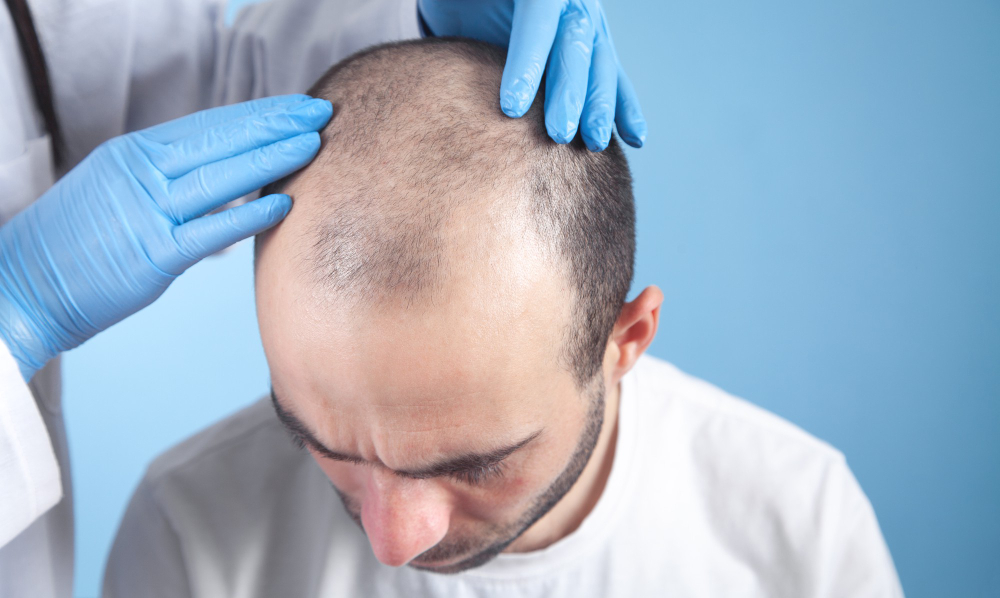

A linear donor scar can make hair loss feel more obvious, not less. Even when a prior transplant added coverage on top, a visible scar in the back or sides can interrupt the way density reads across the scalp. That is the real reason patients ask how scar revision improves density. In many cases, the goal is not simply to hide a mark. It is to change how light reflects off the scalp, how surrounding hair lays over the area, and how evenly fullness is perceived.
Scar revision in hair restoration is often misunderstood. Patients sometimes assume it means cutting out an old scar and starting over, or placing a few grafts into scar tissue and hoping for the best. In reality, improving density around a scar is a more careful process. It requires evaluating the scar itself, the quality of the surrounding donor area, scalp laxity, blood supply, hair characteristics, and the pattern of existing thinning.
How scar revision improves density on the scalp
Density is not just a number. A scalp can have a reasonable graft count and still look thin if there is contrast between hair and skin, if hairs are growing in conflicting directions, or if a scar creates a pale, shiny interruption. Scar revision improves density by reducing that contrast and restoring visual continuity.
In some patients, the scar is widened after a prior FUT strip procedure. A broad scar exposes more scalp than expected, especially with shorter hairstyles or naturally fine hair. Revising that scar can narrow the visible area. When less scar tissue is exposed, the surrounding donor zone appears denser because the eye no longer lands on an empty strip of scalp.
In other patients, the scar itself is the main issue, but the surrounding hair is also miniaturizing. In that setting, placing grafts into the scar without addressing the ongoing thinning may produce only partial improvement. This is where a physician-led plan matters. Sometimes the best result comes from combining scar revision with medical therapy, scalp micropigmentation, or additional graft placement around the scar instead of focusing on the scar alone.
Why scars make density look worse than it is
A scar changes the surface and biology of the scalp. Normal scalp skin has a certain texture, elasticity, and blood flow. Scar tissue is different. It can be flatter or raised, lighter or darker than the surrounding skin, and less predictable in how it supports transplanted follicles.
That difference affects how density is seen. Even a small scar can create a break in the donor area or recipient area that makes neighboring hair look sparse. This is especially true under bright overhead lighting, after exercise, or when hair is wet. The issue is visual disruption as much as actual hair count.
Hair caliber also matters. A patient with coarse, wavy hair may camouflage a scar more easily than someone with fine, straight hair. A scar in the occipital donor area may become obvious sooner in a patient who wears the back and sides shorter. So when we talk about density improvement, it is always patient-specific. The same technique will not produce the same visual change in every scalp.
The main ways scar revision can increase the appearance of fullness
The first method is surgical scar excision or scar revision of a widened linear scar. In the right patient, removing the old scar and closing the area more precisely can reduce width and improve the way the donor area heals. If the revision produces a thinner, softer line, hair around it can cover it more effectively. The scalp then looks denser because less skin is showing through.
The second method is grafting into the scar. Follicular unit extraction, or FUE, is often used to place grafts directly into scar tissue or around its borders. This can soften the outline of the scar and break up the contrast between scar and surrounding scalp. The result is not always dense in the same way as native scalp, because scar tissue may not support every graft equally. Still, even moderate growth can make a major cosmetic difference.
The third approach is combining both strategies. A scar may first be revised to improve width or texture, then later receive grafts once healing is complete. In some cases, this staged method gives the best chance of meaningful density improvement because it addresses both the structure of the scar and the lack of hair within it.
There are also situations where non-surgical support makes the result better. If nearby hair is thinning, treating that miniaturization helps the scar blend more naturally into the surrounding scalp. If contrast remains high despite graft growth, scalp micropigmentation may improve the visual density further. Good medicine is rarely one-size-fits-all.
What determines whether grafting a scar will work well
Blood supply is one of the biggest variables. Scar tissue often has reduced vascularity compared with normal scalp skin. That means graft survival can be lower, and the surgeon may need to place grafts more conservatively. Packing too many grafts into a scar at once can work against the result.
Scar maturity matters too. A newer scar that is still pink, active, or evolving is not the same as a stable mature scar. Texture, thickness, adherence to deeper tissue, and prior surgeries all influence planning. Some scars are soft and mobile. Others are tight and fibrotic. Those details affect both healing and the density that can realistically be achieved.
The donor supply matters as much as the scar. If a patient has already undergone multiple surgeries, the remaining donor area may be limited. In that case, every graft must be used carefully. Sometimes the best decision is modest scar grafting designed for camouflage, not maximal filling. Honest planning protects the long-term result.
How scar revision improves density after a bad prior transplant
Corrective patients often arrive frustrated because they were promised coverage but were left with visible scarring, poor growth, or both. In these cases, scar revision improves density in two ways. It addresses the obvious scar, and it can reset the visual balance of the scalp.
For example, a patient may have a wide donor scar and thin, pluggy, or uneven growth in the front. If only the front is corrected, the donor scar may still limit hairstyle options and keep the transplant feeling exposed. If only the scar is treated, the frontal area may still look unnatural. The most successful corrective plans evaluate the entire scalp as one aesthetic unit.
That is why experience matters. Scar revision is not simply a technical procedure. It is part of a larger reconstruction strategy. The surgeon has to decide where density will have the greatest impact, how many grafts can be safely used, and which combination of revision, grafting, and medical support will create the most natural improvement.
Realistic expectations matter
Scar revision can improve density dramatically in the right case, but it does not erase every scar or restore virgin scalp. Some patients achieve excellent camouflage and much more freedom with styling. Others see a meaningful improvement that is still visible on close inspection or with very short hair.
The key is understanding what “better density” really means. Often it means the scar no longer draws the eye. It means the donor area looks more uniform. It means the scalp reflects less light and appears fuller in everyday settings. Those changes can be significant, even if the scar is not completely invisible.
Patients also need to know that scar tissue may require more than one session. A staged approach is not a setback. It is often the safest path to better graft survival and a more refined final appearance.
Choosing the right plan for scar revision and density improvement
The best plan starts with diagnosis, not assumptions. A proper evaluation should look at the scar type, scalp laxity, donor reserves, hair shaft caliber, skin-to-hair contrast, prior procedures, and whether active hair loss is continuing. There is no single best technique for every patient.
At a specialized clinic such as Hair For Life Medical, this kind of assessment is especially valuable for patients who have had prior surgery, visible donor scarring, or mixed causes of hair loss. Scar revision may be the right answer, but sometimes it is only one part of the answer.
A fuller-looking scalp is often built through small, precise decisions. Narrowing a scar, softening its edges with grafts, strengthening surrounding hair, and planning for the long term can all change how density is perceived. When the treatment matches the biology of the scalp and the goals of the patient, scar revision can do more than improve a scar. It can restore confidence in how the entire result looks.