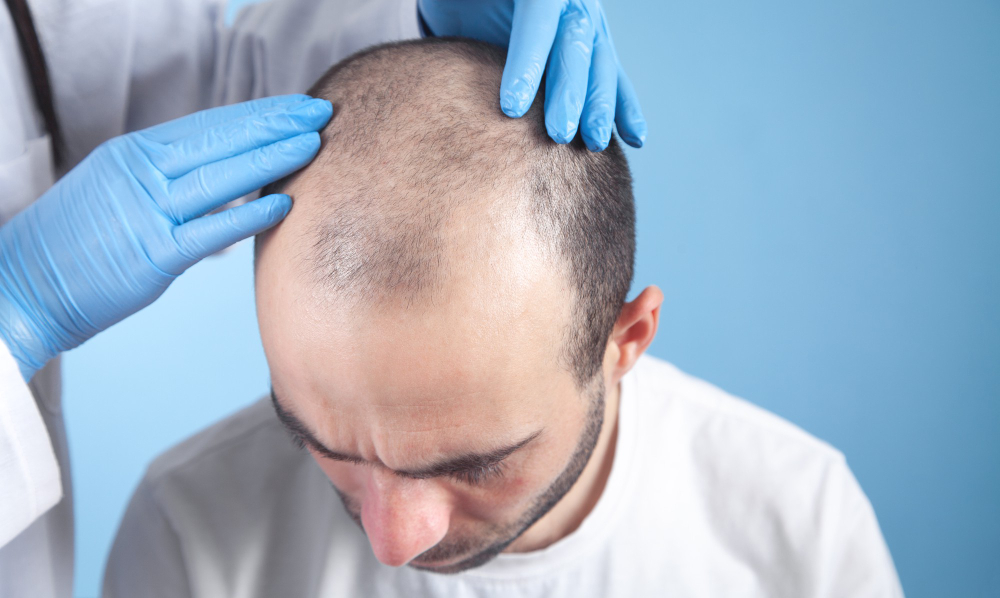
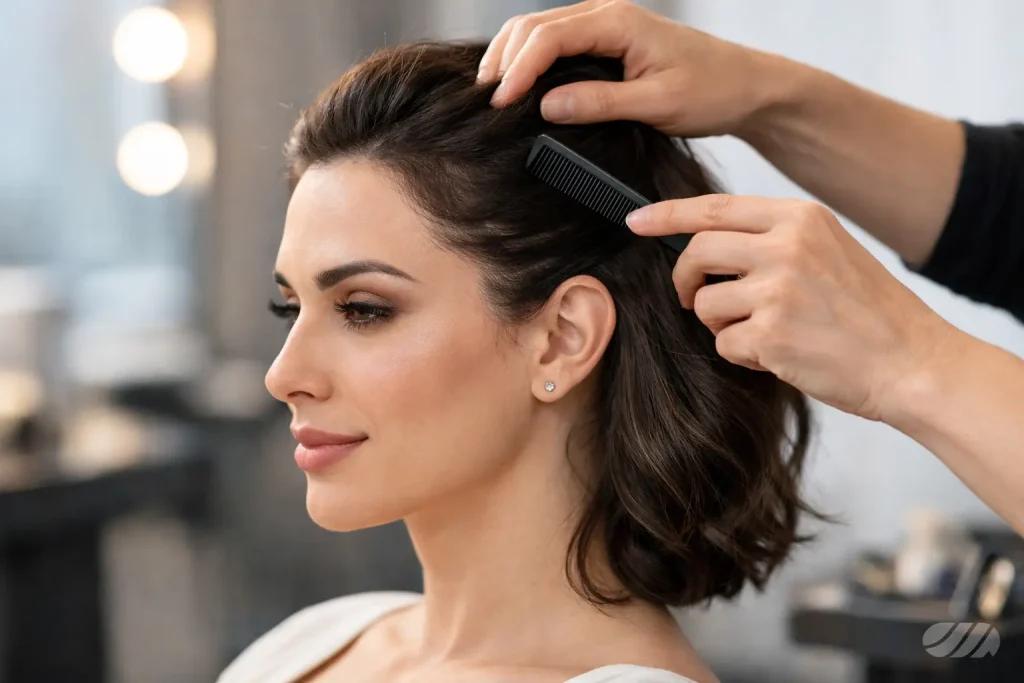
For many transfeminine patients, the hairline is not a small cosmetic detail. It is the frame of the face, the feature that can soften expression, change proportions, and reduce the daily stress of seeing a masculine pattern in the mirror. This guide to transgender hairline feminization is meant to help you understand what actually changes, what options exist, and what separates a natural result from one that looks surgical.
Hairline feminization is not just about lowering the hairline. A feminine hairline usually has a different shape, contour, and transition zone than a typical masculine one. It often sits lower, but just as important, it tends to feel softer at the temples, rounder at the corners, and less sharply recessed. That means the right plan depends on facial anatomy, existing hair density, donor supply, age, hormone history, and your long-term goals.
What transgender hairline feminization is really trying to achieve
The goal is harmony, not simply moving hair forward. A well-designed feminine hairline complements the forehead, brows, temples, and face shape. In some patients, that means a modest lowering with temple rounding. In others, the priority is rebuilding the front corners and creating a softer irregular edge so the hairline no longer reads as male-pattern recession.
This is where experience matters. A hairline that is placed too low can look unnatural over time, especially if native hair behind it continues to thin. A hairline that is too dense and too straight can look harsh under bright light. Feminization works best when the surgeon respects both aesthetics and biology.
Hormones can help, but they do not always solve the problem. Estrogen and androgen suppression may improve miniaturized hairs in some patients, especially if started earlier, but they usually do not reverse a deeply receded hairline or restore lost temple structure on their own. When the shape itself has changed, surgery is often the most direct way to create a feminine frame.
A guide to transgender hairline feminization options
The two most common procedural paths are hair transplantation and surgical hairline advancement. They can sometimes be combined, but they are not interchangeable.
Hair transplantation for a feminine hairline
Hair transplantation uses follicles from the donor area, usually the back and sides of the scalp, and places them into the frontal hairline and temples. This is often done with FUE or FUT. The right technique depends on the patient rather than the other way around.
FUE removes individual follicular units and can be a strong option for patients who prefer shorter recovery visibility or want to avoid a linear scar. FUT removes a strip of donor tissue and may be useful when a larger number of grafts is needed and donor management is critical. Either method can produce excellent results when the planning and placement are precise.
For transgender hairline feminization, graft placement is everything. Single-hair grafts are usually used at the very front to create a soft, feathered transition. Behind that, the density gradually increases. The temple points and temporal recessions require especially careful design because these areas strongly influence whether a hairline reads as masculine or feminine.
Surgical hairline advancement
Hairline advancement surgery physically moves the scalp forward. It can create immediate lowering of a high forehead, which is appealing to some patients. But it does not recreate the same feathered naturalness as a transplant at the leading edge, and not everyone is a candidate. Scalp laxity, scar tolerance, and forehead anatomy all matter.
Some patients undergo hairline advancement first and later refine the edge or temples with transplantation. Others skip advancement entirely because shaping and softening matter more than dramatic lowering. This is a good example of why the answer is often it depends.
Hairline design matters more than graft count
Many consultations focus too early on how many grafts are needed. Graft count matters, but design matters more. A natural feminine hairline usually avoids a flat line across the forehead. It often has micro-irregularity, delicate density variation, and a contour that matches facial proportions.
There is also no single feminine hairline for every patient. A petite oval face may suit a different shape than a broader or longer face. Ethnicity, hair caliber, curl pattern, and skin-to-hair contrast also influence what will look believable. Thick dark hair on light skin creates a stronger visual effect than fine light hair, so the same graft count can produce very different results.
Patients sometimes bring photos of celebrity hairlines or filtered images. Those references can be helpful for communication, but they should not override anatomy. The best plan is one that looks like it could always have belonged to your face.
Timing, hormones, and stability
One of the most common questions in any guide to transgender hairline feminization is whether you should wait until hormone therapy has stabilized. The honest answer is that timing depends on the pattern and pace of hair loss.
If there is active androgen-driven miniaturization, medical treatment may help protect existing hair and improve the long-term durability of a transplant plan. If the frontal recession is already established and unlikely to regrow meaningfully, waiting may not offer much benefit. What matters most is understanding what hair is recoverable, what hair is permanently gone, and whether future thinning is likely.
This is why a physician-led evaluation is so valuable. Scalp analysis, family history, current medications, and the pattern of loss all affect planning. The transplant itself is only one part of the strategy. Preserving surrounding native hair can be just as important as rebuilding the front.
What makes a result look natural
Naturalness comes from restraint and technical precision. The angle of each graft, the direction of growth, the spacing, and the use of finer hairs at the front all contribute. So does avoiding the temptation to overbuild density in one session if the blood supply or graft availability does not support it.
Temple work deserves special attention. Many masculine hairlines are defined by recession in the corners and stronger temple points. Feminization often requires softening those structures rather than simply filling a central gap. Done well, this can change the overall gender perception of the face more than lowering the midpoint alone.
The donor area matters too. Every graft used in the hairline is borrowed from a limited supply. An aggressive first procedure can create problems later if more density is needed or if hair loss progresses. Good planning respects the future, not only the before-and-after photo.
Recovery and when results appear
Recovery is usually manageable, but patients should expect a process rather than an instant transformation. Tiny crusts and redness in the recipient area are common early on. Transplanted hairs often shed before regrowing. That shedding can be emotionally difficult if you were hoping for immediate visible improvement, but it is a normal part of the cycle.
New growth typically begins gradually after several months. Cosmetic change becomes more noticeable as density develops, and the final result can take up to a year, sometimes longer for full maturation of texture and caliber. Patience is part of the treatment.
You should also ask about shock loss, especially if there is native miniaturized hair near the placement zone. Temporary shedding can occur around the transplant area. In experienced hands, planning and technique reduce the risk, but this is one of the trade-offs worth discussing upfront.
Choosing the right surgeon for transgender hairline feminization
Technical skill is essential, but so is aesthetic judgment and the ability to listen. Transgender patients often arrive with a very clear sense of dysphoria around the hairline, and that deserves respect. A good consultation should feel specific, not scripted. You should leave understanding your options, limitations, donor capacity, likely graft range, and whether non-surgical treatment should be part of the plan.
Look for a surgeon who works across the full spectrum of hair restoration rather than forcing every patient into the same procedure. That usually leads to more honest recommendations. It also helps to choose someone who understands that transgender hair restoration is not a generic frontal transplant. Feminization requires a different design philosophy.
At a specialized clinic such as Hair For Life Medical, the strongest plans start with diagnosis and individualized design, not sales pressure. That matters because the best result is not the most aggressive one. It is the one that fits your face, your donor supply, and your life.
If you are considering hairline feminization, give yourself permission to ask detailed questions and to expect thoughtful answers. This is a highly visible change, and you deserve a plan built with precision, respect, and a clear understanding of what will look natural for you.