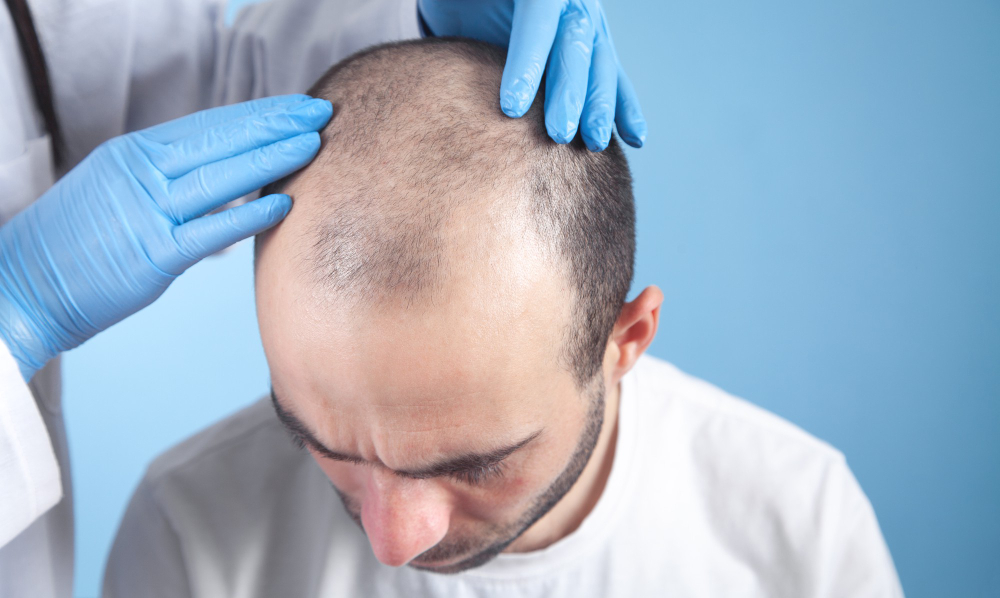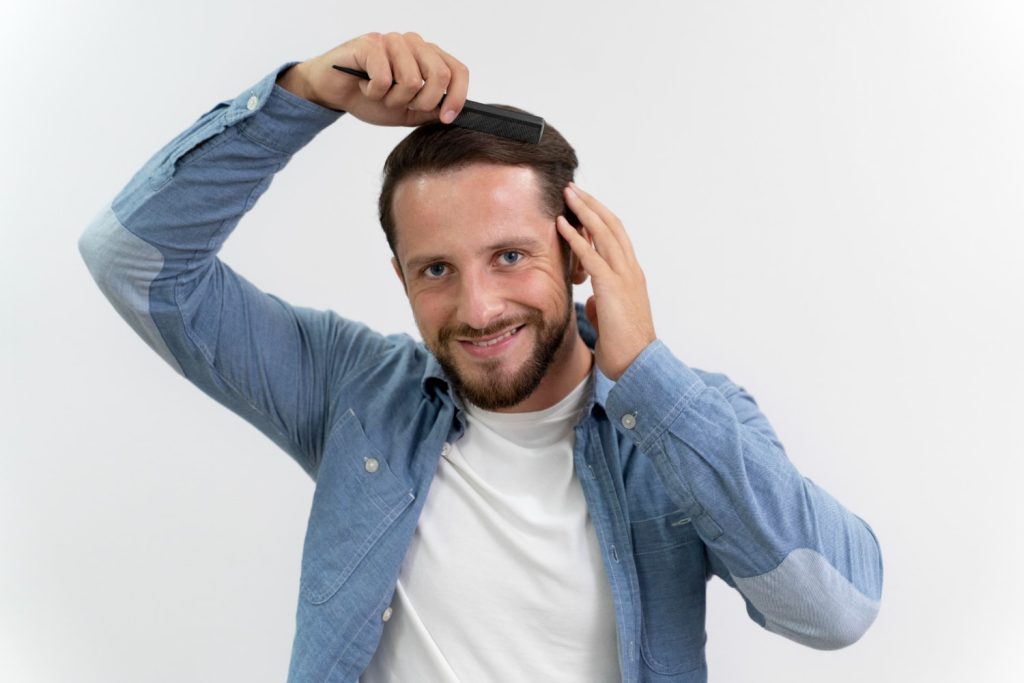

The question of how to hide hair transplant during recovery usually comes down to timing. Most patients are not trying to conceal the fact that they had a procedure forever. They simply want a realistic plan for the first visible days, whether they have a client meeting, a family event, travel plans, or a return to the office on the calendar.
A discreet recovery is possible, but it should never come at the expense of newly placed grafts. The safest approach depends on the technique used, the size and location of the transplant, whether the recipient area was shaved, your skin tone, and how readily your scalp develops redness or swelling. Your physician’s post-procedure instructions should always take priority over any general advice.
How to Hide a Hair Transplant During Recovery Without Risking Grafts
For the first several days, the recipient area is delicate. Each graft needs time to establish a blood supply and become secure in the scalp. That means the most effective form of concealment at the beginning is often strategic scheduling: give yourself genuine downtime rather than trying to cover the area immediately.
Many patients choose to work remotely, schedule their procedure before a long weekend, or take several days away from public-facing responsibilities. This is not merely about appearance. It also makes it easier to follow the washing routine, avoid sweating, sleep with the head elevated if instructed, and protect the scalp from accidental contact.
Swelling, if it occurs, is commonly most noticeable around days two through four. Redness can last longer, especially in fair or sensitive skin. Tiny crusts around grafts are also expected during the early healing period. Trying to camouflage these signs with products too soon can introduce friction, residue, or bacteria to an area that needs to remain clean and untouched.
Ask Before Using Any Head Covering
A loose, clean head covering may be appropriate after a certain point, but the timing is procedure-specific. It must not press on, rub against, or dislodge grafts. The donor area and recipient area may have different restrictions, particularly after FUE or FUT strip surgery.
Do not assume that a loose fit automatically makes headwear safe. The motion of putting it on and removing it can be the concern. Your physician can tell you when it is reasonable to use a specific style and how to place it without contact on the grafted zone. In Arizona, where sun exposure can be intense, this conversation matters for both discretion and protection.
Keep the Scalp Looking Clean, Not Covered Up
Following the prescribed cleansing routine is one of the best ways to make early healing look less conspicuous. Gentle washing helps crusts soften and release at the right stage of recovery. Picking, scratching, or attempting to speed up crust removal can cause bleeding, inflammation, infection, or loss of grafts.
Your medical team may also recommend a saline spray during the earliest phase. Use only the products and method you were given. Even familiar styling products, cosmetic powders, sprays, or topical concealers can be inappropriate until the recipient sites have healed enough for their use to be cleared.
Choose a Procedure With Recovery Visibility in Mind
If discretion is a major priority, raise it before surgery rather than after. The best surgical plan is not based on one marketing phrase or a single technique. It is based on your hair characteristics, donor supply, pattern of loss, desired coverage, medical history, and the amount of visible recovery you can accommodate.
No-shave FUE and long-hair FUE may allow selected patients to maintain surrounding hair length that helps soften the contrast around the treated area. These approaches can be valuable for people who cannot easily step away from work or who prefer not to have an obvious change in their appearance. They are not ideal for every case, however. They may take more time, require careful graft handling, and may be less appropriate for some patterns of loss or larger sessions.
FUE also leaves small dot-like donor wounds, while FUT involves a linear donor incision that needs its own healing plan. Neither approach is universally “invisible.” A physician-led consultation should explain the likely recovery appearance honestly, including where redness, scabbing, donor-area sensitivity, and temporary shedding may occur.
Plan Your Return Around the Recovery Timeline
There is no single day when every patient looks ready for every social setting. A more practical way to plan is to think in phases.
During the first two to three days, focus on rest, graft protection, and swelling prevention. This is generally the period when close-up visibility is highest and concealment options are most limited.
From roughly days four through seven, swelling may be improving, but redness and small crusts can still be visible. Some patients are comfortable with a low-key workday or brief errands, while others prefer more privacy. Your hair density, the number of grafts placed, and the placement of the hairline make a meaningful difference here.
By about days seven to 10, many patients have less obvious crusting, especially when they have followed their wash instructions carefully. Some residual pinkness can remain. This is when a physician may clear selected forms of coverage or products, but clearance should be individualized rather than assumed.
Over the following weeks, transplanted hairs often shed as part of the normal healing cycle. This can feel discouraging, particularly when the early appearance had seemed promising, but it does not mean the procedure failed. New growth develops gradually, with meaningful cosmetic change typically taking months rather than days.
Reduce Attention Without Drawing More Attention
Trying too hard to hide recovery can sometimes make it more noticeable. A calm, low-profile plan usually works better than major changes to your routine, social presentation, or schedule. If someone notices mild redness, it is often less significant to them than it feels to you.
For professional settings, consider whether a few days of remote meetings, camera framing that avoids a close scalp view, or a short period of reduced in-person appointments is realistic. For travel or events, avoid planning around the immediate post-operative window if you want the least visible recovery. Heat, sun, physical exertion, and crowded environments can all make recovery more difficult.
Do not use unapproved makeup, scalp fibers, medicated products, or other cosmetic solutions simply because they appear to work for someone else online. The correct timing varies. A product that is safe over healed skin may be unsuitable over fresh grafts.
Treat Redness and Swelling as Medical Recovery, Not a Cosmetic Failure
A degree of redness, tenderness, and crusting is a normal part of healing. Still, patients should know the difference between expected recovery and symptoms that deserve prompt medical attention. Increasing pain, spreading redness, warmth, drainage, fever, persistent bleeding, or significant swelling should be reported to your surgical team.
Patients with a history of sensitive skin, inflammatory scalp conditions, prior transplant scarring, or corrective surgery needs may require additional planning. The same is true for patients taking medications or using treatments for hormonal hair loss. A comprehensive evaluation can help identify factors that affect healing and create a recovery plan that fits the person, not just the procedure.
A Discreet Recovery Starts With an Honest Consultation
The most reliable way to hide a transplant is not a last-minute cover-up. It is selecting a procedure and schedule that respect your lifestyle before grafts are placed. Discuss your work obligations, upcoming events, travel, desired level of privacy, and tolerance for visible healing with your physician. Those details belong in the treatment plan.
At Hair For Life Medical, the conversation can include surgical options, non-surgical support, scalp health, and the factors contributing to ongoing hair loss. The goal is a natural restoration plan that protects both your grafts and your confidence. Give yourself permission to recover at a pace that is safe, realistic, and aligned with the life you want to return to.