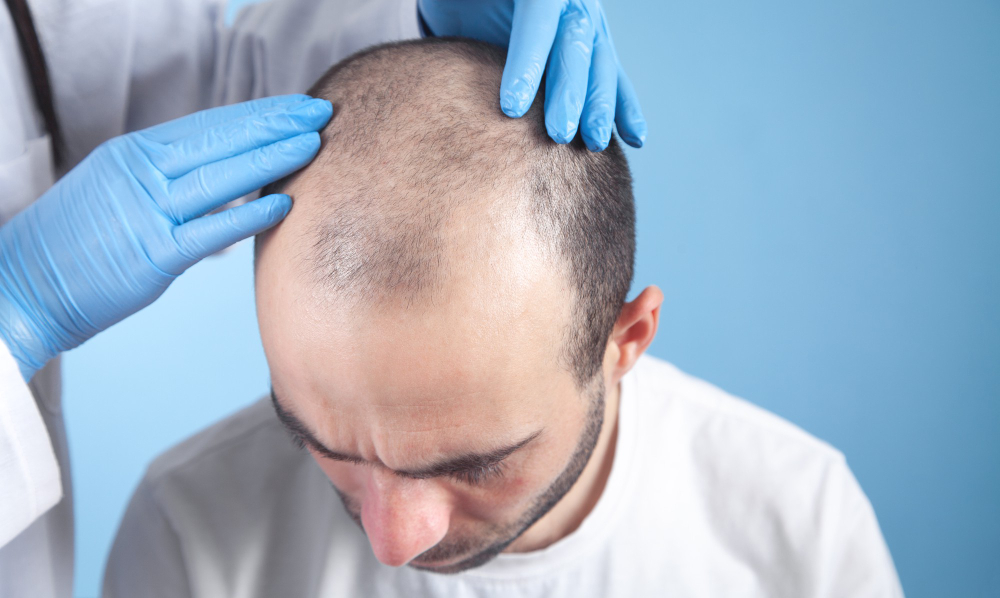

Hair loss decisions are often presented as if one procedure can solve every concern. In reality, doctor led hair restoration planning begins with a more useful question: why is this person losing hair, and what will protect their appearance not only this year, but years from now? The answer may involve medical treatment, surgery, regenerative therapies, or a carefully timed combination.
For men and women considering restoration in Scottsdale or the greater Phoenix area, a physician-led evaluation replaces guesswork with a plan built around diagnosis, donor preservation, natural design, and personal goals. There should be no pressure to choose a procedure before you understand what your hair loss is doing.
Why Doctor Led Hair Restoration Planning Matters
Hair loss is progressive for many patients. A transplant can redistribute permanent donor hairs, but it does not stop ongoing thinning in areas that have not yet been restored. If that progression is ignored, a patient can be left with an isolated transplanted area and reduced density behind it over time.
A doctor looks beyond the visible pattern. The consultation should consider family history, rate of shedding, scalp health, medications, hormonal changes, nutrition, autoimmune factors, prior procedures, and the quality and availability of donor hair. Women, for example, may experience diffuse thinning related to hormones, iron status, thyroid conditions, stress, or genetics. Men may have androgenetic hair loss with a receding hairline and crown loss, but the speed and pattern of progression still vary widely.
That distinction changes treatment planning. A person with stable, well-defined hair loss and strong donor density may be an excellent transplant candidate. Someone with active diffuse shedding may need diagnostic testing and medical stabilization first. Neither approach is a delay in care. Both are ways of protecting the long-term result.
A Plan Starts With Diagnosis, Not a Procedure
The most valuable consultation is not a sales presentation. It is an assessment of what is medically and aesthetically realistic.
A physician may examine the scalp closely, evaluate hair caliber variation and miniaturization, assess donor density, and review whether inflammation, scarring, or another condition may be affecting growth. Scalp analysis, genetic testing, laboratory work, and hormone evaluation can add useful information when the history or examination calls for it.
This process is especially important for patients who have been told they are simply “not a candidate” without an explanation. Candidacy is not always a yes-or-no question. It can depend on whether hair loss is stable, whether the donor area can safely support surgery, whether medical therapy is appropriate, and what level of density can be achieved without overharvesting.
A comprehensive plan should also account for lifestyle. A public-facing professional may prioritize no-shave FUE or long-hair FUE to keep the process discreet. Another patient may prefer the efficiency of a larger session. A patient with a linear scar or an unnatural prior hairline may need corrective surgery or scar revision rather than a standard first-time transplant approach.
Protecting the Donor Area Is a Long-Term Commitment
Donor hair is limited. This is one of the most important truths in surgical hair restoration, and it deserves a direct conversation before any graft is removed.
FUE, including ARTAS robotic FUE, extracts individual follicular units from the donor region. FUT strip surgery removes a narrow strip of donor tissue that is then dissected into grafts. Each method has advantages, limitations, and different scar considerations. The right choice depends on donor characteristics, desired hair length, prior surgery, scalp laxity, the number of grafts needed, and a patient’s tolerance for visible recovery signs.
The best method is not automatically the newest or most marketed one. It is the method that allows a skilled physician to obtain and place grafts safely while respecting the donor supply. In some cases, combining approaches over time can be sensible. In others, a conservative FUE plan is the better choice. For patients with limited scalp donor availability, body hair transplant techniques may be considered selectively, usually as a supplement rather than a direct replacement for scalp donor hair.
A physician-led plan must leave room for the future. A lower, denser hairline can look appealing in the short term, but it may not remain appropriate if native hair continues to recede. Conservative design is not withholding a result. It is often what makes the result continue to look natural as a patient ages.
Designing for Natural Appearance, Not Just Graft Counts
Graft numbers matter, but they do not tell the entire story. A natural result depends on hairline design, angle, direction, distribution, caliber, curl pattern, color contrast, and the placement of single-hair grafts at the leading edge.
The hairline should fit the face and anticipated future pattern. For many men, this means avoiding an overly low or sharply defined juvenile hairline. For women, planning may focus on frontal density, temple recession, part-line visibility, or scars. Eyebrow and beard restoration require a different level of precision because the direction and angle of growth are highly visible.
Density also requires judgment. It is rarely possible or advisable to recreate the density of adolescence across a large bald area in one session. A doctor can help prioritize the areas that will create the greatest cosmetic improvement, whether that is the hairline, frontal third, midscalp, crown, or a corrective zone from a previous procedure.
This is where experience matters. A restoration should look like your own hair in motion, at close range, and under ordinary lighting. The goal is not to make surgery obvious. It is to make the change feel believable.
Medical and Regenerative Support Can Change the Surgical Plan
Surgery is one part of hair restoration, not the entire field. For some patients, non-surgical treatments can slow miniaturization, improve existing hair caliber, or support healing and maintenance after a transplant.
Depending on the diagnosis and medical history, a plan may include prescription medications, hormone therapy, laser therapy, injectables, Regenera Activa AMT, TricoPat, PDO threads, scalp micropigmentation, or other supportive treatments. Each option has different evidence, expectations, costs, and maintenance needs. A responsible recommendation explains those trade-offs clearly.
For example, medication may help preserve native hair but requires ongoing use and medical monitoring. Regenerative treatments may be appropriate for early thinning or as an adjunct, but they are not a substitute for donor hair when a large bald area requires coverage. Scalp micropigmentation can create the appearance of density or help camouflage scars, yet it does not create growing hair.
The strongest plans use these tools for the right reason. They do not promise that every treatment will work equally for every patient.
When a More Specialized Plan Is Needed
Some cases require additional caution and expertise. Patients with failed transplants may have depleted donor areas, visible scarring, unnatural graft placement, or pluggy hairlines that need correction. The goal is often improvement rather than perfection, and a transparent plan should explain the limits before treatment begins.
Transgender hair restoration also deserves individualized planning. Feminizing a hairline, rebuilding temple points, or increasing frontal density involves facial proportions, hormone status, existing hair loss, and the patient’s own vision of affirmation. There is no single correct hairline for every person.
Patients with scarring alopecia or other inflammatory scalp conditions need careful medical evaluation before transplant surgery. Transplanting into an unstable disease process can compromise graft survival and worsen disappointment. Stabilization comes first.
What a Thoughtful Consultation Should Leave You With
You should leave a doctor consultation with clarity, not pressure. That includes an explanation of the likely diagnosis, the options that fit your stage of loss, the expected timeline, the benefits and limitations of each recommendation, and what may happen if hair loss progresses.
At Hair For Life Medical, the purpose of planning is not to steer every patient toward the same procedure. It is to match the treatment to the person, whether that means surgery now, medical support first, a discreet technique, corrective work, or simply monitoring change over time.
The right next step is an evaluation that respects both your concern and your future donor supply. A well-designed plan gives you the confidence to move forward when treatment makes sense, and the reassurance to wait when a different approach will serve you better.