A sudden widening part after menopause, shedding after a thyroid change, or progressive thinning while taking testosterone can make one question feel urgent: does hormone therapy help hair loss? Sometimes, yes. But hormone therapy is not a universal hair-loss treatment, and using the wrong hormone approach can leave shedding unchanged or accelerate genetically driven thinning.
Hair follicles respond to a complex mix of hormones, genetics, nutrition, inflammation, medications, and life events. The most reliable path forward is identifying which of those factors is actually affecting your follicles before choosing treatment. For some patients, correcting a true hormonal imbalance supports healthier growth. For others, the priority is controlling androgen sensitivity, treating a separate scalp condition, or restoring lost density with a medical or surgical plan.
Does Hormone Therapy Help Hair Loss in Every Case?
No. Hormone therapy can help when a diagnosed hormonal issue is contributing to hair shedding or miniaturization. It is less likely to help when hair loss is primarily genetic, autoimmune, scar-related, medication-related, or caused by nutritional deficiency alone.
The distinction matters because “hormonal hair loss” is often used too broadly. Nearly every adult’s hair follicles are influenced by hormones, but that does not mean every patient needs hormone replacement. A physician should look at the pattern of loss, the timeline, your medical history, current medications, scalp findings, and, when indicated, laboratory testing.
Hormone treatment is most effective when it addresses a specific problem. Examples include thyroid dysfunction, estrogen changes around menopause, excess androgen activity associated with conditions such as polycystic ovary syndrome, or hormone shifts related to gender-affirming care. Even then, restored hormonal balance may reduce excessive shedding without fully reversing follicles that have been miniaturizing for years.
How Hormones Affect the Hair Growth Cycle
Hair grows in cycles. Most follicles should remain in the active growth phase for years before transitioning through a resting phase and shedding. Hormonal shifts can shorten the growth phase, push a larger number of hairs into shedding at once, or gradually shrink susceptible follicles.
Androgens are especially relevant. Testosterone and its more potent byproduct, dihydrotestosterone, or DHT, can cause genetically susceptible scalp follicles to miniaturize. The result is finer, shorter hair and reduced coverage over time. This is the process behind many cases of male and female pattern hair loss.
Estrogen may help prolong the growth phase for some people. That is one reason some women notice fuller hair during pregnancy and increased shedding in the months afterward, when hormone levels change rapidly. Menopause can also reveal or worsen underlying pattern thinning as estrogen declines and the relative effect of androgens becomes more apparent.
Thyroid hormones are another major consideration. Both underactive and overactive thyroid conditions can lead to diffuse shedding and changes in hair texture. Correcting thyroid function can be beneficial, but visible improvement is gradual. Hair cycles recover slowly, often over several months.
When Hormone Treatment May Be Part of the Answer
A medically supervised hormonal approach may be considered when testing and symptoms point to a correctable imbalance. The goal is not simply to raise or lower a number on a lab report. It is to improve overall health while creating a more favorable environment for hair growth.
For women with signs of androgen excess, treatment may include an approach that reduces androgen activity or protects follicles from its effects. This can be particularly relevant when thinning is accompanied by irregular periods, acne, or increased facial and body hair. The appropriate option depends on reproductive status, cardiovascular risk, personal health history, and whether pregnancy is possible or planned.
For menopausal women, estrogen-based therapy may be appropriate for broader medical symptoms in selected patients. It should not be prescribed solely as a cosmetic hair treatment without a careful discussion of benefits, risks, and alternatives. Some women see reduced shedding or better hair quality after a well-matched menopause treatment plan, while others need dedicated hair-loss therapy as well.
For people using testosterone, including transgender men and individuals receiving testosterone replacement, scalp hair loss can become more noticeable if there is a genetic predisposition to androgenetic alopecia. The answer is not automatically to discontinue medically necessary or affirming care. A hair restoration physician can help coordinate an approach that respects the patient’s goals while discussing follicle-protective options.
Why More Hormones Can Sometimes Mean More Hair Loss
Hormones are powerful medications, not cosmetic supplements. Taking testosterone without proper indication or monitoring can worsen pattern hair loss in susceptible individuals. Similarly, changing estrogen or progesterone treatment without medical guidance can cause unwanted side effects and may not address the true reason for shedding.
Even “normal” hormone levels do not eliminate the possibility of androgenetic hair loss. Follicles differ in their sensitivity to DHT. Two people can have similar bloodwork and very different hair outcomes because their genetics determine how strongly scalp follicles react.
This is why testing alone is not enough. A lab panel is one piece of the diagnostic picture, not a treatment plan. A close scalp examination can reveal miniaturization, inflammation, breakage, scarring, or a diffuse shedding pattern that bloodwork cannot explain on its own.
A Complete Evaluation Looks Beyond Hormones
When hair loss has a hormonal component, there may also be other factors limiting recovery. Iron deficiency, low vitamin D, rapid weight change, illness, stress, certain medications, and inflammatory scalp conditions can all contribute to shedding. Treating only one factor may produce an incomplete result.
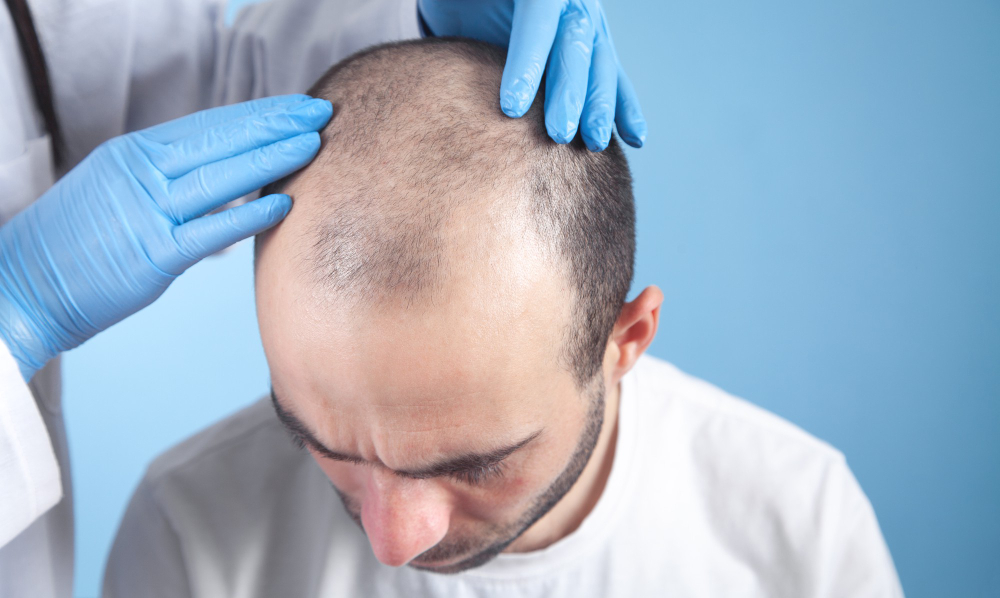
At a physician-led hair loss evaluation, the conversation should begin with your history: when the loss started, how quickly it progressed, whether it is diffuse or concentrated in a particular area, and what has changed medically or personally. Scalp analysis helps determine whether follicles are dormant, miniaturizing, or permanently lost. Genetic testing and laboratory evaluation may be useful for selected patients, not as a substitute for diagnosis but as added information for treatment planning.
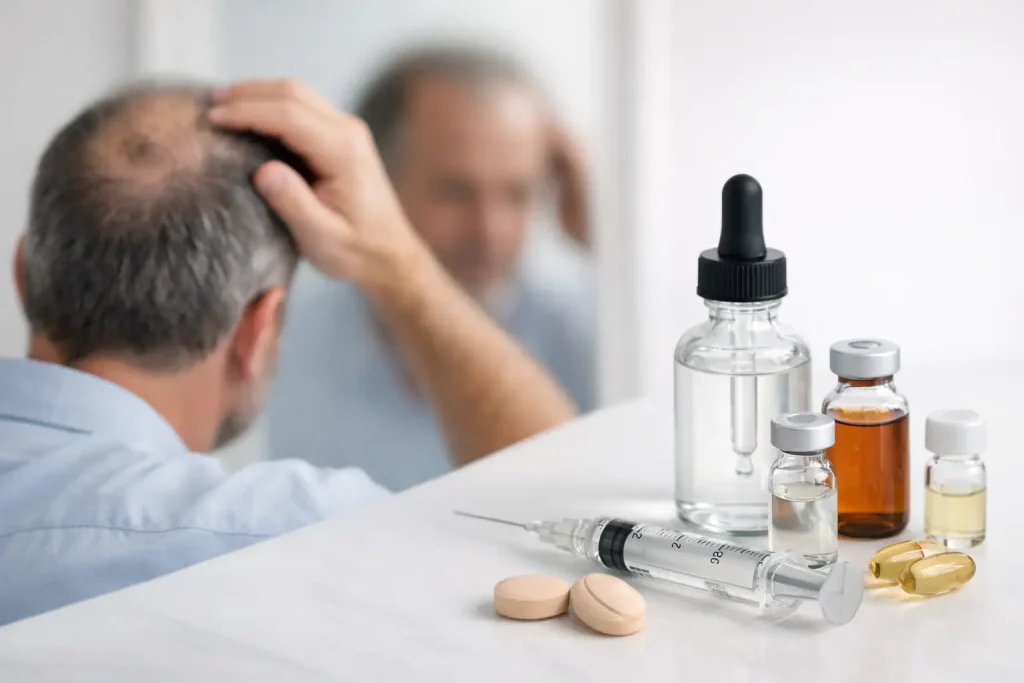
For patients with established pattern loss, a comprehensive plan may combine hormonal management with medications that help maintain follicles, regenerative therapies, laser therapy, injectables, or other non-surgical options. If an area has lost too much density to respond meaningfully to medical treatment, hair transplantation may be considered once the pattern is stable and the donor area is appropriate.
What Results Can You Realistically Expect?
Hormonal treatment generally works on the biology of ongoing shedding, not on an overnight cosmetic transformation. If the treatment is appropriate, shedding may begin to settle over several months. Increased fullness, when it occurs, often takes six to 12 months because new hair must move through its natural growth cycle.
The earlier a contributing hormonal problem is identified, the better the chance of preserving vulnerable follicles. Long-standing miniaturized follicles may need additional therapy, and areas where follicles are no longer viable cannot be revived with hormones alone.
Expectations should also account for safety. Hormone therapy can affect blood-clot risk, breast and prostate health considerations, fertility, mood, cardiovascular health, and other systems depending on the medication and patient. The right treatment is one that makes medical sense for the whole person, not simply one that promises thicker hair.
Choosing a Plan That Fits Your Hair and Health
There is no benefit to a one-size-fits-all approach to hair loss. Someone with thyroid-related shedding needs a different plan than a postmenopausal woman with female pattern thinning, a man with DHT-sensitive follicles, or a transgender patient seeking to preserve density while continuing hormone therapy.
Hair For Life Medical approaches these decisions through diagnosis first. With more than two decades devoted exclusively to hair restoration, Dr. Ramona Kelemen evaluates the visible pattern alongside the possible medical drivers, then discusses appropriate options without pressure to pursue a procedure you do not need.
If you are noticing increased shedding, a changing hairline, or a loss of density after a hormonal change, do not assume the answer is simply more or less hormone. A careful evaluation can replace guesswork with a plan that protects the hair you still have and respects the health goals that matter most to you.