
Can I Have Multiple Hair Transplant Procedures or Corrections?

Can I Have Multiple Hair Transplant Procedures or Corrections?

Dr Kelemen the founder of Hair 4 Life Medical
One of the most common—and most important—questions patients ask is:
“Can I have more than one hair transplant, or fix a previous one?”
The short answer is yes.
The longer, more truthful answer is yes—but only if it’s done correctly, conservatively, and by the right surgeon.
Hair transplantation is permanent surgery. Every graft removed from the donor area is a limited, non-renewable resource. Multiple procedures are possible, but only when planned with long-term strategy in mind.
This article explains when multiple hair transplants make sense, when they don’t, and what it takes to safely correct a prior procedure—including poorly performed transplants.
Why Patients Need More Than One Hair Transplant
Multiple procedures are not a failure. In many cases, they are part of a responsible long-term plan.
Common reasons include:
-
Progressive hair loss over time
-
Conservative first-stage transplant
-
Desire for more density
-
Crown thinning appearing years later
-
Repairing or correcting poor prior work
Hair loss is progressive. A transplant does not stop future loss in untreated areas. That reality hasn’t changed, no matter how advanced the tools become.
Is There a Limit to How Many Hair Transplants You Can Have?
Yes. And anyone who says otherwise is lying.
The limiting factor is donor supply.
Each patient has a finite number of permanent follicles that can be safely harvested without:
-
Visible thinning
-
Patchiness
-
Over-harvesting
-
Scar exposure
A responsible surgeon plans:
-
Not just the first surgery
-
But the second, third, or corrective procedure before the first graft is ever placed
That’s old-school surgical discipline—and it matters.
Typical Scenarios for Multiple Hair Transplants
1. Staged Hair Restoration (Planned in Advance)
This is the ideal scenario.
A patient may start with:
-
Hairline and frontal density first
-
Crown addressed later if needed
Why?
-
Hairline frames the face
-
Crown loss progresses slowly
-
Donor hair must be preserved
This approach produces natural, age-appropriate results.
2. Density Enhancement
Some patients are happy—but want more fullness.
This is common when:
-
Initial surgery was intentionally conservative
-
Fine hair requires higher graft counts
-
Styling goals change over time
A second procedure can:
-
Increase density
-
Refine the hairline
-
Improve coverage
But only if donor reserves allow it.
3. Progression of Hair Loss
This is reality.
Hair behind or around the transplanted area may continue to thin years later.
A follow-up transplant may be needed to:
-
Blend native and transplanted hair
-
Prevent an “island” effect
-
Maintain a natural appearance
This is not a failure—it’s biology.
Hair Transplant Corrections: When Things Go Wrong
Unfortunately, not all hair transplants are done well.
Correction surgery is one of the most technically demanding procedures in hair restoration.
Common Problems That Require Correction:
-
Pluggy or unnatural hairlines
-
Poor graft angles
-
Low or juvenile hairlines
-
Patchy growth
-
Over-harvested donor areas
-
Technician-performed surgeries
-
Robotic over-extraction without artistry
These cases require experience, restraint, and surgical judgment.
Can a Bad Hair Transplant Be Fixed?
Often—yes.
Always—no.
Correction depends on:
-
Remaining donor supply
-
Scalp condition
-
Existing scarring
-
Original graft placement
-
Patient expectations
Some corrections involve:
-
Redistributing grafts
-
Adding density
-
Softening hairlines
-
Camouflaging scars
-
Removing poorly placed grafts
This is not beginner work.
How Long Must I Wait Between Procedures?
Timing matters.
General guidelines:
-
Minimum: 9–12 months between procedures
-
Final growth must be assessed
-
Donor area must fully heal
Rushing a second procedure is a mistake.
The scalp needs time to:
-
Restore blood supply
-
Normalize elasticity
-
Reveal true density
A surgeon who rushes re-entry is not acting in your best interest.
Can I Have a Second Transplant After FUT or FUE?
Yes—if done properly.
After FUT:
-
Scar camouflage is possible
-
Donor planning is critical
After FUE:
-
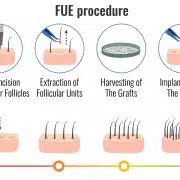
Additional FUE may be possible
-
Donor density must be carefully measured
-
Over-harvesting must be avoided
Mixing techniques requires expertise—not marketing slogans.
What Makes Revision Surgery Different?
Correction surgery is harder than primary surgery.
Challenges include:
-
Scar tissue
-
Altered blood supply
-
Unnatural hair angles
-
Limited donor reserves
This is where surgeon skill—not technology—matters most.
Tools assist.
Judgment decides.
Warning Signs You May Not Be a Good Candidate for Another Procedure
Be cautious if:
-
Your donor area already looks thin
-
You’ve had multiple large sessions
-
You were promised “unlimited grafts”
-
Your hair loss pattern is aggressive and unstable
In some cases, the best decision is not another surgery.
An honest surgeon will say so.
The Role of Medical Therapy Between Procedures
Surgery moves hair.
Medicine helps protect what you still have.
Appropriate medical management may:
-
Slow future loss
-
Improve transplant longevity
-
Reduce the need for repeat procedures
Skipping this step often leads to disappointment.
Managing Expectations: The Hard Truth
Multiple procedures can:
✅ Improve appearance
✅ Increase density
✅ Correct mistakes
They cannot:
❌ Create infinite hair
❌ Restore teenage density
❌ Defy genetics
A good plan respects aging, biology, and realism.
Choosing the Right Surgeon for a Second or Corrective Transplant
This decision matters more than the first.
Look for:
-
Direct surgeon involvement
-
Extensive correction experience
-
Conservative donor management
-
Honest consultations
-
Documented long-term results
Avoid:
-
Assembly-line clinics
-
Technician-driven surgery
-
Guaranteed outcomes
-
High-pressure sales tactics
Hair restoration is surgery—not a commodity.
The Honest Bottom Line
Yes, you can have multiple hair transplant procedures or corrections.
But:
-
Donor hair is finite
-
Each surgery must be planned carefully
-
Correction requires advanced expertise
-
Timing and restraint matter
Done correctly, multiple procedures can produce:
-
Natural results
-
Long-term satisfaction
-
A restoration that ages well
Done poorly, they can make things worse.
Experience, honesty, and surgical discipline still matter—just as they always have.
Ready to Learn More?
If you want a DHI hair transplant done correctly—with precision, honesty, and genuine surgical craftsmanship—schedule a consultation with Dr. Kelemen at Hair 4 Life Medical.
Explore additional topics and resources at:
Hair 4 Life Medical Blog.
🔗 Visit www.hairforlifeaz.com 📞 Call (480) 525-4547
👉 Ready to restore your hair? Schedule a consultation with Dr. Kelemen today!
Interested in learning more? Contact Us or call Hair 4 Life at (480) 525-4547 to schedule an appointment.References
FUE Hair Transplant: What to Expect, Cost, Pictures, and More FUE Hair Transplant: Benefits, Process & Recovery Follicular Unit Extraction Hair Transplant – PMC DHI Hair Transplant vs. FUE, Pros & Cons, Recovery – RealSelf Revision and Repair of Previous Hair Transplants – ISHRS Different options in revision surgical hair restoration | Hair Transplant Forum International
 Hair4LifeMed






 Hair 4 Life Medical