Graft Survival Comparison: Manual FUE vs Robotic FUE vs DHI
What Actually Keeps Hair Alive After Transplant Surgery
In hair transplantation, nothing matters more than graft survival. You can have the best marketing, the newest device, and the flashiest promises—but if grafts don’t survive, the result fails.
This article compares graft survival rates between Manual FUE, Robotic FUE, and DHI (Implanter Pen), explains why survival differs, and tells patients what clinics rarely say out loud.
What Is Graft Survival—and Why It Matters
Graft survival refers to the percentage of transplanted follicles that:
-
Successfully revascularize
-
Resume normal growth cycles
-
Produce permanent, natural hair
In properly performed surgery, 90–95% survival is achievable. Anything significantly lower is not “normal variation”—it is a technical failure.
Graft Survival Rates by Method (Real-World Comparison)
| Method | Typical Survival Range | Key Risk Factors |
|---|---|---|
| Manual FUE (Doctor-Performed) | 90–95% | Skill-dependent |
| Robotic FUE (ARTAS-assisted) | 85–92% | Limited adaptability |
| DHI / Implanter Pen | 80–88% | Excess handling, speed |
These are realistic clinical ranges, not marketing claims.
Manual FUE: Highest Survival When Done Correctly
Why manual FUE leads the field:
-
Controlled extraction depth and angle
-
Minimal follicle trauma
-
Precise graft handling and hydration
-
Custom site creation for each follicle
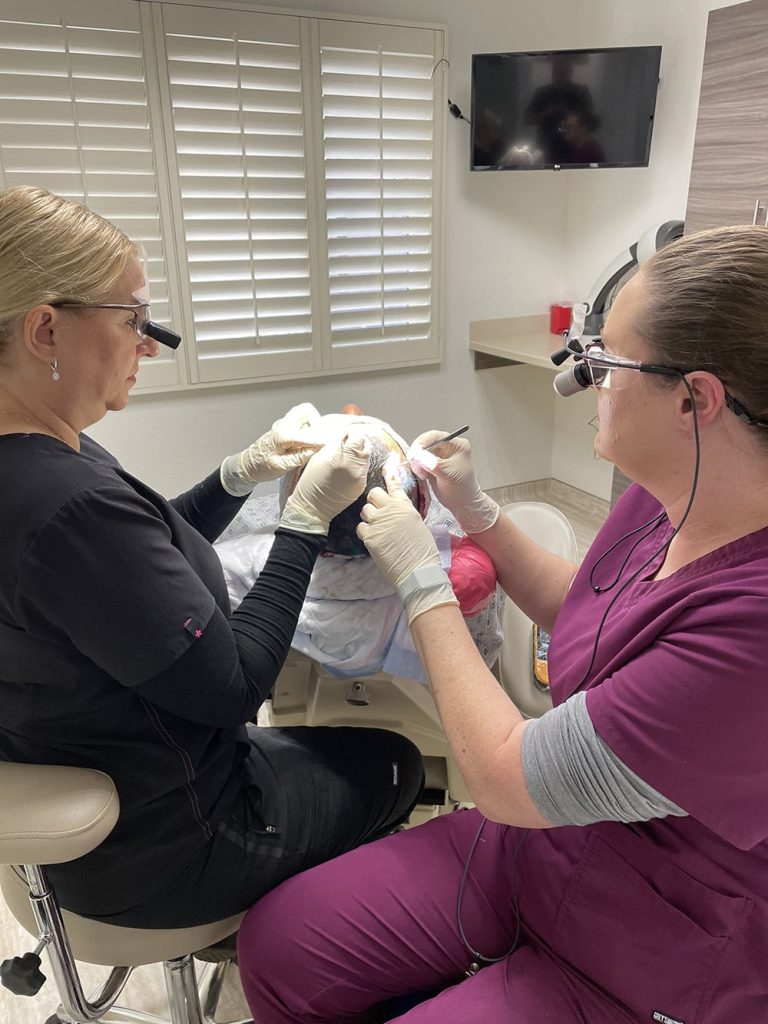
When the physician performs extraction, site creation, and implantation, grafts spend less time out of the body and experience less mechanical stress.
Manual FUE respects a principle older than any device:
hair survives best when handled slowly, gently, and deliberately.
Robotic FUE: Consistency Without Judgment
Robotic systems can reduce fatigue and improve punch consistency, but they introduce limitations:
Challenges affecting survival:
-
Fixed algorithms that can’t adapt to scarring or curl
-
Higher transection risk in non-ideal donors
-
Delayed graft placement when workflow is inefficient
When used as an assistive tool under direct physician control, robotic FUE can achieve good survival. When used as an automated system with minimal oversight, survival drops.
Technology assists—it does not replace surgical judgment.
DHI (Implanter Pen): Speed at a Biological Cost
DHI is often promoted as superior for survival, but clinical reality says otherwise.
Why survival can suffer:
-
Repeated graft loading and unloading
-
Compression trauma inside the pen
-
Extended out-of-body time
-
Technician-based placement in many clinics
High-speed implantation looks efficient. Biologically, it increases stress on follicles. Hair roots are living tissue, not hardware.
Why Clinics Get Different Results Using the Same Method
Graft survival is influenced more by who performs the surgery than by the device used.
Critical variables include:
-
Time grafts remain outside the body
-
Hydration solutions and temperature
-
Handling force and frequency
-
Recipient site quality and vascularity
-
Implantation angle and depth
Ignore these fundamentals, and no method will save the outcome.
Common Myths About Graft Survival
Myth: “Robots eliminate human error”
Truth: They introduce different errors—and cannot correct them.
Myth: “DHI guarantees better survival”
Truth: The pen does nothing if the operator lacks skill.
Myth: “All clinics get the same survival rates”
Truth: Outcomes vary dramatically based on involvement and experience.
The Traditional Rule That Still Wins
For decades, successful surgeons followed the same rule:
The less you traumatize the graft, the more hair you keep.
That rule has not changed—no matter how advanced the tools become.
Final Verdict: Which Method Has the Best Graft Survival?
-
Best overall: Manual FUE performed entirely by the physician
-
Acceptable with limits: Robotic FUE as a physician-controlled tool
-
Highest risk: DHI in high-volume, technician-driven clinics
There is no shortcut to living hair. Precision, patience, and accountability still determine survival.
Book Your Consultation Today
Want the most discreet, technically advanced, and artistically guided procedure available? Schedule your personal consultation with Dr. Ramona Kelemen at Hair 4 Life Medical today.See what happens when medicine, science, and art align.
📍 Located in Scottsdale, Arizona, Hair 4 Life Medical is a boutique, physician-led clinic focused on custom hair restoration solutions.
📞 Call or visit hair4lifemedical.com to schedule your private 45–60 minute consultation with Dr. Kelemen.