
A female pattern loss treatment example should never begin with a one-size-fits-all product recommendation. A woman who notices a widening part at 32, diffuse thinning after a major hormonal change at 47, or reduced density after menopause may all describe the same concern, yet need very different care. The visible thinning matters, but so do the timing, family history, scalp health, medications, nutrition, hormones, and the pattern of follicle miniaturization.
For many patients, the most reassuring first step is learning that treatment is not all or nothing. A thoughtful plan can begin with medical stabilization, add regenerative support when appropriate, and reserve surgical restoration for areas where lasting density is needed. The goal is natural-looking improvement that fits the patient’s life, comfort level, and long-term hair-loss pattern.
What Female Pattern Hair Loss Usually Looks Like
Female pattern hair loss, also called androgenetic alopecia, most often appears as gradually reduced density through the top of the scalp. The frontal hairline may remain relatively preserved while the center part becomes wider and more scalp becomes visible in bright light. Some women notice less volume in a ponytail long before they see obvious bare areas.
This pattern is different from sudden shedding across the entire scalp. Telogen effluvium, for example, can follow illness, surgery, rapid weight changes, medication changes, childbirth, or major stress. Thyroid conditions, low iron stores, inflammatory scalp disease, autoimmune hair loss, traction, and certain nutritional deficiencies can also contribute. More than one cause can be present at the same time.
That distinction changes the treatment plan. Treating active shedding as though it were only genetic thinning can delay answers. On the other hand, waiting for a single perfect explanation when a patient clearly has progressive miniaturization can allow more loss to occur.
Start With a Doctor-Led Diagnosis
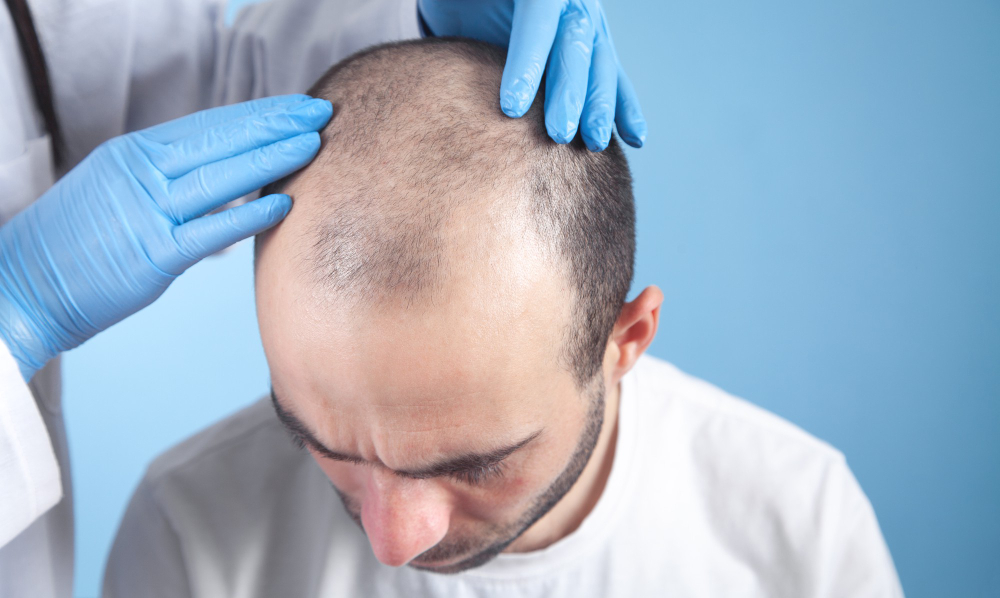
A meaningful consultation includes more than looking at a photograph of the scalp. The physician reviews the history of loss, family pattern, medical conditions, prescriptions and supplements, menstrual or menopausal history when relevant, and prior treatments. Scalp analysis can help identify variation in shaft diameter, density, follicular units, inflammation, and the distribution of miniaturized hairs.
Depending on the history, testing may be recommended to evaluate factors such as iron status, thyroid function, vitamin levels, or hormonal changes. Genetic testing can also add useful context for some patients, although it does not replace a clinical examination. The purpose is not to order every possible test. It is to identify information that could change the treatment decision.
Photographs taken under consistent lighting are equally valuable. Hair density changes slowly, and daily mirror checks are a poor way to judge progress. Standardized images give the patient and physician a more honest baseline.
A Female Pattern Loss Treatment Example
Consider an illustrative patient: a 44-year-old professional with a slowly widening part and reduced density across the mid-scalp for five years. Her mother had similar thinning. She has no sudden shedding, but she reports that the loss became more noticeable during perimenopause. Scalp analysis shows diffuse miniaturization through the top and crown, with healthy donor density in the back of the scalp. Laboratory evaluation identifies no major correctable driver.
Her priorities are clear: she wants to preserve the hair she has, avoid an unnatural change, and keep treatment discreet. She is open to medication but does not want surgery unless it becomes necessary. A reasonable plan may look like this.
Phase One: Preserve and Stabilize
The first priority is slowing further miniaturization. Topical minoxidil is commonly considered for female pattern hair loss because it can extend the growth phase of susceptible follicles. Consistency matters more than intensity. Temporary increased shedding can occur early in treatment, which is one reason patients should understand what to expect before deciding it has failed.
For an appropriate candidate, the physician may also discuss oral medication options. Low-dose oral minoxidil is used by some hair-restoration physicians, but it requires individualized screening because it can affect blood pressure, heart rate, and fluid retention. Anti-androgen therapy, including spironolactone in selected patients, may be helpful when hormonal sensitivity is a meaningful part of the pattern. It is not suitable for everyone and requires physician oversight, especially for patients who are pregnant, trying to become pregnant, or have relevant medical conditions.
If the evaluation suggests a hormonal imbalance or menopausal shift that may be affecting the hair, hormone therapy may be part of a broader medical discussion. Hair restoration should not be isolated from the patient’s overall health. The right choice depends on medical history, risks, goals, and coordination with the patient’s other physicians when needed.
Phase Two: Improve the Scalp Environment and Existing Density
After a few months of a stable medical foundation, the patient may choose to add a regenerative option. Treatments such as Regenera Activa AMT, TricoPat, injectables, PDO threads for hair loss, or laser therapy are not interchangeable, and they do not produce identical results for every person. They may be considered to support weakened follicles and improve the quality of existing hair, particularly when there is still substantial native hair to protect.
This is where a broad treatment menu matters. A patient should not be told that every concern requires the same device or injection series. Some patients prefer a medication-focused plan. Others want to combine medical therapy with regenerative treatment. Cost, downtime, tolerance for maintenance, degree of miniaturization, and the pace of loss all influence the decision.
For this example patient, a physician may recommend a course of regenerative treatment alongside her medication plan, with repeat photography and scalp analysis at defined intervals. The expectation is gradual improvement or stabilization, not overnight density. Hair growth cycles move slowly, so meaningful evaluation commonly takes six to 12 months.
Phase Three: Reassess Before Considering Surgery
At the one-year review, suppose the patient’s shedding has stabilized and the part is less visible, but she still sees a thin area at the crown under overhead light. If the donor area remains strong and the pattern appears stable, surgical restoration can become a reasonable conversation.
FUE, FUT strip harvesting, ARTAS robotic FUE, DHI, no-shave FUE, and long-hair FUE are techniques, not automatic answers. The best method depends on the amount of grafting needed, donor characteristics, hair caliber, styling preferences, prior procedures, and whether the patient needs discretion during recovery. In women with diffuse thinning, surgery requires particular care. Transplanted grafts need to be placed without compromising vulnerable native hairs, and medication or other supportive treatment may still be needed to protect surrounding follicles.
In this example, the patient may decide that her improvement is sufficient and continue nonsurgical care. Or she may choose a conservative FUE session to strengthen the crown while maintaining her medical program. Both are valid choices. A successful plan respects the patient’s threshold for treatment rather than treating surgery as the inevitable next step.
When the Plan Needs to Change
A treatment plan should be revised when the diagnosis changes, the hair loss accelerates, side effects occur, or the patient’s priorities shift. A woman who develops rapid shedding, scalp discomfort, patchy loss, or eyebrow changes needs prompt reassessment rather than simply adding another growth treatment.
Likewise, a patient with advanced loss may not have enough miniaturized hair left in a specific area for regenerative therapies alone to create the desired coverage. Scalp micropigmentation can reduce the contrast between hair and scalp for selected patients. Surgical restoration may offer greater visible density in the right candidate, while medical therapy remains essential for preserving the hair around it.
At Hair For Life Medical, the value of a consultation is not pressure to choose a procedure. It is having an experienced hair-restoration physician explain what is medically possible, what is likely to help, and what may not be worth the patient’s time or investment.
The most helpful next step is a clear diagnosis and a plan that can adapt with you. Female pattern hair loss is often progressive, but early, individualized care can give you more choices and a stronger foundation for the years ahead.