
How important is post op care?
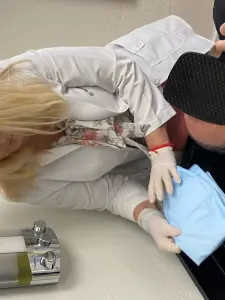
Dr Kelemen teaches the patient to take care of their newly transplanted hair
Received a phone call recently from a person that had a hair transplant with the top surgeon in the valley but could not get hold of him for post op care clarification. Sadly, I could not help him, because he was not my patient, and I would have to see him to provide him with info. My advice is that you must always follow up with your provider, calling another physician will mean that you will have to pay for a consultation which will make you their patient and they can provide care for you.
This was a hard lesson learned by the patient that after he paid 5 figures, he could not find anybody to answer his questions the day after the surgery. The lesson to be learned from this event is that he should have asked more questions during his consultation, and it shows just how important the complete package is i.e. it is not just the hair transplant but the post op and pre op.
At Hair 4 Life, I see the patient personally for the next 3 days, I, the doctor, do the shampoo and teach them how to care for their hair. I feel that post op is just as important as the surgery itself. If you do not take care properly of the new implants, then you waisted your money.
So, for those that did not get post-op instructions from their provider here are Dr. Kelemen’s:

Hyperbaric chamber, same one used by elite athletes, for quicker healing.
Do’s
- DO take care of the implanted area
Your hair transplant recovery heavily depends on how well you care for the implanted area within the first seven days after hair transplant. Post-surgery, your doctor will give you a saline solution with copper peptides that you must spray on the transplanted area. On your own, or with the help of someone, spray the solution every 2-3 hours or as directed by your surgeon to avoid swelling.
You may be allowed to wash your hair 24 hours after the surgery, but water pressure must be kept to a minimum, and its temperature must be lukewarm. To manage it easier, you can use a small jar to wash the location of the transplanted roots. Refrain from putting anything on your scalp or using any products that your doctor hasn’t cleared as it may irritate the area.
Once you’ve finished, lightly dab the area with a soft cloth to dry.
You should expect itchiness, especially as the scabs begin to form, but it should be trivial if the technician trimmed the graft properly. But it’s imperative to avoid directly touching the area with your fingers as this may cause bleeding or inflammation. You can also consult your doctor on properly removing scabs after a hair transplant without affecting the newly-placed grafts.
- DO use pain medication as recommended
It’s normal to experience swelling, headaches, or discoloration of the transplanted area within the first week. It is essential to take your antibiotics as prescribed to help prevent infection. Painkillers and even sleeping pills when you can’t sleep will help relax your body and give you relief.
- DO keep an eye out for infection
Surgical incisions are at risk for infection, which is why unless there’s an absolute need to, avoid touching the donor area with your hands. You’ll also be responsible for keeping your wound dry and changing its dressing.
Always be on the lookout for discharge, pus, excessive bleeding, fever, persistent pain, or increased redness of your scalp. These are signs of a developing infection that needs immediate attention from your doctor.
Don’t
- DON’T smoke, drink or take aspirin
Alcohol in the body interferes with its metabolism, which is crucial for the growth of new hair. Taking aspirin in lieu of what you’ve been prescribed may thin the blood and cause excessive bleeding. It’s better to stick with the pain medication you’ve been given.
Nicotine from cigarettes restricts blood flow. We advise our patients to avoid cigarettes at least four weeks before surgery.
- DON’T engage in strenuous exercise or activities
Workouts that require too much exertion, lifting, or straining may disrupt the healing of your wound. You need to manage your blood pressure and heart rate to lessen the risk of swelling, so avoid excessive movements, especially during the first two weeks post-op. Too much movement may also cause excessive sweating, and perspiration increases the risks of infection.
- DON’T expose your scalp to sunlight
Direct exposure to sunlight can be dangerous to the areas where grafts have been implanted. It is advisable to avoid exposure for at least four months following the FUE hair transplant procedure. But if sun exposure is entirely unavoidable, you must carefully apply sunscreen to the area before heading out. Some patients prefer to use hats to protect themselves from the sun, but there is still a risk of rubbing against the implanted hairs, which is why we don’t recommend it.
More Aftercare Tips
Two important aftercare activities that you will be doing every day are washing your hair and sleeping in a manner that doesn’t affect your surgery. Sleeping with your head elevated will alleviate swelling! Dr. Kelemen recommends you roll a large towel and used it as a neck brace to keep you from rolling left or right the first 3 nights.
The first 3 days after the surgery, I recommend you find hyperbaric center and do 3 sessions to help speed up healing. At my clinic, Hair 4 Life, I offer onsite hyperbaric treatment to my hair transplant patients and the results have been incredible: quicker healing and less scaring!
Here is how you can wash your hair and sleep in the optimal position post-FUE/FUT hair transplant.
Hair Transplant Clinic in Scottsdale
Dr. Kelemen integrates conventional and naturopathic medicine to provide the best of what both worlds have to offer. She creates a unique, compassionate, accepting environment for her patients. You only have to read the reviews to find out how she empowers her clients to look and feel their best. They leave the clinic with their heads held high!
To find out which procedure is best suited to your needs, you are invited to come into Hair4Life for a consultation. Treatments are kept as affordable and accessible as possible so come in and talk to us.
Hair Transplant | Johns Hopkins Medicine
Contact Us or call Hair 4 Life at (480) 525-4547 to schedule an appointment.


 Hair 4 Life Medical