Genetic Testing for Hair Loss: Is It Worth It?

Hair loss rarely starts as a medical puzzle on paper. It starts in the mirror, in photos, in the shower drain, or in the uneasy feeling that your part looks wider than it did six months ago. Genetic testing for hair loss appeals to many patients for one simple reason – they want a clearer answer about why this is happening and what to do next.
That instinct makes sense. If genetics play a role in hair thinning, it seems reasonable that a DNA-based test should provide a roadmap. Sometimes it helps. Sometimes it adds useful context but not a final answer. And sometimes patients expect more certainty than the test can realistically deliver.
What genetic testing for hair loss can actually tell you
Most hair loss with a hereditary component is not caused by a single on-off gene. Male and female pattern hair loss are usually polygenic, meaning many genes may influence how sensitive the follicles are to hormones, how quickly miniaturization progresses, and how early thinning begins. A genetic test is usually looking for variants associated with increased risk, not delivering a diagnosis by itself.
That distinction matters. A positive result may suggest a higher likelihood of androgenetic alopecia or a stronger inherited tendency toward follicle sensitivity. It does not automatically explain the full picture. A negative or low-risk result also does not rule out hair loss, because real-life hair disorders are influenced by hormones, inflammation, age, stress, nutrition, medications, thyroid disease, autoimmune conditions, and scalp health.
In the right setting, genetic testing may also offer clues about treatment response. Some panels are marketed as a way to help predict whether a patient may respond better or worse to certain medications or supportive therapies. This can be helpful, but it should be viewed as one piece of a broader clinical workup, not a replacement for medical judgment.
Why genetics matter – and why they are not the whole story
Patients often hear that pattern baldness comes from their mother’s side of the family. That is an oversimplification. Hair loss inheritance can come from either side, and family patterns do not always repeat neatly. You may have a father with a full head of hair and still develop progressive thinning. You may also have strong family history and keep better density than expected for decades.
Genes can influence susceptibility, but they do not act in isolation. Hormonal shifts after pregnancy or during menopause can accelerate shedding in women who were already genetically predisposed. Men may start noticing recession or crown loss earlier when androgen sensitivity is combined with age and scalp inflammation. Some patients have hereditary pattern loss layered on top of telogen effluvium, anemia, or thyroid dysfunction. In those cases, the visible thinning is real, but the cause is mixed.
This is exactly why testing has to be interpreted in context. A DNA report can tell you about risk. It cannot examine your scalp, measure miniaturization, assess donor quality, or determine whether your current shedding pattern is active, temporary, or long-standing.
Who may benefit most from genetic testing for hair loss
The best candidates are usually patients who want a more complete diagnostic picture rather than a quick yes-or-no answer. If your hair loss pattern is early, subtle, or confusing, genetics can add value when the clinical signs are still developing. It may also help patients who want to make earlier treatment decisions before thinning becomes advanced.
It can be especially useful for patients who have a family history of hair loss but are not sure whether their current changes fit the same pattern. It may also appeal to men and women who want a more data-driven approach to long-term planning, including whether they should monitor closely, begin medical treatment, or think ahead about procedural options.
That said, not every patient needs it. If someone already has obvious androgenetic alopecia on scalp exam, strong family history, and progressive miniaturization seen under magnification, a skilled physician can often make the diagnosis without a genetic panel. In that scenario, testing may confirm what is already clinically clear, but it may not change the treatment plan much.
What these tests cannot do
This is where expectations need to stay realistic. Genetic testing cannot promise that you will or will not go bald. It cannot predict the exact age your hair loss will progress, how fast it will happen, or what your hairline will look like ten years from now. It also cannot replace blood work, scalp analysis, medical history, or physician evaluation.
It is also not a shortcut around diagnosis when symptoms point toward something non-genetic. If you have sudden shedding, patchy loss, scalp pain, itching, scaling, or scarring, those findings may suggest inflammatory, autoimmune, infectious, or systemic causes that require direct medical evaluation. In those cases, relying on genetics alone can delay the right treatment.
There is another limitation patients do not always consider – commercial tests vary. Not all panels analyze the same markers, and not all claims about treatment matching are equally strong from a scientific standpoint. Some are more useful for education and risk awareness than for hard clinical decision-making.
How genetic testing fits into a real treatment plan
The most useful way to think about genetic testing is as an enhancer of diagnosis, not the center of it. In a physician-led hair restoration practice, the bigger question is not just, “Do I have a gene for hair loss?” The bigger question is, “What is happening in my scalp right now, what is driving it, and what will give me the best result over time?”
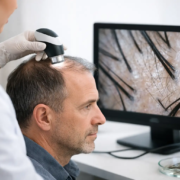
That requires combining several layers of information. Your medical history helps identify triggers and timing. Scalp examination shows whether follicles are miniaturizing, inflamed, scarred, or simply shedding. Lab work may uncover hormonal or metabolic contributors. Genetic findings can then support the overall picture, especially when there is uncertainty or when treatment planning needs another layer of personalization.
For some patients, that means starting medical therapy early to protect vulnerable follicles. For others, it means treating an underlying issue first, then reassessing whether surgery even makes sense. For transplant candidates, genetics may matter less than donor density, scalp characteristics, progression pattern, age, and whether the existing hair is stable enough to support a lasting result.
This is one reason comprehensive clinics approach hair loss differently than centers that only sell one solution. If every patient is being funneled toward the same procedure, a genetic test can become a marketing tool instead of a diagnostic one. A proper evaluation should leave room for nuance.
Is genetic testing worth it before a hair transplant?
Sometimes yes, but not automatically. If you are very young, have diffuse thinning, or have an uncertain pattern, more diagnostic clarity can be helpful before surgery. Transplant planning works best when the surgeon can reasonably anticipate future loss and protect the long-term appearance of the result.
If your hair loss is already well established and the diagnosis is straightforward, genetic testing may add less value than a detailed scalp exam and donor assessment. Surgery is not planned from DNA alone. It is planned from anatomy, pattern, progression, and goals.
For women, the question can be even more layered. Female hair loss is often multifactorial, and a woman with inherited thinning may also be dealing with hormonal changes, iron deficiency, thyroid imbalance, or chronic shedding. In that setting, a genetic test may be informative, but it should never replace a full medical workup.
The best question to ask before you order a test
Do not ask whether the test is advanced. Ask whether the result will change anything meaningful.
If the answer is yes – perhaps it will help clarify risk, support earlier intervention, or strengthen a borderline diagnosis – then testing may be worthwhile. If the answer is no, and your physician can already identify the pattern and recommend a sound treatment plan, then the test may be optional rather than essential.
Patients often feel relieved when they hear that. Not every useful hair loss decision requires more technology. Sometimes the most valuable step is a thorough evaluation by a physician who focuses exclusively on hair and can separate what is genetic, what is medical, and what is treatable now.
At Hair For Life Medical in Scottsdale, that kind of evaluation matters because the goal is not to push one answer. It is to understand the cause, stage, and behavior of your hair loss well enough to build a plan that fits your life, your goals, and your future hair.
If you are considering genetic testing for hair loss, treat it as a tool, not a verdict. The right test in the right hands can be helpful. The right diagnosis, however, still comes from seeing the whole patient – not just the genes.
References
TrichoTest™ – Fagron Genomics US