No Shave FUE Scottsdale: Is It Right for You?
If the idea of a hair transplant sounds appealing but shaving your head feels like a hard no, that hesitation is more common than you may think. For many patients researching no shave FUE Scottsdale options, the real question is not just whether the procedure works. It is whether they can restore hair without announcing it to coworkers, clients, family, or anyone else who was not invited into the decision.
That is exactly where no-shave FUE can make sense. It is designed for patients who want the precision of follicular unit extraction while keeping their existing hairstyle intact. The appeal is obvious, but this is not the right fit for every person, every hair type, or every hair loss pattern. A careful evaluation matters.
What no shave FUE in Scottsdale actually means
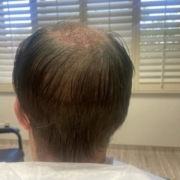
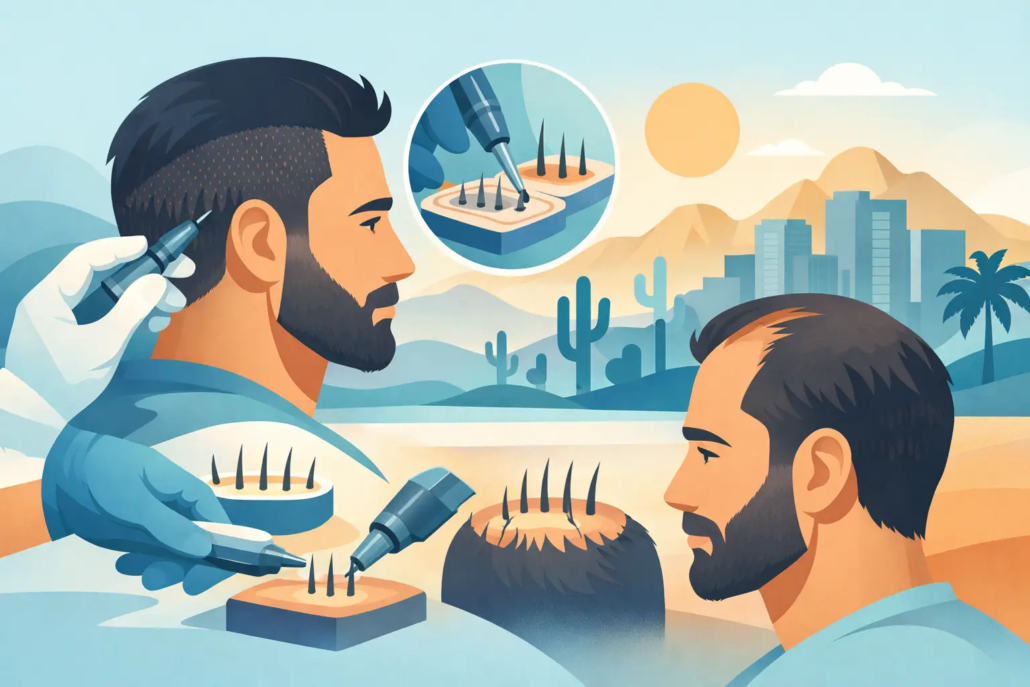
No-shave FUE is a version of follicular unit extraction in which the donor area is not fully shaved. Instead of clipping the entire back and sides of the scalp, the physician selectively harvests follicular units in a way that allows surrounding hair to conceal the donor sites.
The goal is discretion. Patients can often return to daily life without the dramatic visual change that comes with a traditional shaved FUE approach. For professionals who are on camera, in meetings, or simply private about cosmetic treatment, that difference can be significant.
It is still FUE. Individual grafts are extracted one by one and placed into thinning or balding areas. The main distinction is how the donor area is managed and how much concealment can be preserved during healing.
Why patients ask for no shave FUE Scottsdale clinics offer
The most common reason is simple: privacy. A fully shaved donor area can be difficult to hide, especially for women, men with longer hairstyles, and anyone who cannot take extended social downtime.
There is also a practical side. Some patients cannot change their appearance suddenly because of work, public-facing responsibilities, or personal commitments. Others have spent years managing thinning hair carefully and do not want a transplant process that temporarily makes the issue more visible.
For the right candidate, no-shave FUE can offer a more discreet path forward. That said, discretion is not the same as invisibility. You may still have redness, tiny scabs, or temporary signs of healing, and those details vary based on skin tone, graft count, and the treatment area.
Who is a good candidate for no-shave FUE?
A strong candidate usually has enough donor density, realistic expectations, and a hairstyle that can help cover the donor area during recovery. Patients seeking smaller to moderate sessions often do especially well because the procedure is more manageable without shaving a large area.
This option can be attractive for women with diffuse thinning, men who wear their hair longer, and patients focused on hairline refinement or limited-density work. It may also be useful for beard or eyebrow cases depending on the plan.
Still, candidacy depends on more than preference. The donor area has to be assessed closely. If hair loss is advanced, if a high number of grafts is needed, or if the donor supply is limited, another technique may be more efficient and produce a better long-term outcome. A procedure should fit the biology, not just the schedule.
When no-shave FUE may not be the best choice
There are trade-offs. No-shave FUE is often more technically demanding and more time-intensive than standard shaved FUE. In some cases, that can affect cost, session length, and the total number of grafts that can be harvested efficiently.
If a patient needs extensive coverage, shaving may allow better access, improved workflow, and a more strategic use of the donor area. Patients with very short hairstyles may also find that shaving is less of a concern than they expected. Sometimes the most discreet option in the short term is not the best option for the final result.
That is why a true consultation should include alternatives. No-shave FUE is valuable, but it should not be treated as the answer for everyone.
How the procedure works
The process begins with a detailed scalp and hair evaluation. Hair loss pattern, donor density, miniaturization, caliber, scalp laxity, medical history, and long-term goals all need to be considered before any graft planning happens.
On the day of the procedure, the donor region is prepared in a targeted way rather than being broadly shaved. Follicular units are extracted individually with specialized instruments. The recipient area is then designed and implanted according to the treatment plan, whether the priority is rebuilding a hairline, adding density, softening scars, or improving a specific cosmetic concern.
What matters most is not just getting grafts out and in. Angle, direction, spacing, and hairline design determine whether the result looks natural. A technically correct transplant can still look artificial if the design is wrong. That is one reason physician experience matters so much in a procedure that is meant to stay undetectable.
Recovery and downtime
Most patients tolerate recovery well, but expectations should stay realistic. No-shave FUE reduces the obvious look of a shaved donor area. It does not eliminate healing.
Tiny crusts form around implanted grafts. Mild swelling or redness may occur. The donor area can feel tender for several days. Many patients return to non-strenuous work relatively quickly, especially if they can style existing hair around the treated areas. But exercise, sun exposure, and scalp friction still need to be managed carefully.
Shedding is also part of the process. Newly transplanted hairs commonly shed before growing back. That can be emotionally frustrating if you expected immediate fullness. Early growth often starts around a few months after surgery, with meaningful cosmetic improvement developing gradually and final maturation taking much longer.
The biggest benefit: discretion
For the right patient, discretion is not a minor perk. It is the deciding factor that makes surgery possible.
A no-shave approach can reduce the social barrier to treatment. Patients often feel more comfortable moving forward when they know they do not have to explain a shaved scalp or disappear for weeks. That emotional comfort matters. Hair restoration is not only about follicles. It is also about control, timing, confidence, and feeling like yourself throughout the process.
The biggest limitation: efficiency
The same feature that makes no-shave FUE appealing can also make it less efficient. Working around existing hair takes more time and precision. In larger cases, this can limit throughput and may not be the best use of the donor area.
That does not mean it is inferior. It means case selection matters. A smaller, carefully planned no-shave session can be excellent. A very large restoration case may be better served by a different strategy, whether that is shaved FUE, FUT strip, a staged plan, or a combination of surgical and non-surgical treatments.
Why diagnosis matters before surgery
Not every thinning area should go straight to transplant. Some patients have active shedding, hormonal imbalance, inflammatory scalp conditions, nutritional issues, or medication-related hair loss that should be addressed first. Others may benefit from medical therapy to stabilize loss before surgery is considered.
This is where a specialized practice has an advantage. A transplant should be part of an overall hair restoration plan, not a stand-alone sales product. At Hair For Life Medical, that broader evaluation is central to treatment planning because the visible symptom and the underlying cause are not always the same thing.
Questions worth asking at a consultation
If you are considering no shave FUE in Scottsdale, ask how many grafts you likely need, whether your donor area supports this approach, what degree of concealment is realistic, and whether another technique would serve you better. Ask who performs the critical parts of the procedure. Ask how your long-term pattern of loss affects today’s design.
Those questions help separate a customized medical plan from a generic pitch. The best transplant is not the one that sounds easiest. It is the one that fits your hair characteristics, your goals, and the future of your hair loss.
No-shave FUE can be an excellent option when privacy matters and the case is selected thoughtfully. The most helpful next step is not choosing a procedure name. It is choosing a thorough evaluation with a physician who can tell you when this approach is right, when it is not, and how to protect the natural result you will still want years from now.
References:
Shaven and Un-Shaven Hair Transplant Terminology

 Hair4LifeMed