FUT Hair Transplant: Is It Still a Good Option?

If you have been researching surgical hair restoration, you have probably noticed that FUT hair transplant procedures still come up even though FUE gets more attention. That is not because FUT is outdated. It is because the right procedure depends on your pattern of loss, your donor supply, your styling preferences, your future goals, and how much graft efficiency matters in your case.
For some patients, FUT remains one of the smartest ways to move a large number of healthy follicular units while protecting the donor area for future planning. For others, the linear scar, the healing profile, or the desire to wear the hair very short makes FUE the better fit. The key is not choosing the most talked-about method. The key is choosing the one that fits your scalp, your hair characteristics, and your long-term restoration plan.
What is a FUT hair transplant?
FUT stands for Follicular Unit Transplantation. It is often called the strip method because a thin strip of scalp is removed from the permanent donor zone, usually in the back of the head, where hair is genetically more resistant to pattern baldness. That strip is then carefully dissected under magnification into naturally occurring follicular units, which may contain one, two, three, or sometimes four hairs.
Those grafts are then placed into the recipient area using a design that matches your natural hair direction, angulation, and density pattern. When FUT is done well, the result should not look pluggy or obvious. It should look like your own hair growing where it had thinned or disappeared.
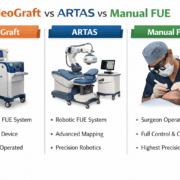
The main difference between FUT and FUE is how the donor hair is harvested. In FUE, grafts are removed one by one. In FUT, they are obtained from a carefully excised strip and then separated into individual grafts. Both methods can produce excellent results. Neither is automatically better in every case.
Why FUT is still relevant
FUT has stayed relevant for one simple reason. It can be very efficient.
Because the grafts are dissected from a strip under high magnification, the surgeon can often preserve a strong number of intact follicular units in a single session. That can be especially useful for patients who need significant coverage in the frontal scalp, midscalp, or crown, or for patients who may need to conserve donor resources over a lifetime.
There is also a planning advantage. Hair loss is progressive. If a younger patient is already showing a meaningful pattern of loss, the best surgery is not always the one that gives the fastest short-term win. It is the one that uses donor hair wisely and leaves options open for the future. In certain cases, FUT can play an important role in that strategy.
This matters even more when a patient has finer hair, a limited donor area, extensive thinning, or prior surgery. A transplant should never be planned as if this is the only decision that will matter. It needs to fit the likely future of your hair loss.
Who may be a good candidate for FUT hair transplant surgery
A FUT hair transplant may be a strong option for patients who need a larger number of grafts, typically wear their hair long enough to conceal a linear scar, and want to maximize donor harvesting efficiency. It can also make sense for patients with scalp laxity that allows safe strip removal and for those who are less concerned about wearing the back and sides very short.
Men with advancing pattern hair loss are often good candidates, but women can also benefit from FUT, especially when shaving a donor area for FUE is not appealing. In some cases, a woman with diffuse thinning may still need a very careful diagnostic workup before any surgery is considered. Not every thinning pattern is a surgical one.
Patients seeking corrective surgery may also be evaluated for FUT if they need additional grafts and donor management is critical. This is where a physician-led assessment matters. Prior scars, depleted donor areas, unusual hair characteristics, or failed prior work can change the decision significantly.
When FUT may not be the best choice
FUT is not ideal for everyone. If you prefer a very short haircut, the linear scar may be harder to conceal. If your scalp is tight, strip harvesting may be less favorable. If your main goal is to avoid a line scar altogether, FUE may be a better match.
There are also lifestyle and healing considerations. FUT recovery can involve more tightness or discomfort in the donor area during the early healing period than FUE. Some patients tolerate this very well. Others strongly prefer the recovery profile of individual extraction.
And there is one more important point. Surgery is not always the first step. If active hair loss is still progressing, the smartest plan may include medical treatment, hormone evaluation, scalp analysis, or non-surgical support before moving into surgery. Hair restoration works best when the cause and pattern of loss are properly understood.
FUT vs FUE: the real trade-offs
This is where many consultations become oversimplified. Patients are sometimes led to think FUE is modern and FUT is old, or that FUT gives a scar and FUE does not. Neither framing is accurate enough.
FUE creates many tiny extraction sites across the donor region. FUT creates a single linear scar. The question is not scar versus no scar. The question is which donor pattern, healing pattern, and graft strategy make the most sense for you.
FUT can be excellent for maximizing graft yield in a session and limiting diffuse removal across the donor area. FUE can be excellent for flexibility, shorter hairstyles, and avoidance of a linear scar. Some patients benefit from one method alone. Others may benefit from a staged or combined approach over time.
The surgeon’s skill matters just as much as the technique. Donor design, graft handling, recipient site creation, angle control, and long-term planning affect the result in ways that marketing language never will.
What happens during the procedure
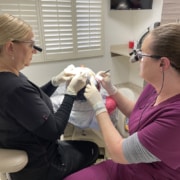
A FUT procedure is typically performed under local anesthesia. After the donor strip is removed, the area is closed with techniques designed to support healing and minimize scar visibility as much as possible. The donor tissue is then dissected into follicular units with careful attention to graft quality.
Meanwhile, the recipient area is prepared with tiny sites designed around your hairline, density goals, and natural growth pattern. This design work is not a minor detail. A natural hairline is not just about where it starts. It is about irregularity, softness, transition, and how it will look as your face and hair loss pattern continue to age.
Once the grafts are placed, you go home the same day with detailed aftercare instructions. Growth does not happen overnight. Most transplanted hairs shed first, then begin to regrow over the following months. Visible improvement often starts around three to four months, with more meaningful change as the year progresses.
Recovery and scarring
The donor area usually feels sore or tight early on, and you may have swelling or scabbing in the recipient area. Most patients are back to non-strenuous work fairly quickly, but exercise restrictions and healing instructions should be followed closely.
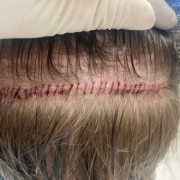
The linear scar is the main concern patients ask about with FUT. In many cases, it heals as a fine line that is easy to conceal with surrounding hair. In other cases, scarring can be more noticeable depending on individual healing, closure tension, scalp characteristics, and post-op care. This is one of the reasons a personalized consultation matters so much.
If a patient is prone to widened scars or knows they will want very short hair later, that should be part of the decision from the start, not something addressed afterward.
Why diagnosis matters before surgery
A technically good transplant can still be the wrong treatment if the diagnosis is incomplete.
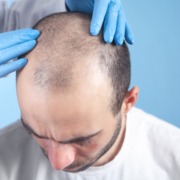
Hair loss may involve androgenetic alopecia, hormonal shifts, inflammatory scalp conditions, traction history, diffuse thinning, nutritional issues, or scarring disorders. Some of these can limit candidacy, alter timing, or require treatment before surgery. Others affect whether FUT, FUE, or non-surgical treatment is the wiser path.
That is why a comprehensive hair clinic should not push one procedure for every patient. The best plan comes from evaluating the scalp, the donor area, the cause of loss, family history, medical history, and aesthetic goals together. At Hair For Life Medical, that physician-led approach is central because the treatment should fit the patient, not the other way around.
Is FUT the right move for you?
If your goal is strong coverage, efficient use of donor hair, and a long-term restoration plan built around medical judgment rather than trends, FUT deserves real consideration. If your priorities are different, another path may make more sense. That is not a drawback of FUT. It is simply how honest hair restoration works.
A good consultation should leave you better informed, not pressured. You should understand what can be achieved, what should wait, what risks matter in your case, and how today’s choice may affect future options. The best results come from that kind of clarity, because confidence starts long before the first graft is placed.
References
Latest Advances in FUE and FUT Techniques – ISHRS
Combination FUE & FUT Masterclass – ISHRS 33rd World Congress

 H4L Medical